Saxena Gourvendu, Mitra Suparna, Marzinelli Ezequiel M, Xie Chao, Wei Toh Jun, Steinberg Peter D, Williams Rohan B H, Kjelleberg Staffan, Lauro Federico M, Swarup Sanjay
Department of Biological Sciences, National University of Singapore, Singapore, Singapore.
Singapore Centre for Environmental Life Sciences Engineering (SCELSE), National University of Singapore, Singapore, Singapore.
mSystems. 2018 Jun 5;3(3). doi: 10.1128/mSystems.00136-17. eCollection 2018 May-Jun.
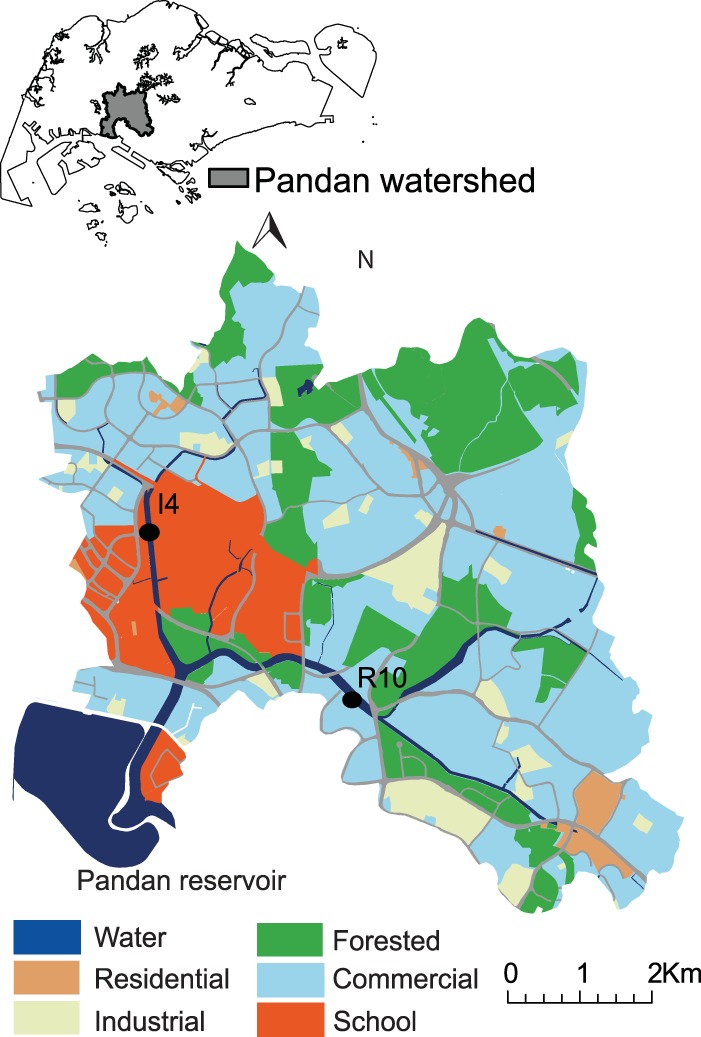
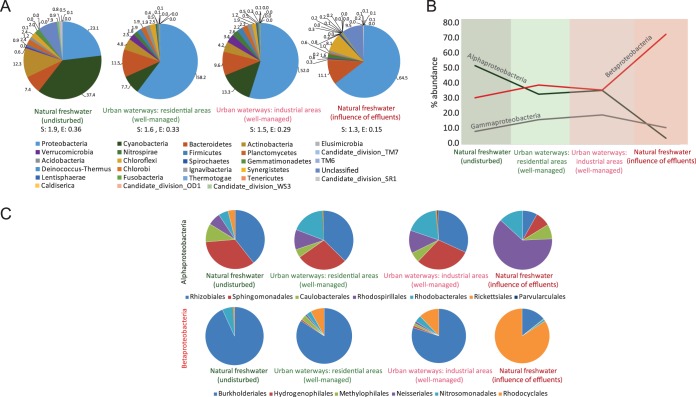
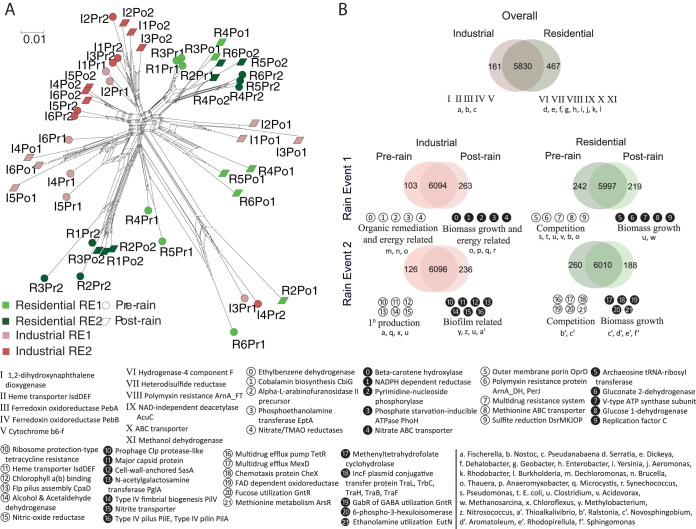
Growing demands for potable water have led to extensive reliance on waterways in tropical megacities. Attempts to manage these waterways in an environmentally sustainable way generally lack an understanding of microbial processes and how they are influenced by urban factors, such as land use and rain. Here, we describe the composition and functional potential of benthic microbial communities from an urban waterway network and analyze the effects of land use and rain perturbations on these communities. With a sequence depth of 3 billion reads from 48 samples, these metagenomes represent nearly full coverage of microbial communities. The predominant taxa in these waterways were and , indicating the presence of nitrogen and carbon fixation in this system. Gene functions from carbohydrate, protein, and nucleic acid metabolism suggest the presence of primary and secondary productivity in such nutrient-deficient systems. Comparison of microbial communities by land use type and rain showed that while there are significant differences in microbial communities in land use, differences due to rain perturbations were rain event specific. The more diverse microbial communities in the residential areas featured a higher abundance of reads assigned to genes related to community competition. However, the less diverse communities from industrial areas showed a higher abundance of reads assigned to specialized functions such as organic remediation. Finally, our study demonstrates that microbially diverse populations in well-managed waterways, where contaminant levels are within defined limits, are comparable to those in other relatively undisturbed freshwater systems. Unravelling the microbial metagenomes of urban waterway sediments suggest that well-managed urban waterways have the potential to support diverse sedimentary microbial communities, similar to those of undisturbed natural freshwaters. Despite the fact that these urban waterways are well managed, our study shows that environmental pressures from land use and rain perturbations play a role in shaping the structure and functions of microbial communities in these waterways. We propose that although pulsed disturbances, such as rain perturbations, influence microbial communities, press disturbances, including land usage history, have a long-term and stronger influence on microbial communities. Our study found that the functions of microbial communities were less affected by environmental factors than the structure of microbial communities was, indicating that core microbial functions largely remain conserved in challenging environments.
对饮用水需求的不断增长,导致热带特大城市对水道的广泛依赖。以环境可持续的方式管理这些水道的尝试,通常缺乏对微生物过程以及它们如何受到城市因素(如土地利用和降雨)影响的理解。在这里,我们描述了城市水道网络中底栖微生物群落的组成和功能潜力,并分析了土地利用和降雨扰动对这些群落的影响。通过对48个样本进行30亿次读数的测序深度,这些宏基因组几乎覆盖了微生物群落。这些水道中的主要分类群是 和 ,表明该系统中存在氮和碳固定。来自碳水化合物、蛋白质和核酸代谢的基因功能表明,在这种营养缺乏的系统中存在初级和次级生产力。按土地利用类型和降雨对微生物群落进行比较表明,虽然土地利用中的微生物群落存在显著差异,但降雨扰动造成的差异是特定于降雨事件的。居民区中更多样化的微生物群落具有更高丰度的与群落竞争相关基因的读数。然而,工业区中多样性较低的群落显示出更高丰度的与有机修复等特殊功能相关的读数。最后,我们的研究表明,在管理良好、污染物水平在规定范围内的水道中,微生物多样的种群与其他相对未受干扰的淡水系统中的种群相当。 揭示城市水道沉积物的微生物宏基因组表明,管理良好的城市水道有潜力支持多样的沉积微生物群落,类似于未受干扰的天然淡水。尽管这些城市水道管理良好,但我们的研究表明,土地利用和降雨扰动带来的环境压力在塑造这些水道中微生物群落的结构和功能方面发挥了作用。我们提出,虽然脉冲干扰(如降雨扰动)会影响微生物群落,但包括土地使用历史在内的压力干扰对微生物群落有长期且更强的影响。我们的研究发现,微生物群落的功能受环境因素的影响小于微生物群落的结构,这表明核心微生物功能在具有挑战性的环境中基本保持不变。