Sørensen Jonas
1 Centre of Inflammation and Metabolism, Copenhagen, Denmark.
Integr Cancer Ther. 2018 Sep;17(3):1000-1008. doi: 10.1177/1534735418781743. Epub 2018 Jun 13.
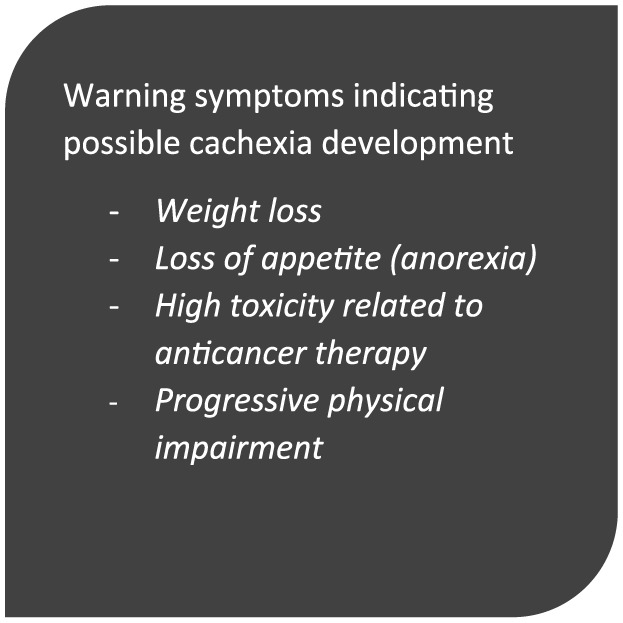
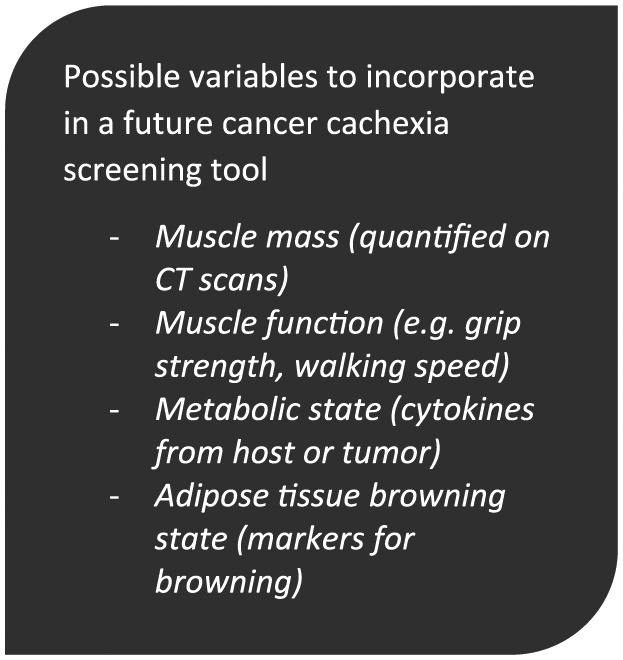
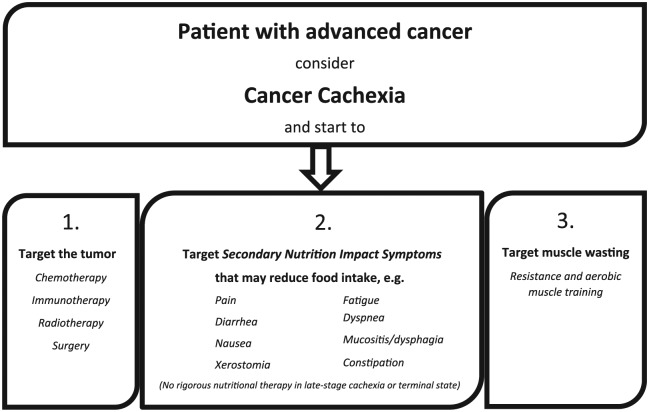
Cachexia has been recognized for a long time as an adverse effect of cancer. It is associated with reduced physical function, reduced tolerance to anticancer therapy, and reduced survival. This wasting syndrome is mainly known for an ongoing loss of skeletal muscle leading to progressive functional impairment and is driven by a variable combination of reduced food intake and abnormal metabolism. Cytokines derived from host immune system or the tumor itself is believed to play a role in promoting cancer cachexia. Circulating levels of cytokines, including IL-1α, IL-6, and TNFα have been identified in cancer patients but they probably only represent a small part of a changed and abnormal metabolism. Murine models have shown that browning of white adipose tissue (WAT) takes place early in the progression of cancer cachexia. Thus, browning of white adipose tissue is believed to be a strong contributor to the increased energy expenditure common in cachectic patients. Despite the severe implications of cancer cachexia for the patients and extensive research efforts, a more coherent and mechanistic explanation of the syndrome is lacking, and for many clinicians, cancer cachexia is still a vague concept. From a lung cancer perspective this commentary reviews the current knowledge on cancer cachexia mechanisms and identifies specific ways of clinical management regarding food intake, systemic inflammation, and muscular dysfunction. Much of what we know comes from preclinical studies. More translational research is needed for a future cancer cachexia screening tool to guide clinicians, and here possible variables for a cancer cachexia screening tool are considered.
恶病质长期以来一直被认为是癌症的一种不良反应。它与身体功能下降、对抗癌治疗的耐受性降低以及生存率降低有关。这种消瘦综合征主要以骨骼肌持续流失导致进行性功能障碍为特征,其由食物摄入量减少和代谢异常的多种组合驱动。源自宿主免疫系统或肿瘤本身的细胞因子被认为在促进癌症恶病质中起作用。癌症患者体内已检测到包括白细胞介素 -1α、白细胞介素 -6 和肿瘤坏死因子α 在内的细胞因子循环水平,但它们可能仅代表代谢改变和异常的一小部分。小鼠模型表明,白色脂肪组织(WAT)的褐色化在癌症恶病质进展的早期就会发生。因此,白色脂肪组织的褐色化被认为是恶病质患者常见的能量消耗增加的一个重要因素。尽管癌症恶病质对患者有严重影响且进行了广泛的研究,但仍缺乏对该综合征更连贯和机制性的解释,对许多临床医生来说,癌症恶病质仍然是一个模糊的概念。从肺癌的角度来看,这篇评论回顾了关于癌症恶病质机制的当前知识,并确定了在食物摄入、全身炎症和肌肉功能障碍方面的具体临床管理方法。我们所知道的很多内容都来自临床前研究。未来需要更多的转化研究来开发一种癌症恶病质筛查工具以指导临床医生,本文考虑了癌症恶病质筛查工具可能的变量。