Basak Chandramallika, Qin Shuo, Nashiro Kaoru, O'Connell Margaret A
School of Behavioral and Brain Sciences, University of Texas at Dallas, United States.
Center for Vital Longevity, University of Texas at Dallas, United States.
Data Brief. 2018 May 18;19:997-1007. doi: 10.1016/j.dib.2018.05.059. eCollection 2018 Aug.
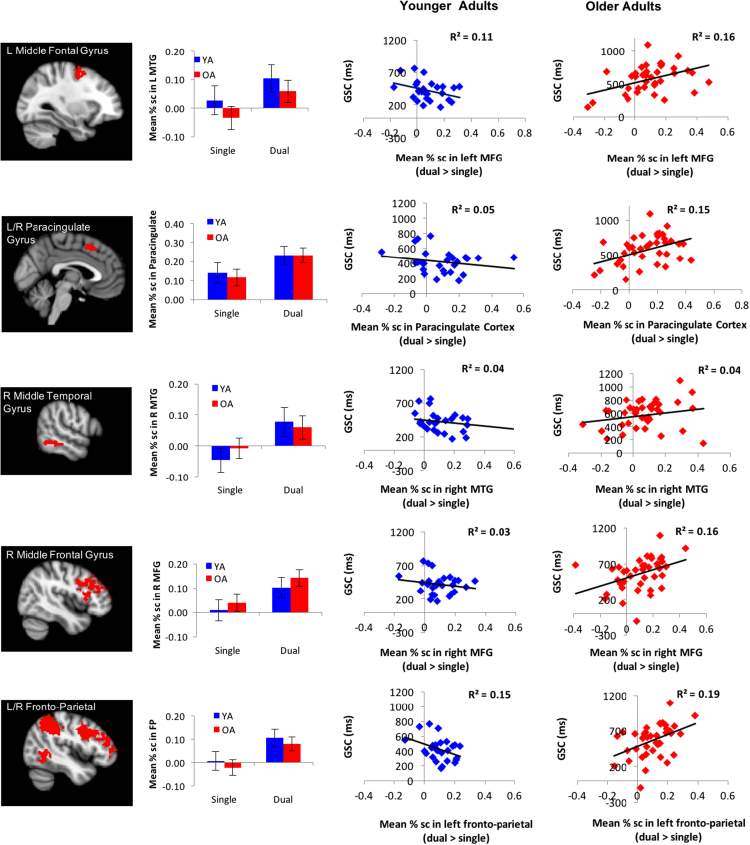
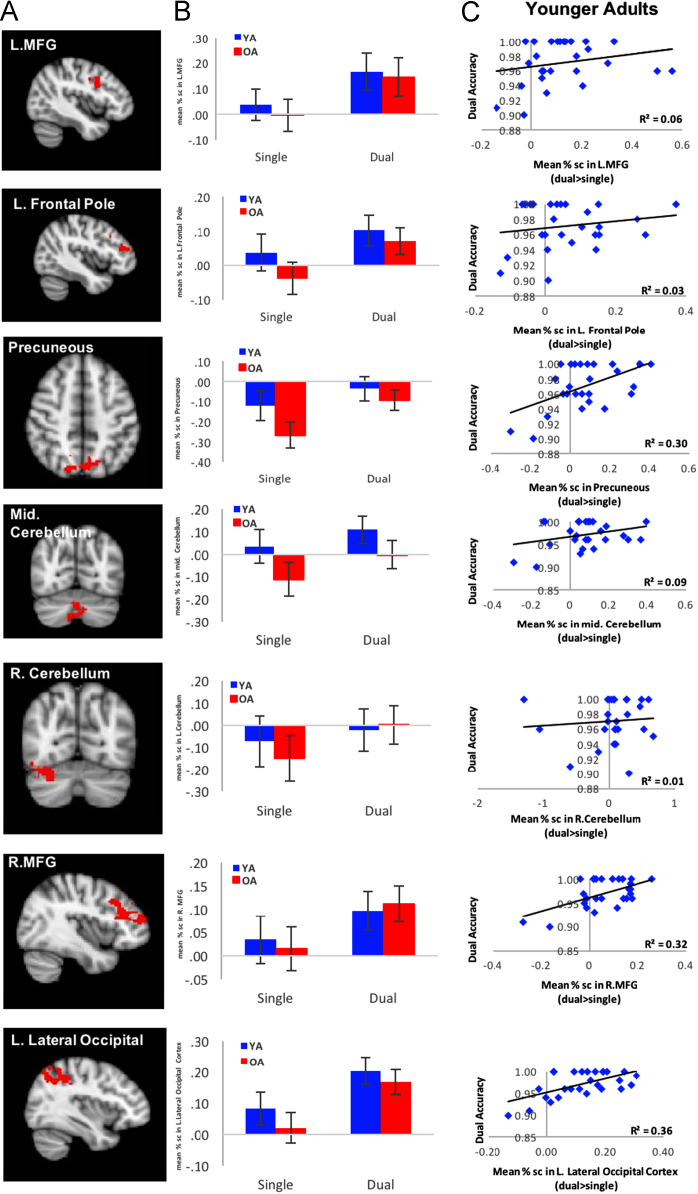
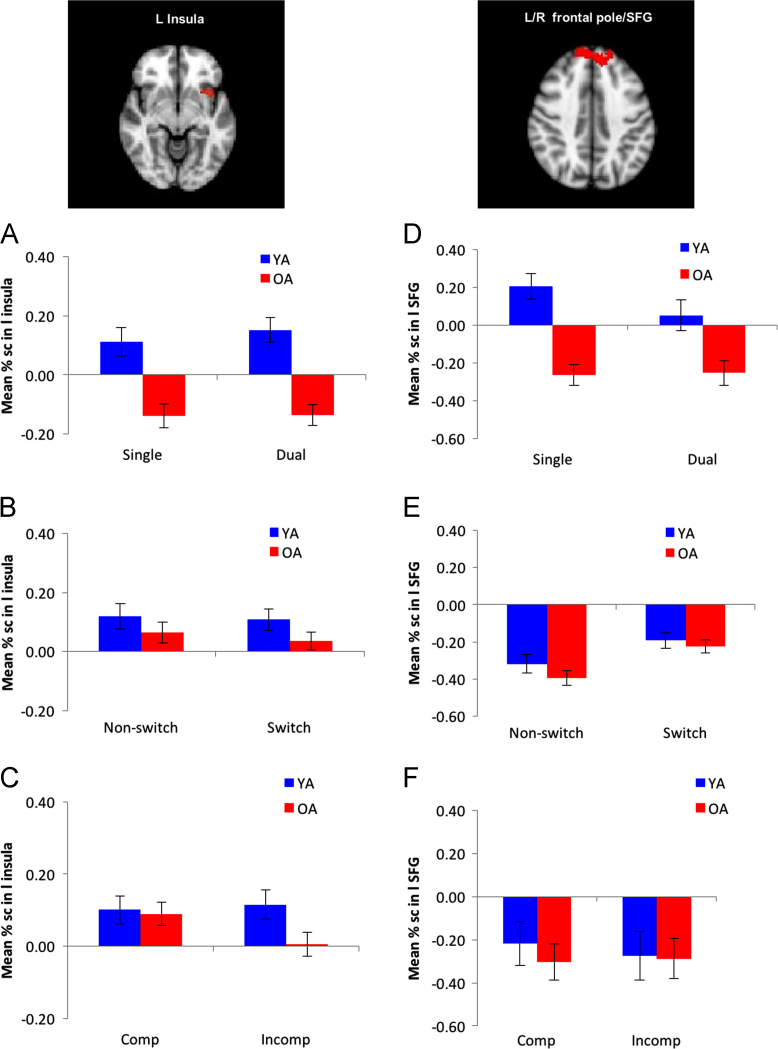
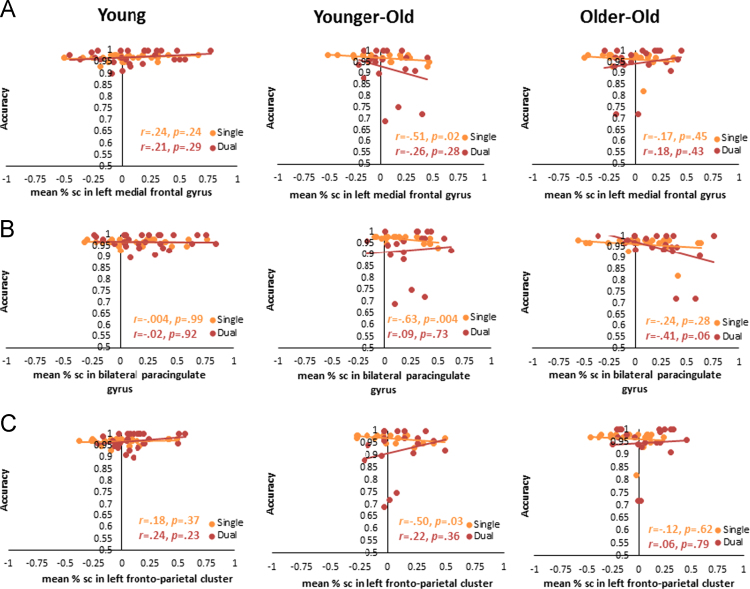
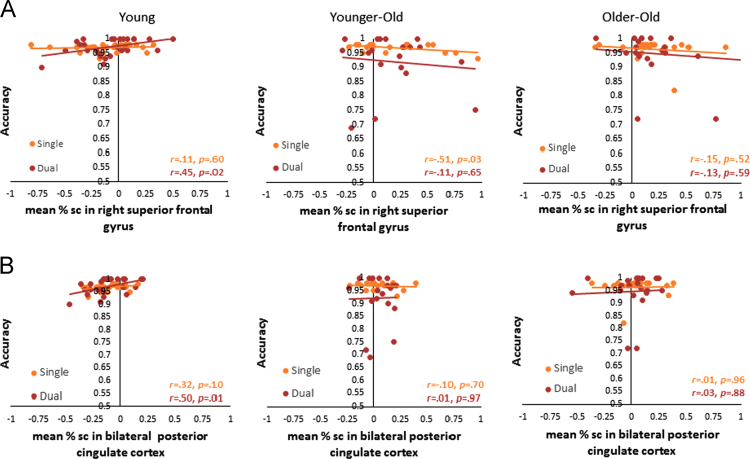
The data presented in this article is related to the research article entitled "Age-related Differences in BOLD Modulation to Cognitive Control Costs in a Multitasking Paradigm: Global Switch, Local Switch, and Compatibility-Switch Costs" (Nashiro et al., 2018) [1]. This article describes age-related differences in accuracies for various cognitive costs incurred during task switching across three different age-cohorts: younger (18-35 years), younger-old (50-64 years) and older-old (65-80 years). The cognitive costs evaluated were global switch costs (GSC), local switch costs (LSC) and compatibility switch costs (CSC). Whole brain analyses were conducted to determine the brain regions sensitive to these cognitive costs, irrespective of age. Furthermore, age-related differences in brain-behavior relationships were evaluated by correlating activations from these regions with global switch costs, indexed by both response times and accuracies, for younger and older adults separately. Activations of age-sensitive regions during the task, where younger adults activated more than the combined groups of older adults, were also correlated with response times and accuracies to determine age-related differences in brain-behavior relationships of these under-recruited brain regions by older adults.
本文所呈现的数据与题为《多任务范式中与年龄相关的脑血氧水平依赖(BOLD)调制对认知控制成本的差异:全局切换、局部切换和兼容性切换成本》(Nashiro等人,2018年)[1]的研究文章相关。本文描述了在三个不同年龄组:年轻人(18 - 35岁)、年轻老年人(50 - 64岁)和年长老年人(65 - 80岁)的任务切换过程中,各种认知成本准确性方面的年龄差异。所评估的认知成本包括全局切换成本(GSC)、局部切换成本(LSC)和兼容性切换成本(CSC)。进行了全脑分析以确定对这些认知成本敏感的脑区,而不考虑年龄因素。此外,通过分别将这些区域的激活与年轻人和老年人的全局切换成本(以反应时间和准确性为指标)进行关联,评估了脑 - 行为关系中的年龄差异。在任务期间年龄敏感区域的激活情况(年轻人的激活程度超过年长成年人的合并组)也与反应时间和准确性相关联,以确定年长成年人在这些招募不足的脑区的脑 - 行为关系中的年龄差异。