Institute of Cell Biology, School of Biological Sciences, University of Edinburgh, King's Buildings, Mayfield Road, Edinburgh EH9 3FF, UK.
Nucleic Acids Res. 2018 Jul 27;46(13):6670-6682. doi: 10.1093/nar/gky463.
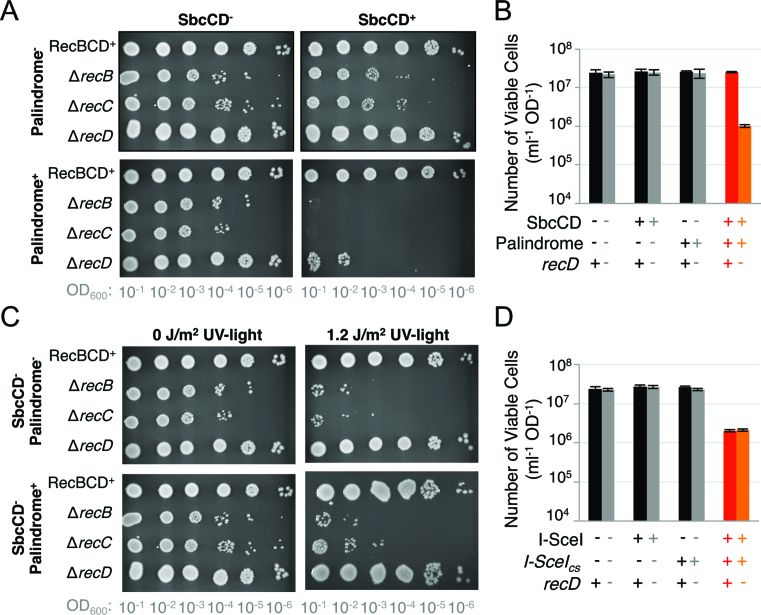
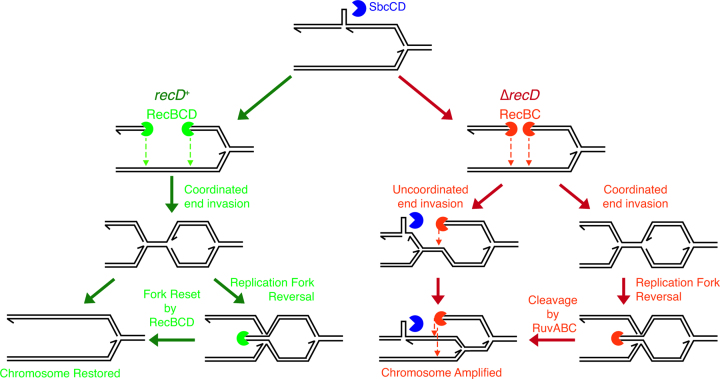
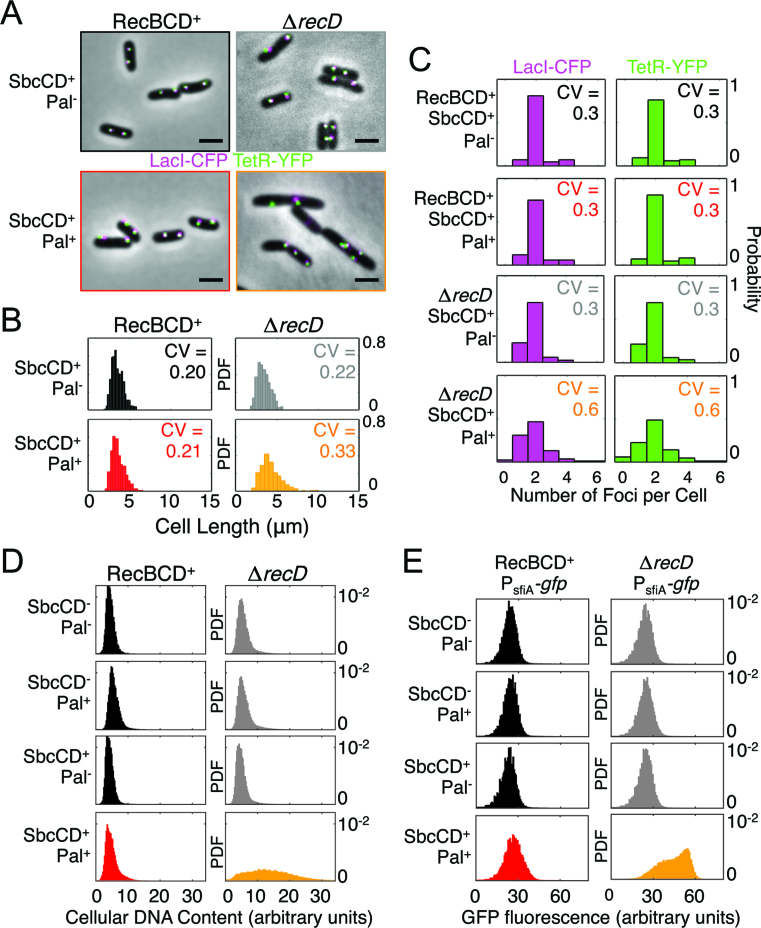
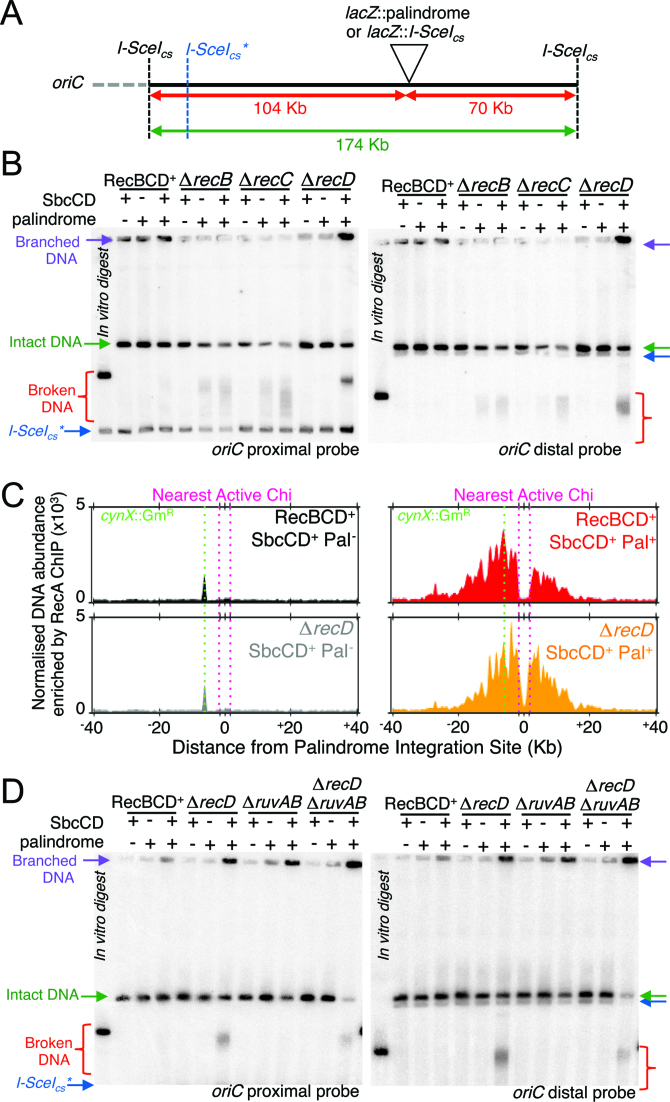
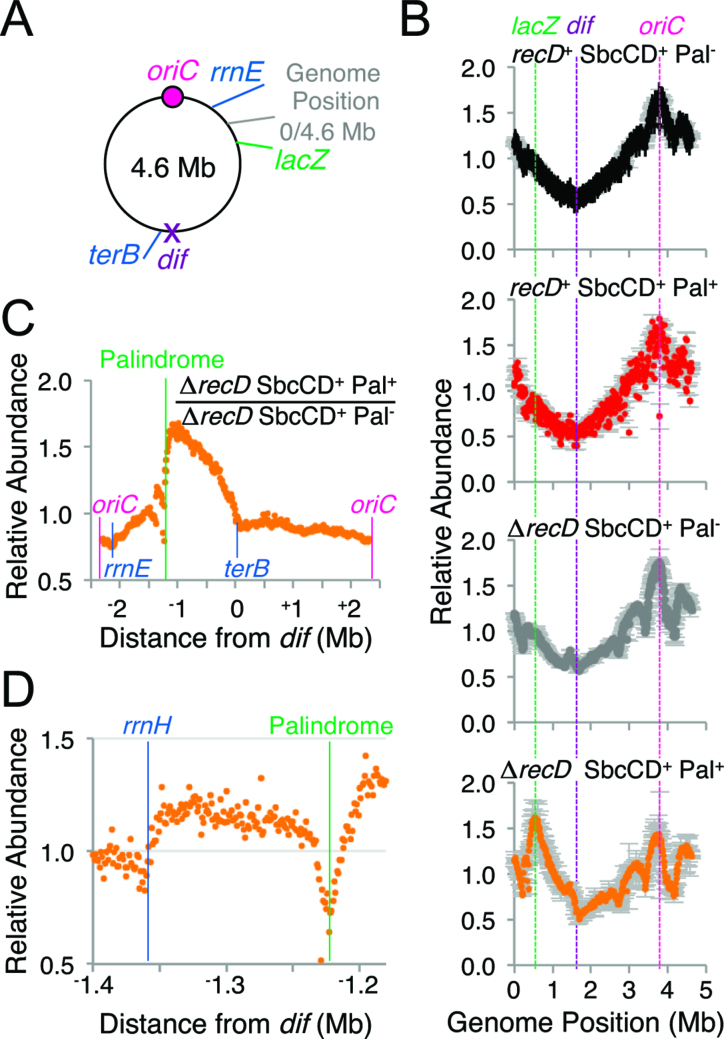
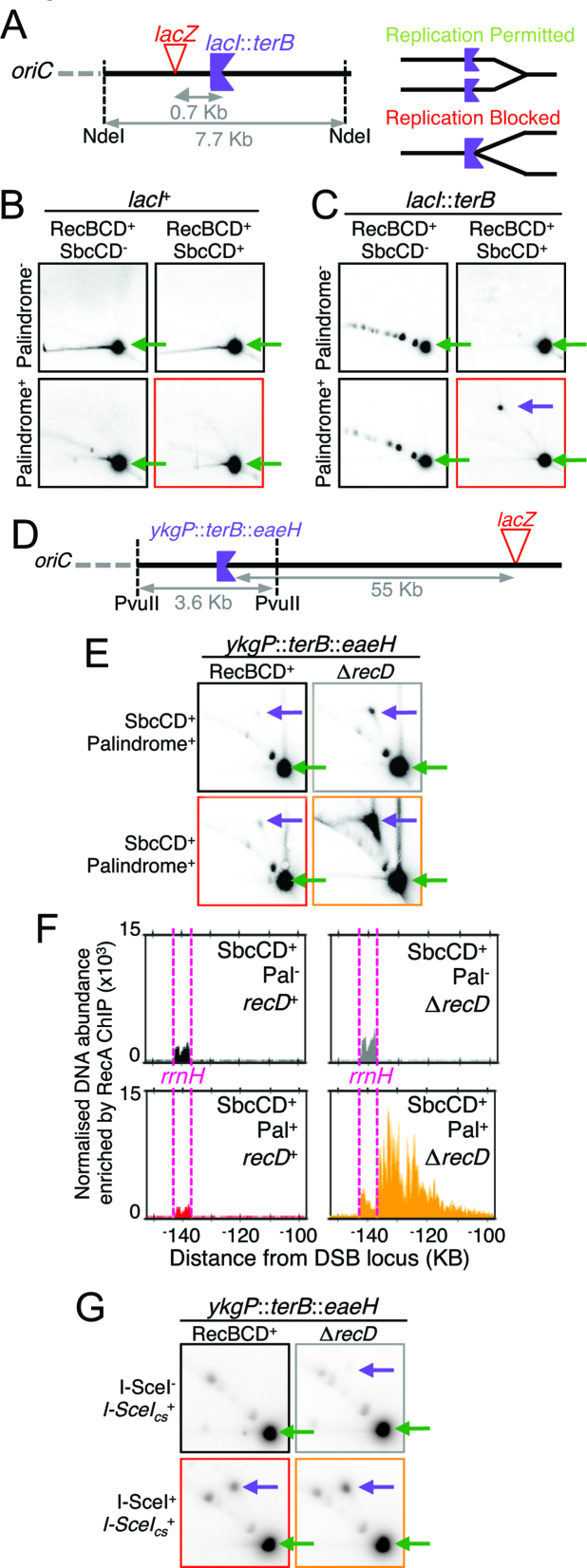
DNA double-strand break (DSB) repair is critical for cell survival. A diverse range of organisms from bacteria to humans rely on homologous recombination for accurate DSB repair. This requires both coordinate action of the two ends of a DSB and stringent control of the resultant DNA replication to prevent unwarranted DNA amplification and aneuploidy. In Escherichia coli, RecBCD enzyme is responsible for the initial steps of homologous recombination. Previous work has revealed recD mutants to be nuclease defective but recombination proficient. Despite this proficiency, we show here that a recD null mutant is defective for the repair of a two-ended DSB and that this defect is associated with unregulated chromosome amplification and defective chromosome segregation. Our results demonstrate that RecBCD plays an important role in avoiding this amplification by coordinating the two recombining ends in a manner that prevents divergent replication forks progressing away from the DSB site.
DNA 双链断裂 (DSB) 修复对于细胞存活至关重要。从细菌到人类的各种生物体都依赖同源重组来进行准确的 DSB 修复。这需要 DSB 两端的协调作用,以及对所得 DNA 复制的严格控制,以防止不必要的 DNA 扩增和非整倍体。在大肠杆菌中,RecBCD 酶负责同源重组的初始步骤。先前的工作表明 recD 突变体是核酶缺陷但重组功能正常。尽管有这种功能,我们在这里表明,recD 缺失突变体在修复双端 DSB 方面存在缺陷,这种缺陷与不受调控的染色体扩增和染色体分离缺陷有关。我们的结果表明,RecBCD 通过协调两个重组末端,防止发散复制叉远离 DSB 位点,从而在避免这种扩增方面发挥重要作用。