Cancer Biology Program, Stanford University School of Medicine, Stanford, CA 94305, USA; http://med.stanford.edu/curtislab.html.
Cancer Biology Program, Stanford University School of Medicine, Stanford, CA 94305, USA; Stanford Cancer Institute, Stanford University School of Medicine, Stanford, CA 94305, USA; Department of Medicine, Division of Oncology, Stanford University School of Medicine, Stanford, CA 94305, USA; Department of Genetics, Stanford University School of Medicine, Stanford, CA 94305, USA; http://med.stanford.edu/curtislab.html.
Trends Genet. 2018 Aug;34(8):639-651. doi: 10.1016/j.tig.2018.05.007. Epub 2018 Jun 11.
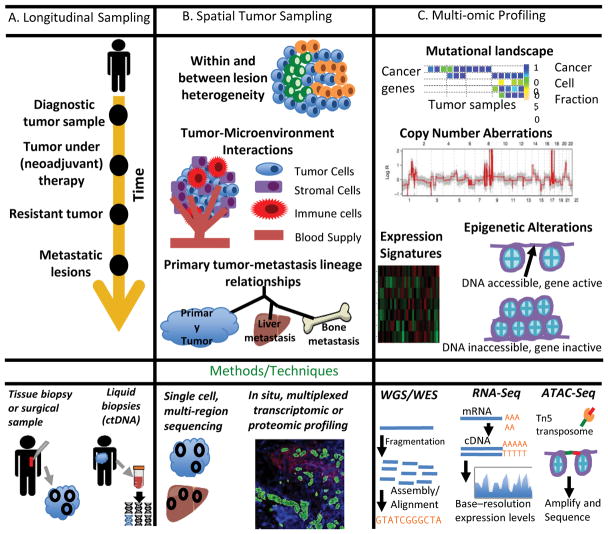
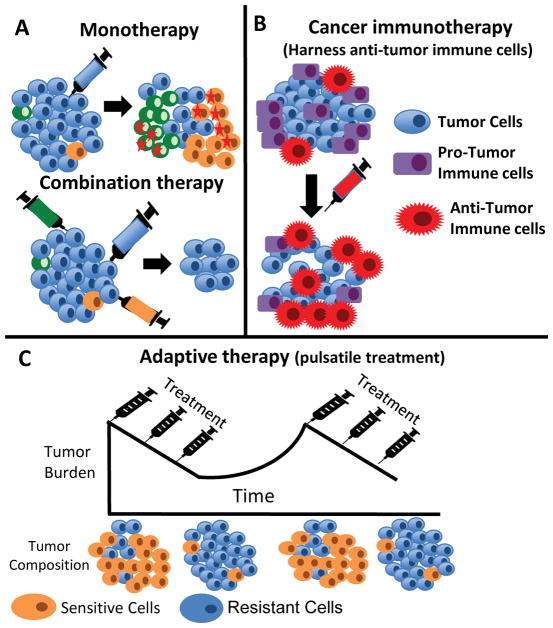
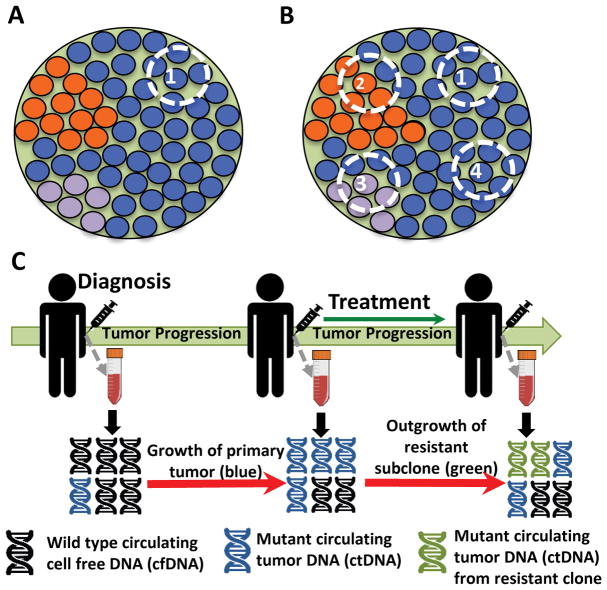
High-throughput sequencing can be used to measure changes in tumor composition across space and time. Specifically, comparisons of pre- and post-treatment samples can reveal the underlying clonal dynamics and resistance mechanisms. Here, we discuss evidence for distinct modes of tumor evolution and their implications for therapeutic strategies. In addition, we consider the utility of spatial tissue sampling schemes, single-cell analysis, and circulating tumor DNA to track tumor evolution and the emergence of resistance, as well as approaches that seek to forestall resistance by targeting tumor evolution. Ultimately, characterization of the (epi)genomic, transcriptomic, and phenotypic changes that occur during tumor progression coupled with computational and mathematical modeling of tumor evolutionary dynamics may inform personalized treatment strategies.
高通量测序可用于测量肿瘤在空间和时间上的组成变化。具体来说,对治疗前后样本的比较可以揭示潜在的克隆动力学和耐药机制。在这里,我们讨论了肿瘤进化的不同模式及其对治疗策略的意义。此外,我们还考虑了空间组织取样方案、单细胞分析和循环肿瘤 DNA 在跟踪肿瘤进化和耐药性出现方面的应用,以及通过针对肿瘤进化来预防耐药性的方法。最终,对肿瘤进展过程中发生的(表观)基因组、转录组和表型变化的特征描述,以及对肿瘤进化动力学的计算和数学建模,可能为个性化治疗策略提供信息。