National Veterinary Institute, Technical University of Denmark, Kemitorvet, 2800, Lyngby, Denmark.
Sci Rep. 2018 Jun 14;8(1):9100. doi: 10.1038/s41598-018-27518-7.
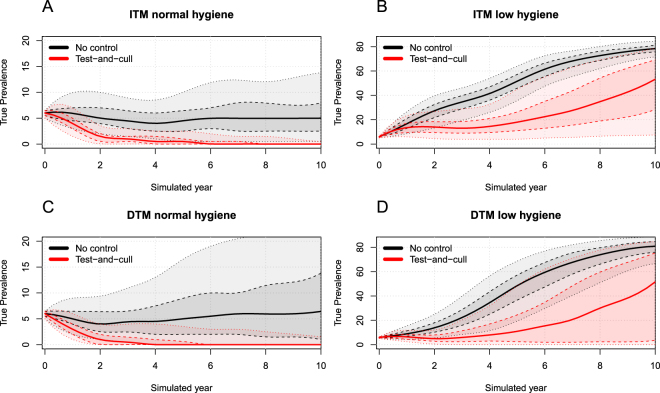
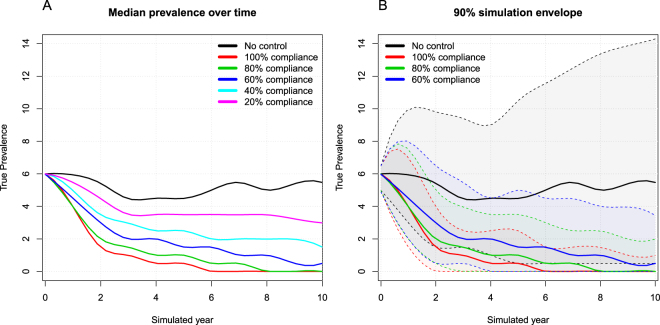
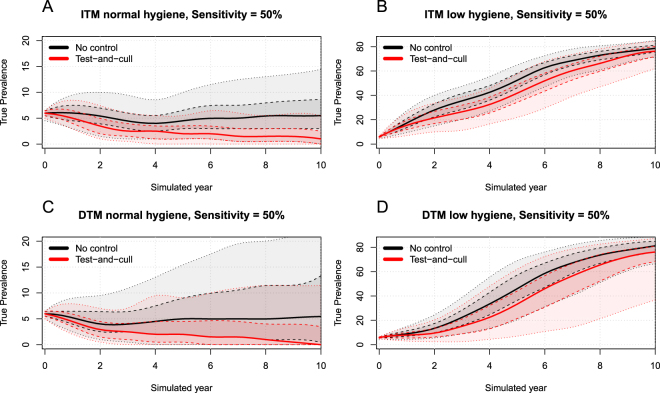
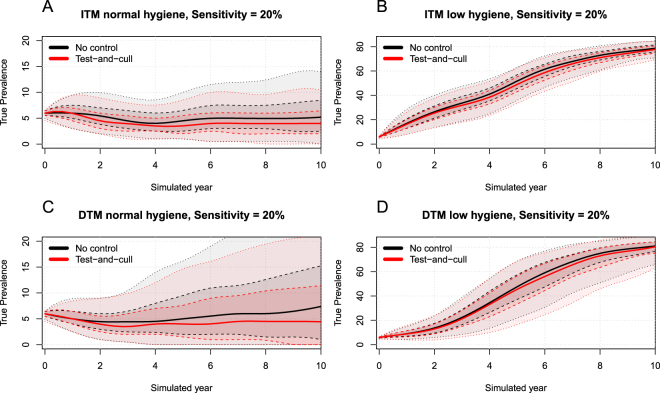
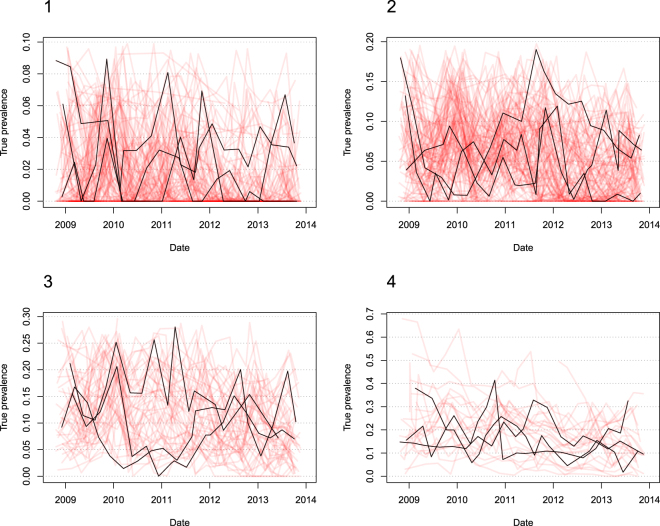
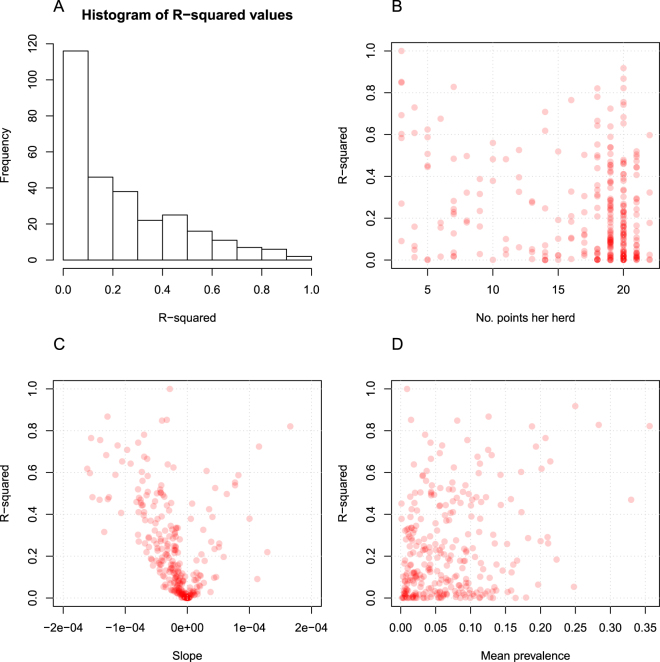
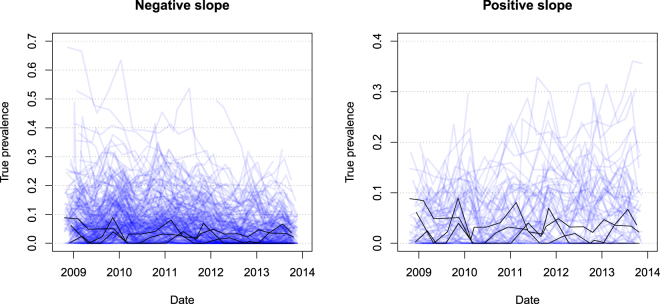
Simulation models can predict the outcome of different strategies for the control and eradication of paratuberculosis (PTB) in dairy herds. Two main transmission modes have previously been used to simulate the spread of PTB: direct (contact between animals) and indirect (through the environment). In addition, previous models were calibrated to either low or high within-herd prevalence levels, which we refer to as normal and low hygiene levels, respectively. We simulated both direct and indirect transmission with the same model in both normal and low hygiene level scenarios. The effectiveness of a test-and-cull strategy was dependent on the calibration level of the simulation model, and eradication occurred less frequently with the more biologically plausible indirect transmission mode. The results were compared to within-herd prevalence records from 314 dairy herds. The prevalence in 50% of the herds varied less than 0.9% per year on average, and less than 4% in 90% of the herds. We therefore conclude that the normal-hygiene scenario best describes most dairy herds in Denmark. Finally, we simulated different levels of farmer compliance with a test-and-cull strategy and found that a 60% compliance level was not sufficient to reach eradication within 10 years.
模拟模型可以预测不同的控制和根除奶牛结核病 (PTB) 策略的结果。以前曾使用两种主要的传播模式来模拟 PTB 的传播:直接(动物之间的接触)和间接(通过环境)。此外,以前的模型是针对低或高的 herd 内流行率水平进行校准的,我们分别将其称为正常和低卫生水平。我们在正常和低卫生水平的情况下使用相同的模型模拟了直接和间接传播。检测和淘汰策略的有效性取决于模拟模型的校准水平,并且在更符合生物学原理的间接传播模式下,根除发生的频率较低。结果与来自 314 个奶牛场的 herd 内流行率记录进行了比较。在 50%的 herd 中,平均每年的流行率变化小于 0.9%,在 90%的 herd 中,流行率变化小于 4%。因此,我们得出结论,正常卫生条件情景最能描述丹麦大多数奶牛场的情况。最后,我们模拟了农民对检测和淘汰策略的不同遵守程度,并发现 60%的遵守水平不足以在 10 年内实现根除。