The Hormel Institute, University of Minnesota, Austin, MN, 55912, USA.
China-US Hormel Cancer Institute, 45008, Henan, China.
Oncogene. 2018 Oct;37(42):5633-5647. doi: 10.1038/s41388-018-0350-9. Epub 2018 Jun 14.
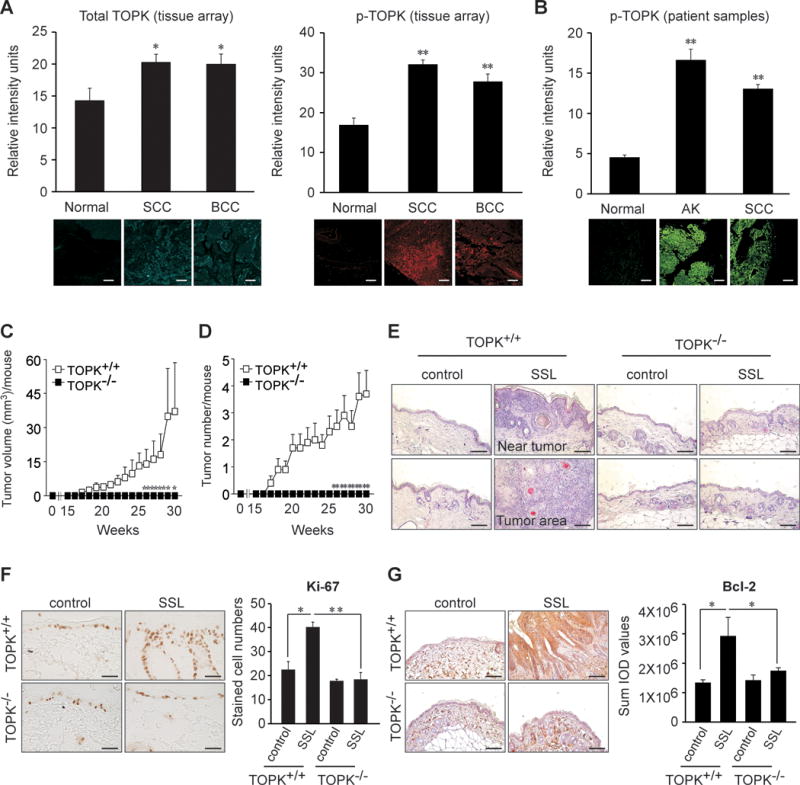
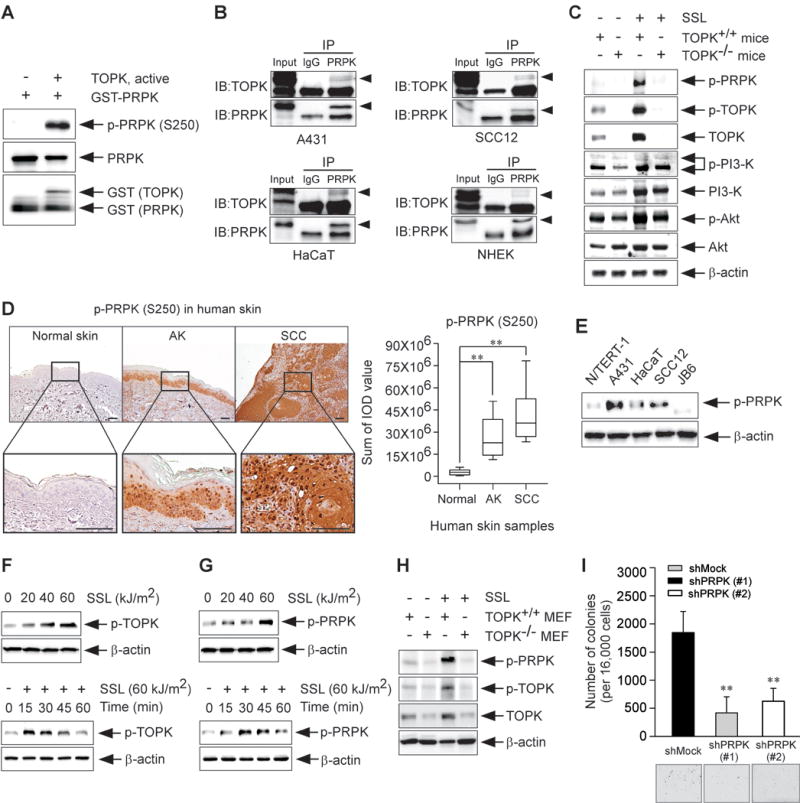
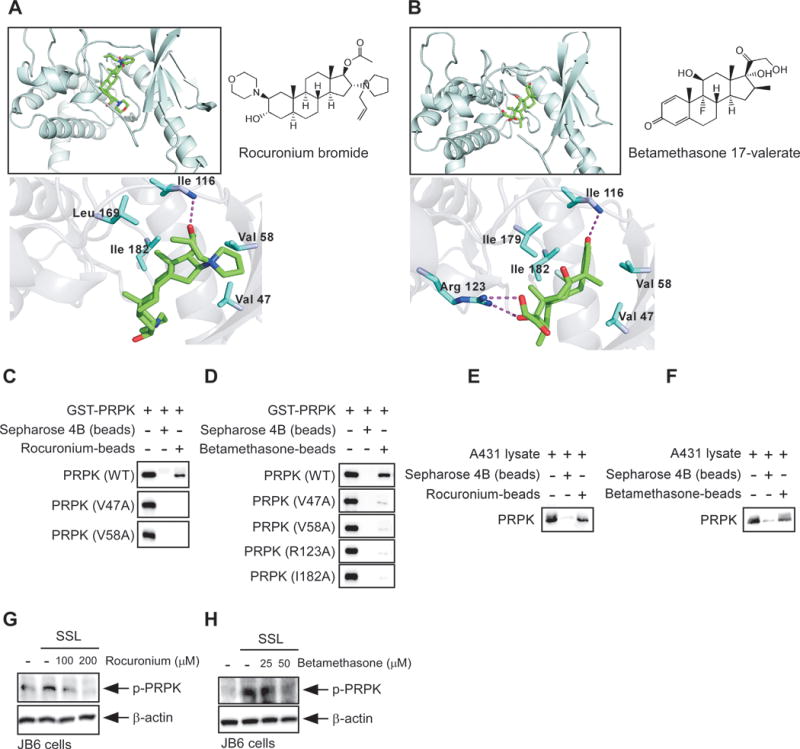
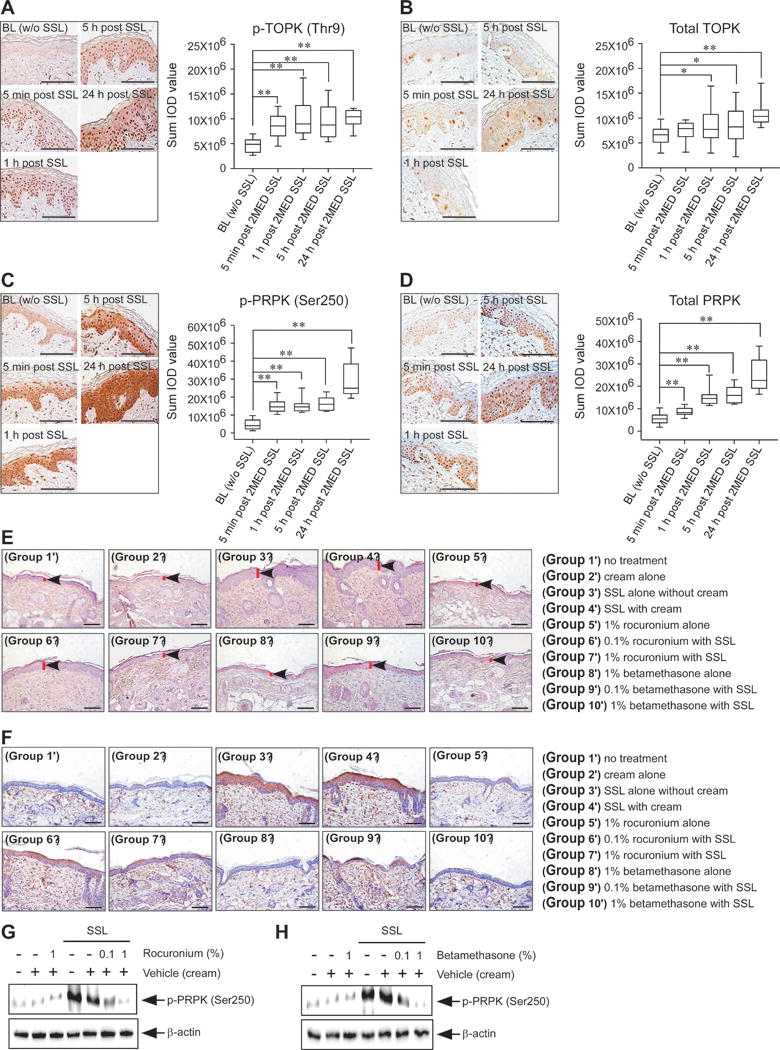
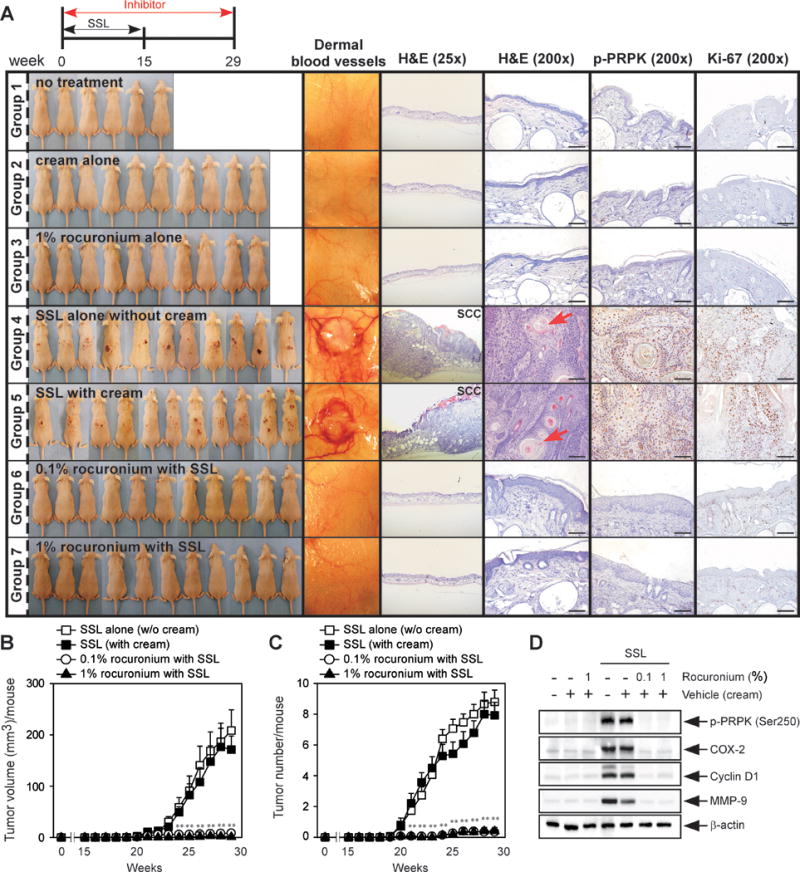
Solar ultraviolet (sUV) irradiation is a major environmental carcinogen that can cause inflammation and skin cancer. The costs and morbidity associated with skin cancer are increasing, and therefore identifying molecules that can help prevent skin carcinogenesis is important. In this study, we identified the p53-related protein kinase (PRPK) as a novel oncogenic protein that is phosphorylated by the T-LAK cell-originated protein kinase (TOPK). Knockdown of TOPK inhibited PRPK phosphorylation and conferred resistance to solar-simulated light (SSL)-induced skin carcinogenesis in mouse models. In the clinic, acute SSL irradiation significantly increased epidermal thickness as well as total protein and phosphorylation levels of TOPK and PRPK in human skin tissues. We identified two PRPK inhibitors, FDA-approved rocuronium bromide (Zemuron) or betamethasone 17-valerate (Betaderm) that could attenuate TOPK-dependent PRPK signaling. Importantly, topical application of either rocuronium bromide or betamethasone decreased SSL-induced epidermal hyperplasia, neovascularization, and cutaneous squamous cell carcinoma (cSCC) development in SKH1 (Crl: SKH1-Hr) hairless mice by inhibiting PRPK activation, and also reduced expression of the proliferation and oncogenesis markers, COX-2, cyclin D1, and MMP-9. This study is the first to demonstrate that targeting PRPK could be useful against sUV-induced cSCC development.
太阳紫外线(sUV)辐射是一种主要的环境致癌因素,可引起炎症和皮肤癌。与皮肤癌相关的成本和发病率正在增加,因此确定有助于预防皮肤癌发生的分子非常重要。在这项研究中,我们鉴定出 p53 相关蛋白激酶(PRPK)是一种新型致癌蛋白,可被 T-LAK 细胞起源的蛋白激酶(TOPK)磷酸化。TOPK 的敲低抑制了 PRPK 的磷酸化,并赋予了对小鼠模型中模拟太阳光(SSL)诱导的皮肤致癌作用的抗性。在临床上,急性 SSL 照射显著增加了人皮肤组织中表皮厚度以及 TOPK 和 PRPK 的总蛋白和磷酸化水平。我们鉴定出两种 PRPK 抑制剂,即已批准的 FDA 药物罗库溴铵(Zemuron)或倍他米松 17-戊酸酯(Betaderm),可减弱依赖于 TOPK 的 PRPK 信号。重要的是,罗库溴铵或倍他米松的局部应用通过抑制 PRPK 激活,减少了 SSL 诱导的 SKH1(Crl:SKH1-Hr)无毛小鼠的表皮过度增生、新血管形成和皮肤鳞状细胞癌(cSCC)发展,并降低了增殖和致癌标志物 COX-2、细胞周期蛋白 D1 和 MMP-9 的表达。这项研究首次证明靶向 PRPK 可能对 sUV 诱导的 cSCC 发展有用。