Research Institute of Molecular Pathology (IMP), Vienna Biocenter (VBC), Dr. Bohr Gasse 7, 1030, Vienna, Austria.
Division of Neurophysiology and Neuropharmacology, Centre for Physiology and Pharmacology, Medical Univ. Vienna, Schwarzspanierstrasse 17, 1090, Vienna, Austria.
Mol Psychiatry. 2020 Feb;25(2):428-441. doi: 10.1038/s41380-018-0089-2. Epub 2018 Jun 14.
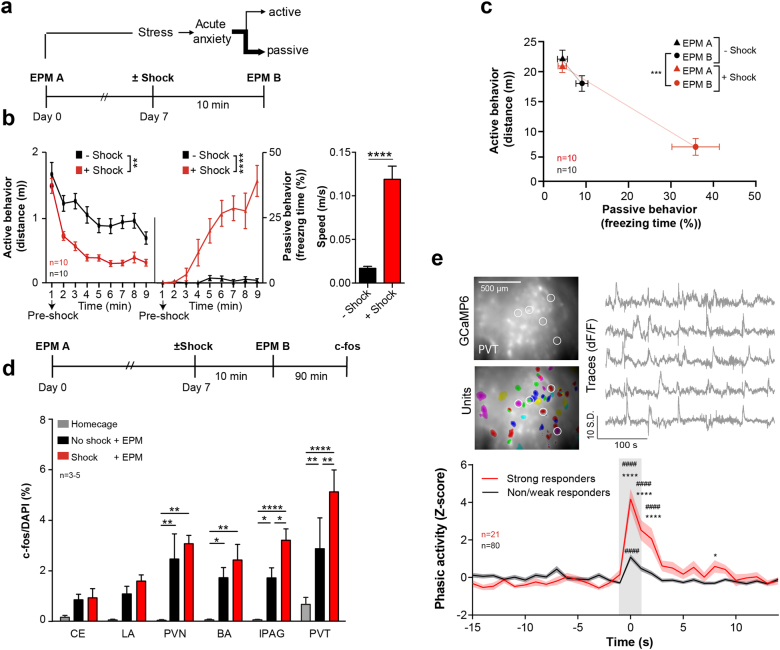
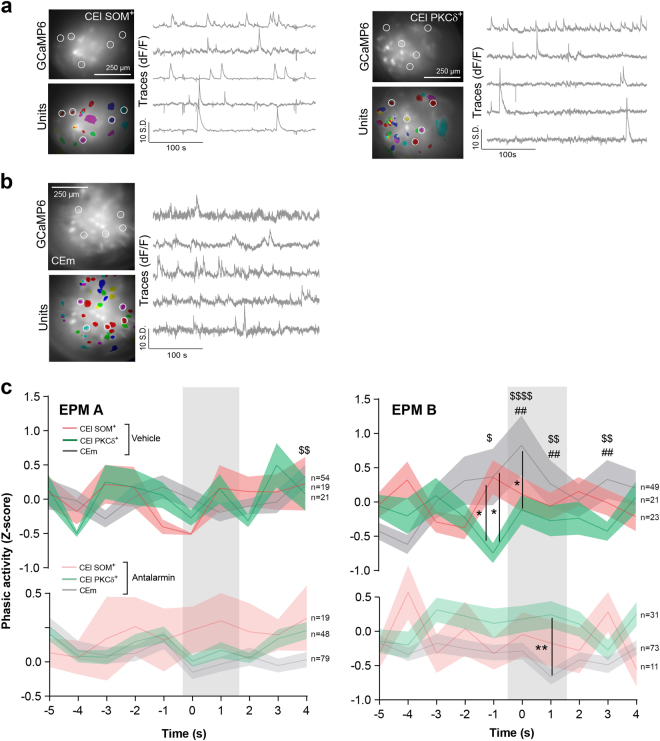
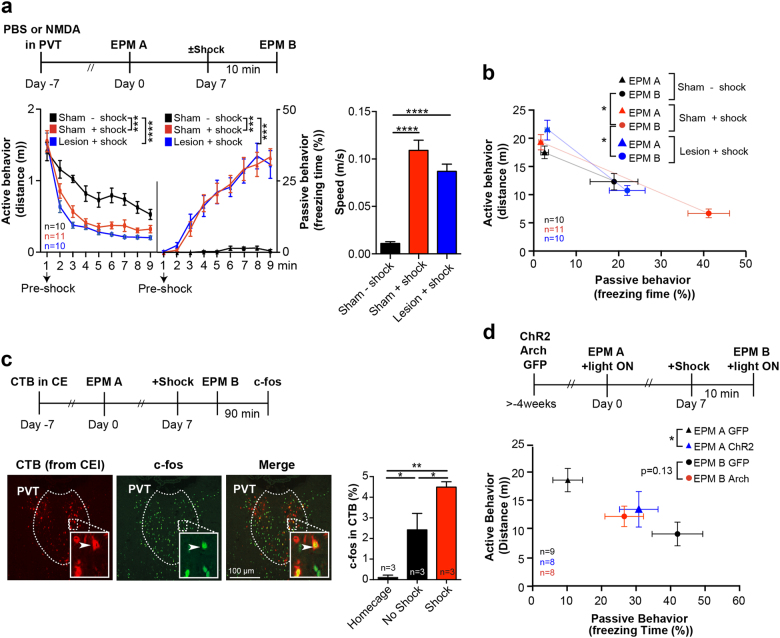
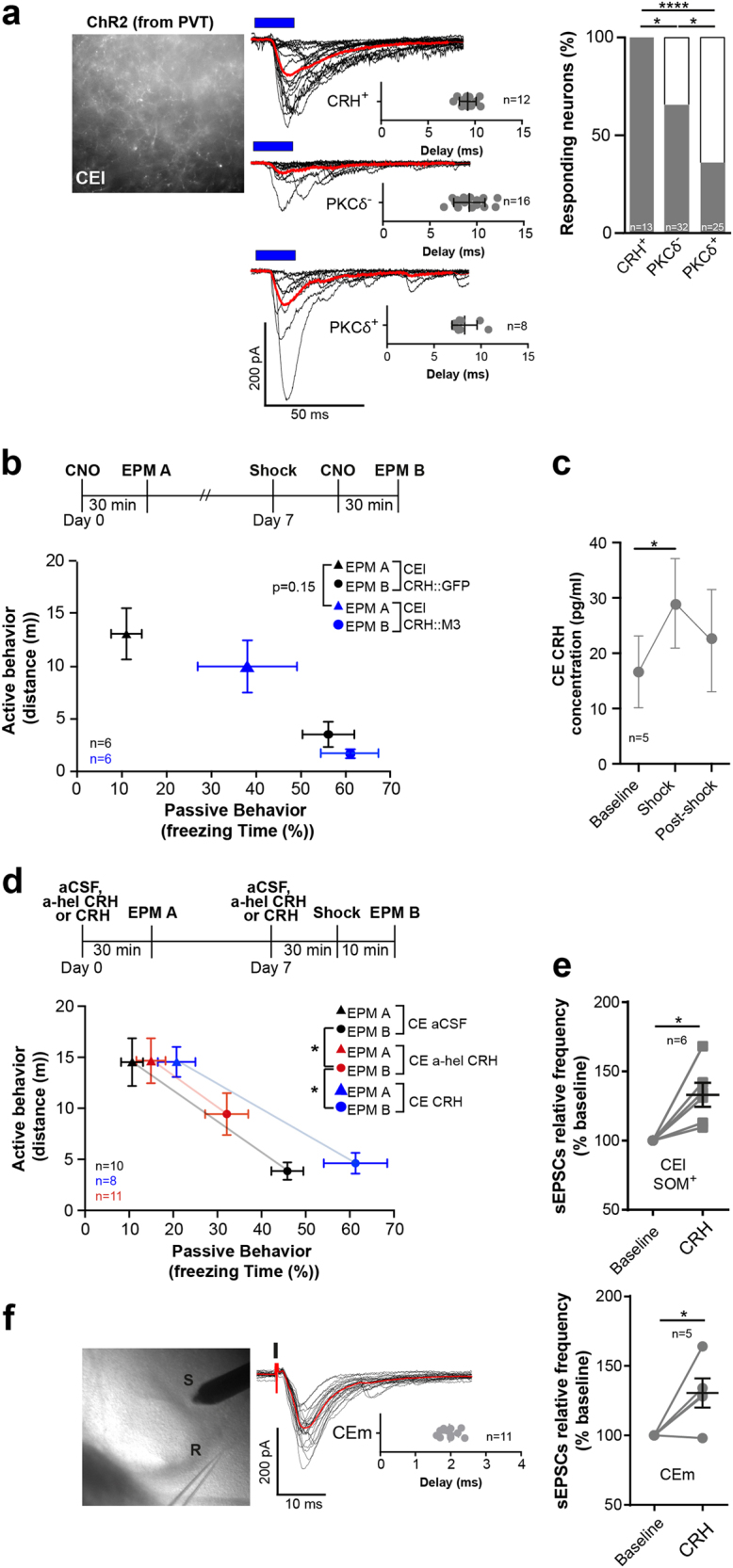
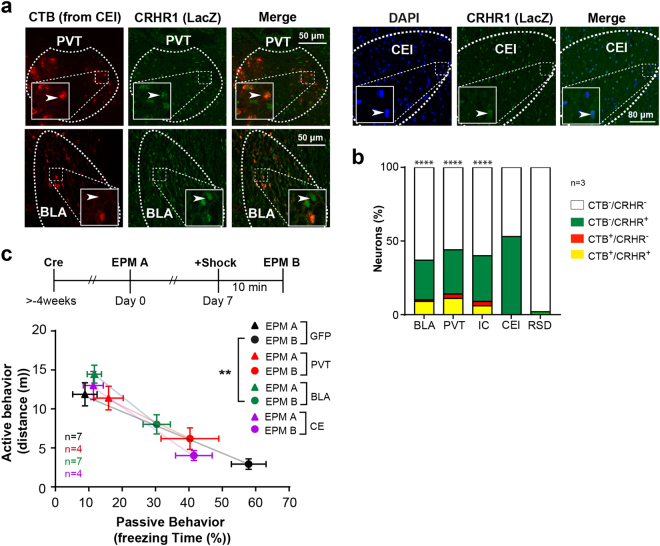
Survival relies on optimizing behavioral responses through experience. Animals often react to acute stress by switching to passive behavioral responses when coping with environmental challenge. Despite recent advances in dissecting mammalian circuitry for Pavlovian fear, the neuronal basis underlying this form of non-Pavlovian anxiety-related behavioral plasticity remains poorly understood. Here, we report that aversive experience recruits the posterior paraventricular thalamus (PVT) and corticotropin-releasing hormone (CRH) and sensitizes a Pavlovian fear circuit to promote passive responding. Site-specific lesions and optogenetic manipulations reveal that PVT-to-central amygdala (CE) projections activate anxiogenic neuronal populations in the CE that release local CRH in response to acute stress. CRH potentiates basolateral (BLA)-CE connectivity and antagonizes inhibitory gating of CE output, a mechanism linked to Pavlovian fear, to facilitate the switch from active to passive behavior. Thus, PVT-amygdala fear circuitry uses inhibitory gating in the CE as a shared dynamic motif, but relies on different cellular mechanisms (postsynaptic long-term potentiation vs. presynaptic facilitation), to multiplex active/passive response bias in Pavlovian and non-Pavlovian behavioral plasticity. These results establish a framework promoting stress-induced passive responding, which might contribute to passive emotional coping seen in human fear- and anxiety-related disorders.
生存依赖于通过经验优化行为反应。动物在应对环境挑战时,常常通过切换到被动行为反应来应对急性应激。尽管近年来在解析哺乳动物的条件恐惧回路方面取得了进展,但这种非条件性焦虑相关行为可塑性的神经基础仍知之甚少。在这里,我们报告说,厌恶体验会招募后室旁核(PVT)和促肾上腺皮质激素释放激素(CRH),并使条件恐惧回路敏感化,以促进被动反应。特定部位的损伤和光遗传学操作表明,PVT 到杏仁中央核(CE)的投射激活了 CE 中的焦虑神经元群,这些神经元群在急性应激时释放局部 CRH。CRH 增强了基底外侧杏仁核(BLA)-CE 的连接,并拮抗了 CE 输出的抑制性门控,这一机制与条件性恐惧有关,有助于从主动行为到被动行为的转变。因此,PVT-杏仁核恐惧回路将 CE 中的抑制性门控用作共享的动态基元,但依赖于不同的细胞机制(突触后长时程增强与突触前易化),以在条件性和非条件性行为可塑性中实现主动/被动反应偏向的复用。这些结果建立了一个促进应激诱导的被动反应的框架,这可能有助于人类恐惧和焦虑相关障碍中观察到的被动情绪应对。