Wagle John P, Carroll Kevin M, Cunanan Aaron J, Taber Christopher B, Wetmore Alexander, Bingham Garett E, DeWeese Brad H, Sato Kimitake, Stuart Charles A, Stone Michael H
Center of Excellence for Sport Science and Coach Education, Department of Sport, Exercise, Recreation, and Kinesiology, East Tennessee State University, Johnson City, TN 37601, USA.
Department of Physical Therapy and Human Movement Science, Sacred Heart University, Fairfield, CT 06825, USA.
Sports (Basel). 2017 Nov 21;5(4):88. doi: 10.3390/sports5040088.
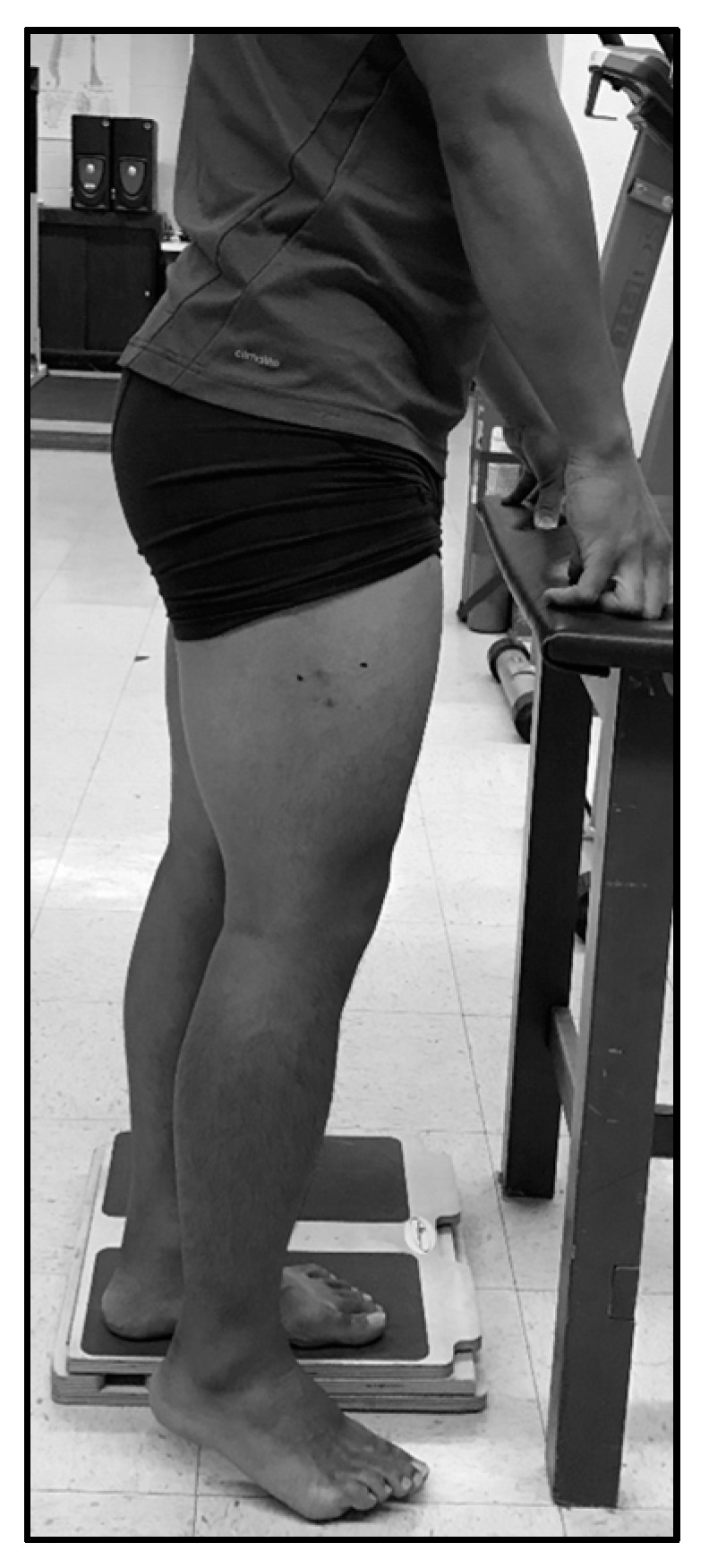
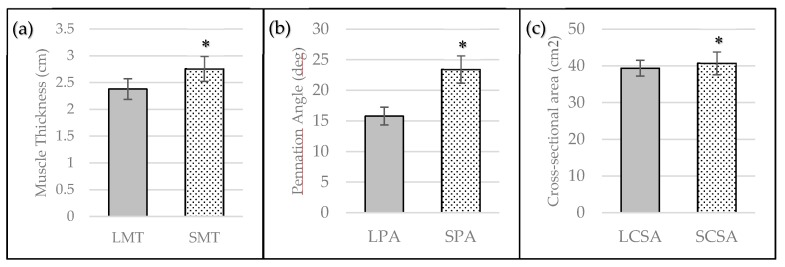
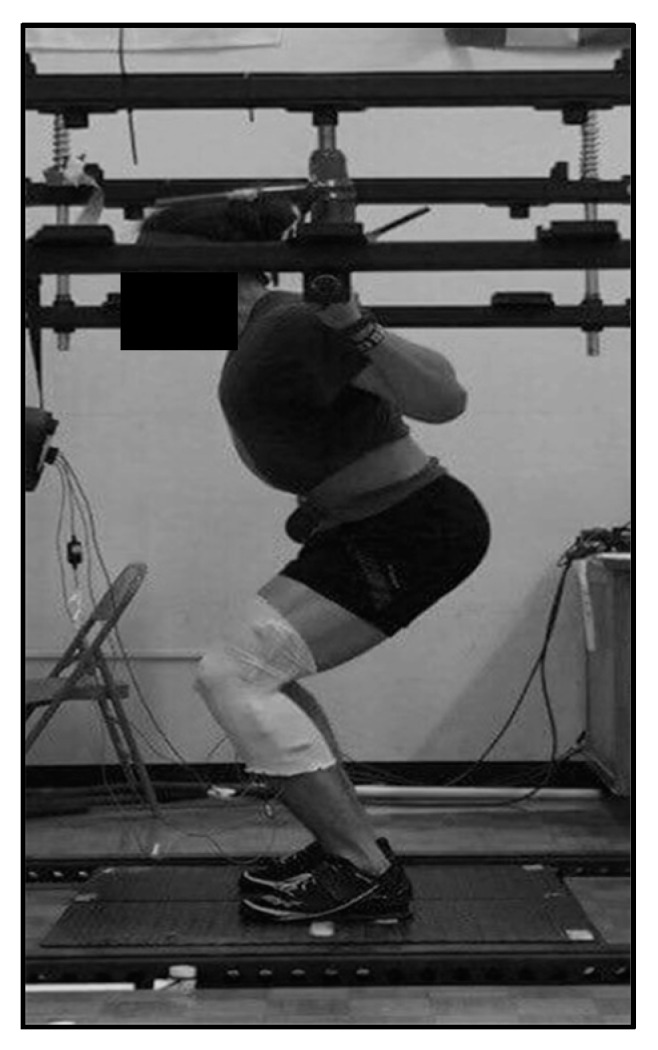
The purpose of the current study was (1) to examine the differences between standing and lying measures of vastus lateralis (VL), muscle thickness (MT), pennation angle (PA), and cross-sectional area (CSA) using ultrasonography; and (2) to explore the relationships between lying and standing measures with isometric and dynamic assessments of force production-specifically peak force, rate of force development (RFD), impulse, and one-repetition maximum back squat. Fourteen resistance-trained subjects (age = 26.8 ± 4.0 years, height = 181.4 ± 6.0 cm, body mass = 89.8 ± 10.7 kg, back squat to body mass ratio = 1.84 ± 0.34) agreed to participate. Lying and standing ultrasonography images of the right VL were collected following 48 hours of rest. Isometric squat assessments followed ultrasonography, and were performed on force platforms with data used to determine isometric peak force (IPF), as well as RFD and impulse at various time points. Forty-eight hours later, one-repetition maximum back squats were performed by each subject. Paired-samples t-tests revealed statistically significant differences between standing and lying measurements of MT ( < 0.001), PA ( < 0.001), and CSA ( ≤ 0.05), with standing values larger in all cases. Further, standing measures were correlated more strongly and abundantly to isometric and dynamic performance. These results suggest that if practitioners intend to gain insight into strength-power potential based on ultrasonography measurements, performing the measurement collection with the athlete in a standing posture may be preferred.
(1)使用超声检查来检验股外侧肌(VL)的站立和卧位测量指标(肌肉厚度[MT]、羽状角[PA]和横截面积[CSA])之间的差异;(2)探讨卧位和站立测量指标与力量产生的等长和动态评估(具体为峰值力量、力量发展速率[RFD]、冲量和一次重复最大重量后深蹲)之间的关系。14名经过抗阻训练的受试者(年龄 = 26.8 ± 4.0岁,身高 = 181.4 ± 6.0厘米,体重 = 89.8 ± 10.7千克,后深蹲与体重比 = 1.84 ± 0.34)同意参与研究。在休息48小时后,采集右侧股外侧肌的卧位和站立位超声图像。超声检查后进行等长深蹲评估,在测力平台上进行,所获数据用于确定等长峰值力量(IPF)以及不同时间点的RFD和冲量。48小时后,每位受试者进行一次重复最大重量后深蹲。配对样本t检验显示,MT(< 0.001)、PA(< 0.001)和CSA(≤ 0.05)的站立和卧位测量值之间存在统计学显著差异,所有情况下站立值均更大。此外,站立测量指标与等长和动态表现的相关性更强且更丰富。这些结果表明,如果从业者打算基于超声测量深入了解力量 - 功率潜力,那么让运动员以站立姿势进行测量采集可能更为可取。