Gerłowska Justyna, Skrobas Urszula, Grabowska-Aleksandrowicz Katarzyna, Korchut Agnieszka, Szklener Sebastian, Szczęśniak-Stańczyk Dorota, Tzovaras Dimitrios, Rejdak Konrad
Faculty of Education and Psychology, Institute of Methodology and Psychological Diagnosis, UMCS, Lublin, Poland.
Department of Neurology, Medical University of Lublin, Lublin, Poland.
Front Neurol. 2018 Jun 1;9:392. doi: 10.3389/fneur.2018.00392. eCollection 2018.
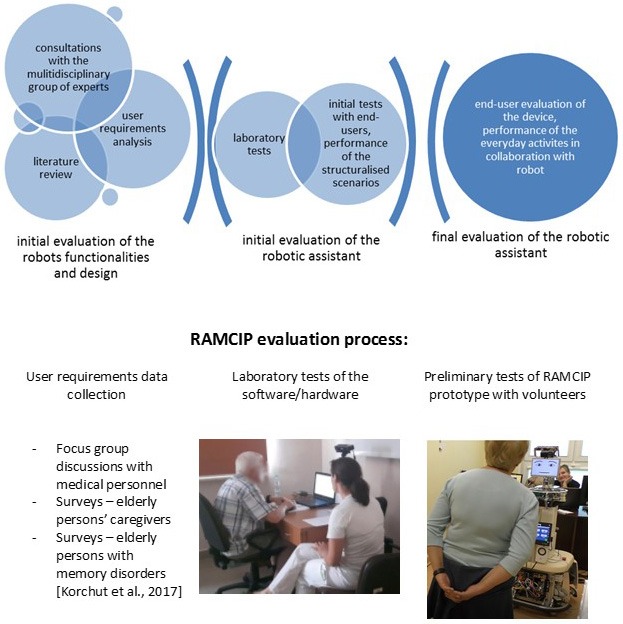
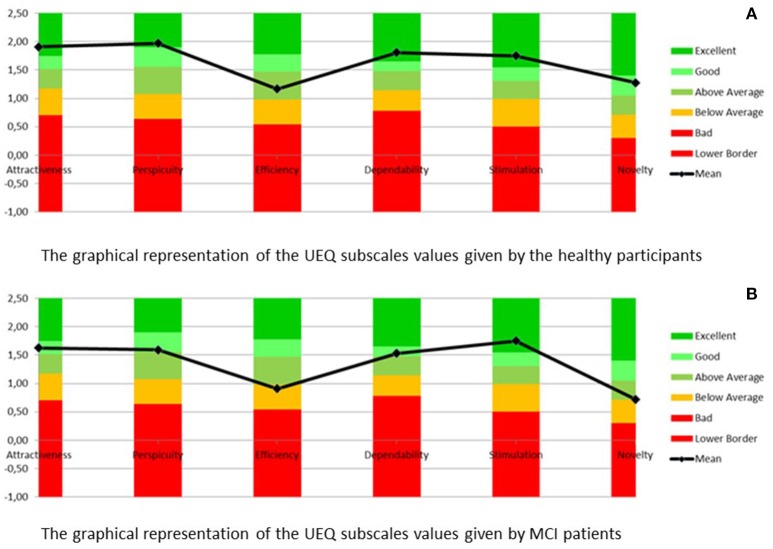
The aim of the present study is to present the results of the assessment of clinical application of the robotic assistant for patients suffering from mild cognitive impairments (MCI) and Alzheimer Disease (AD). The human-robot interaction (HRI) evaluation approach taken within the study is a novelty in the field of social robotics. The proposed assessment of the robotic functionalities are based on end-user perception of attractiveness, usability and potential societal impact of the device. The methods of evaluation applied consist of User Experience Questionnaire (UEQ), AttrakDiff and the societal impact inventory tailored for the project purposes. The prototype version of the Robotic Assistant for MCI patients at Home (RAMCIP) was tested in a semi-controlled environment at the Department of Neurology (Lublin, Poland). Eighteen elderly participants, 10 healthy and 8 MCI, performed everyday tasks and functions facilitated by RAMCIP. The tasks consisted of semi-structuralized scenarios like: medication intake, hazardous events prevention, and social interaction. No differences between the groups of subjects were observed in terms of perceived attractiveness, usability nor-societal impact of the device. The robotic assistant societal impact and attractiveness were highly assessed. The usability of the device was reported as neutral due to the short time of interaction.
本研究的目的是展示对患有轻度认知障碍(MCI)和阿尔茨海默病(AD)的患者使用机器人助手的临床应用评估结果。本研究采用的人机交互(HRI)评估方法在社交机器人领域是一项创新。对机器人功能的评估建议基于终端用户对设备的吸引力、可用性和潜在社会影响的认知。所应用的评估方法包括用户体验问卷(UEQ)、AttrakDiff以及为项目目的量身定制的社会影响清单。针对家中MCI患者的机器人助手(RAMCIP)的原型版本在波兰卢布林神经病学系的半控制环境中进行了测试。18名老年参与者,10名健康者和8名MCI患者,在RAMCIP的协助下执行日常任务和功能。任务包括半结构化场景,如:服药、预防危险事件和社交互动。在设备的吸引力、可用性和社会影响方面,未观察到受试者组之间存在差异。机器人助手的社会影响和吸引力得到了高度评价。由于交互时间较短,该设备的可用性报告为中性。