Warwick Clinical Trials Unit, Division of Health Sciences, University of Warwick, Coventry, CV4 7AL, UK.
Gloucestershire Care Services NHS Trust, 1010 Gloucester Business Park, Pioneer Avenue, Brockworth, Gloucester, GL, 3 4AW, UK.
BMC Health Serv Res. 2018 Jun 18;18(1):463. doi: 10.1186/s12913-018-3280-x.
Musculoskeletal shoulder problems are common after breast cancer treatment. There is some evidence to suggest that early postoperative exercise is safe and may improve shoulder function. We describe the development and delivery of a complex intervention for evaluation within a randomised controlled trial (RCT), designed to target prevention of musculoskeletal shoulder problems after breast cancer surgery (The Prevention of Shoulder Problems Trial; PROSPER).
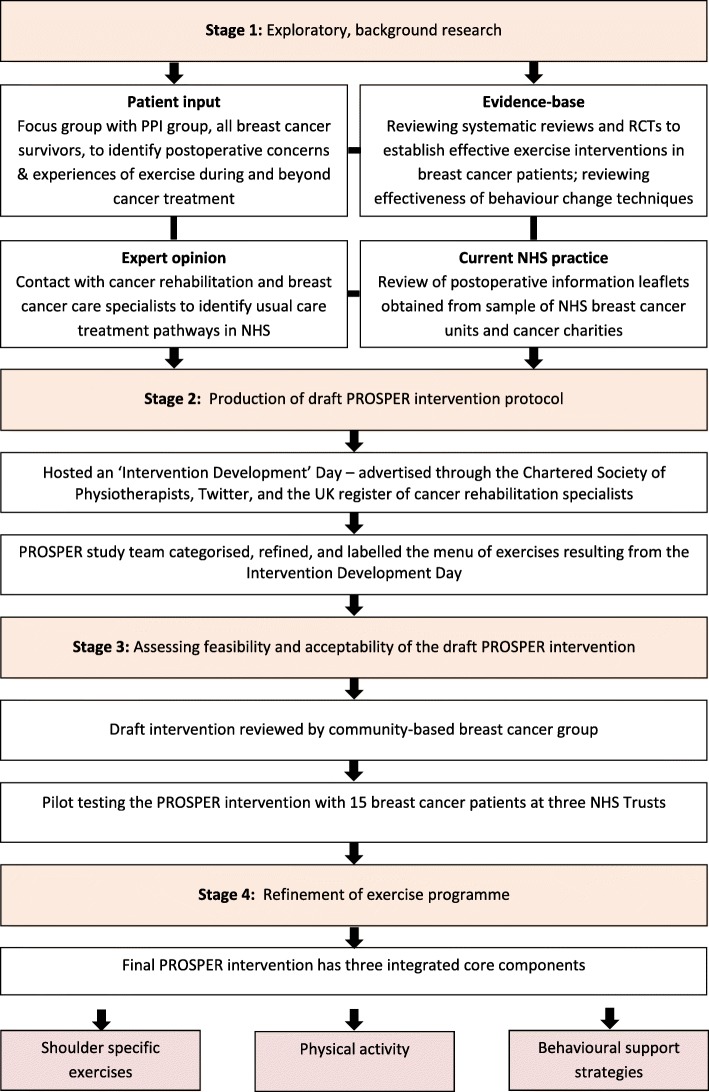
A pragmatic, multicentre RCT to compare the clinical and cost-effectiveness of best practice usual care versus a physiotherapy-led exercise and behavioural support intervention in women at high risk of shoulder problems after breast cancer treatment. PROSPER will recruit 350 women from approximately 15 UK centres, with follow-up at 6 and 12 months. The primary outcome is shoulder function at 12 months; secondary outcomes include postoperative pain, health related quality of life, adverse events and healthcare resource use. A multi-phased approach was used to develop the PROSPER intervention which was underpinned by existing evidence and modified for implementation after input from clinical experts and women with breast cancer. The intervention was tested and refined further after qualitative interviews with patients newly diagnosed with breast cancer; a pilot RCT was then conducted at three UK clinical centres.
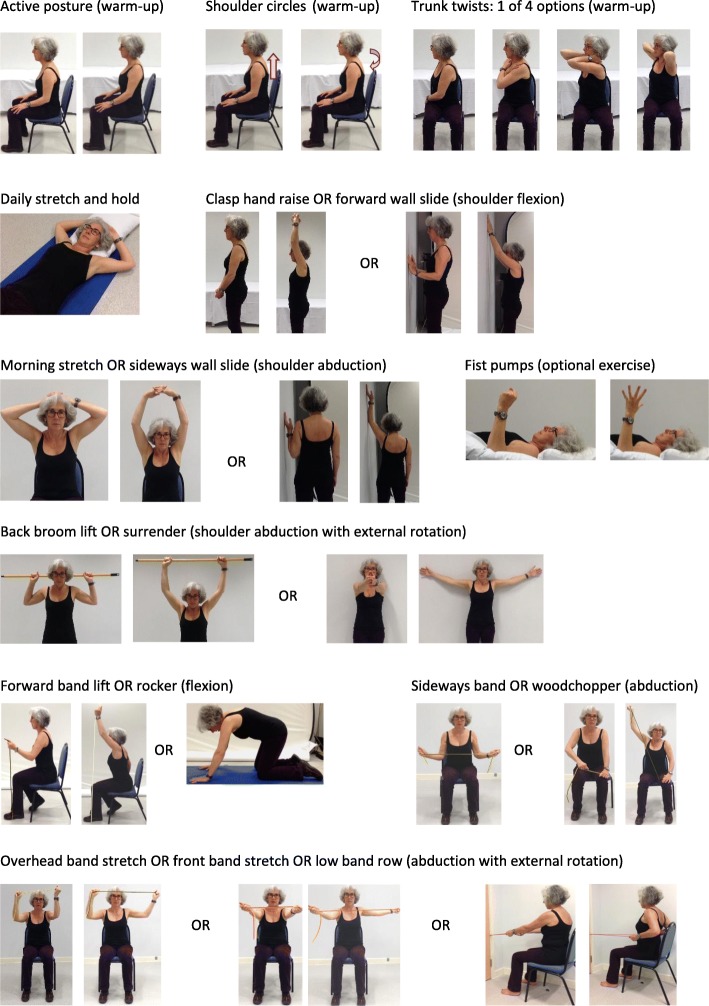
The PROSPER intervention incorporates three main components: shoulder-specific exercises targeting range of movement and strength; general physical activity; and behavioural strategies to encourage adherence and support exercise behaviour. The final PROSPER intervention is fully manualised with clear, documented pathways for clinical assessment, exercise prescription, use of behavioural strategies, and with guidance for treatment of postoperative complications. This paper adheres to TIDieR and CERT recommendations for the transparent, comprehensive and explicit reporting of complex interventions.
International Standard Randomised Controlled Trial Number: ISRCTN 35358984 .
乳腺癌治疗后常出现肌肉骨骼肩部问题。有证据表明,早期术后运动是安全的,并且可能改善肩部功能。我们描述了一种复杂干预措施的制定和实施,以便在随机对照试验(RCT)中进行评估,旨在针对乳腺癌手术后肌肉骨骼肩部问题进行预防(预防肩部问题试验;PROSPER)。
一项实用的、多中心 RCT,比较最佳实践常规护理与物理治疗主导的运动和行为支持干预在乳腺癌治疗后肩部问题高风险女性中的临床和成本效益。PROSPER 将从大约 15 个英国中心招募 350 名女性,在 6 个月和 12 个月进行随访。主要结局是 12 个月时的肩部功能;次要结局包括术后疼痛、健康相关生活质量、不良事件和医疗保健资源使用。采用多阶段方法制定 PROSPER 干预措施,该措施以现有证据为基础,并在临床专家和乳腺癌患者的意见下进行修改,以便实施。在与新诊断为乳腺癌的患者进行定性访谈后,进一步对干预措施进行了测试和完善;然后在三个英国临床中心进行了试点 RCT。
PROSPER 干预措施包括三个主要部分:针对活动范围和力量的肩部特定运动;一般身体活动;以及鼓励坚持和支持运动行为的行为策略。最终的 PROSPER 干预措施完全手册化,具有明确的临床评估、运动处方、行为策略使用和术后并发症治疗的记录路径。本文遵循 TIDieR 和 CERT 建议,对复杂干预措施进行透明、全面和明确的报告。
国际标准随机对照试验编号:ISRCTN 35358984。