Department of Experimental Pharmacology and Toxicology, University Medical Center Hamburg-Eppendorf, Martinistrasse 52, 20246, Hamburg, Germany.
Core Facility Stem Cells, University Medical Center Hamburg-Eppendorf, Martinistrasse 52, 20246, Hamburg, Germany.
Stem Cell Res Ther. 2018 Jun 18;9(1):165. doi: 10.1186/s13287-018-0893-2.
Human induced pluripotent stem (iPS) cells have revolutionised research and spark hopes for future tissue replacement therapies. To obtain high cell numbers, iPS cells can be expanded indefinitely. However, as long-term expansion can compromise cell integrity and quality, we set out to assess potential reduction of clonal diversity by inherent growth imbalances.
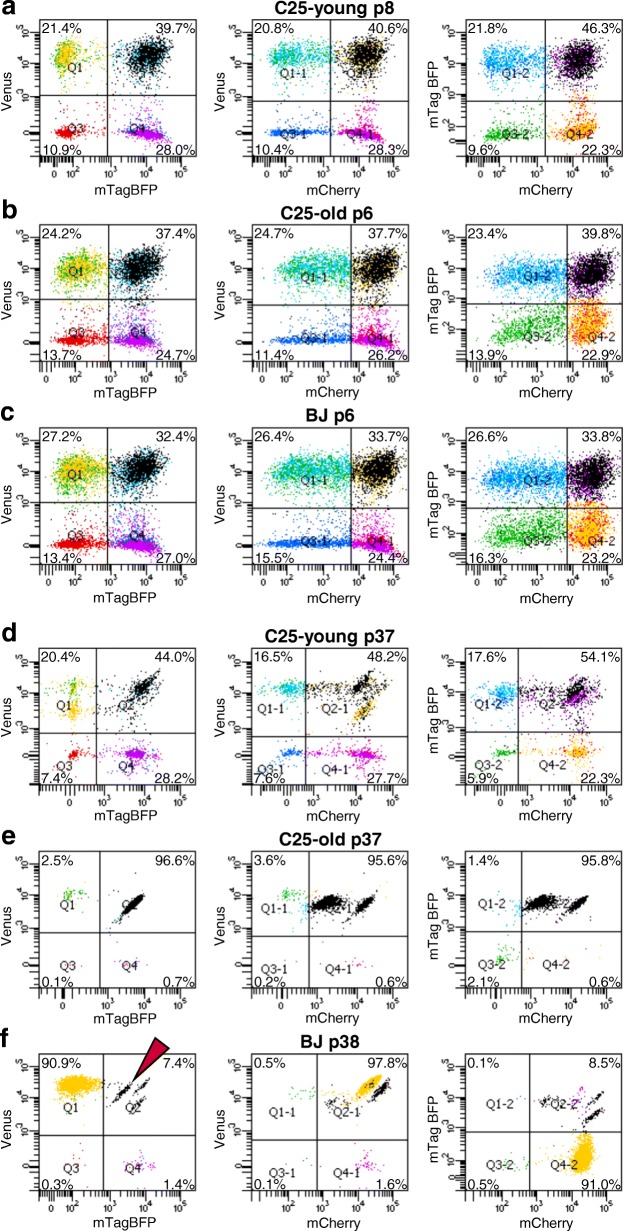
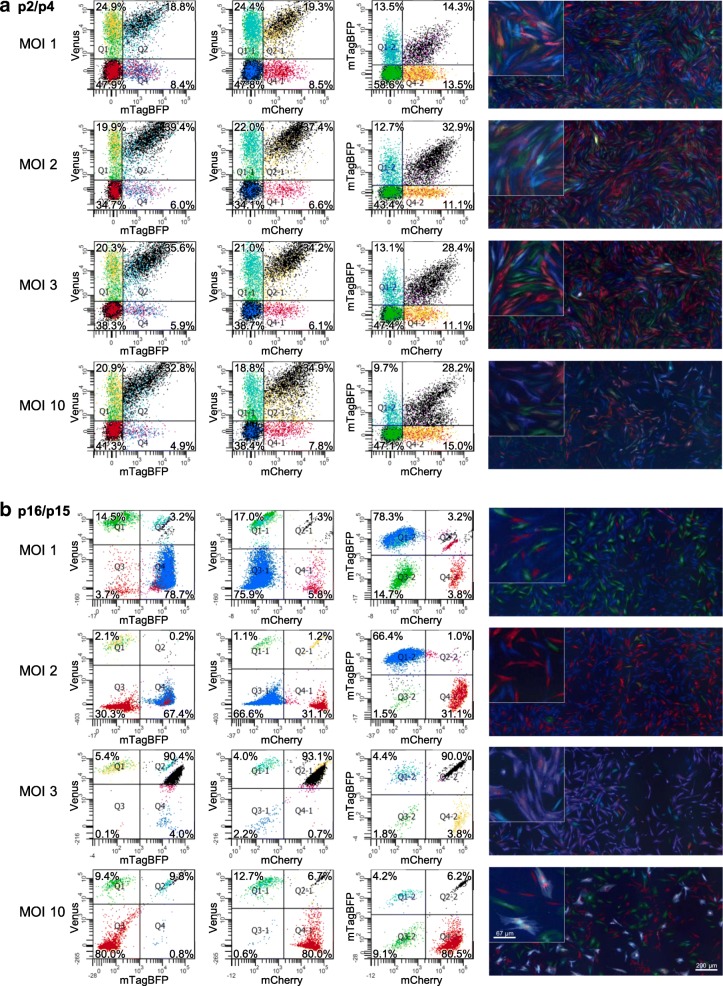
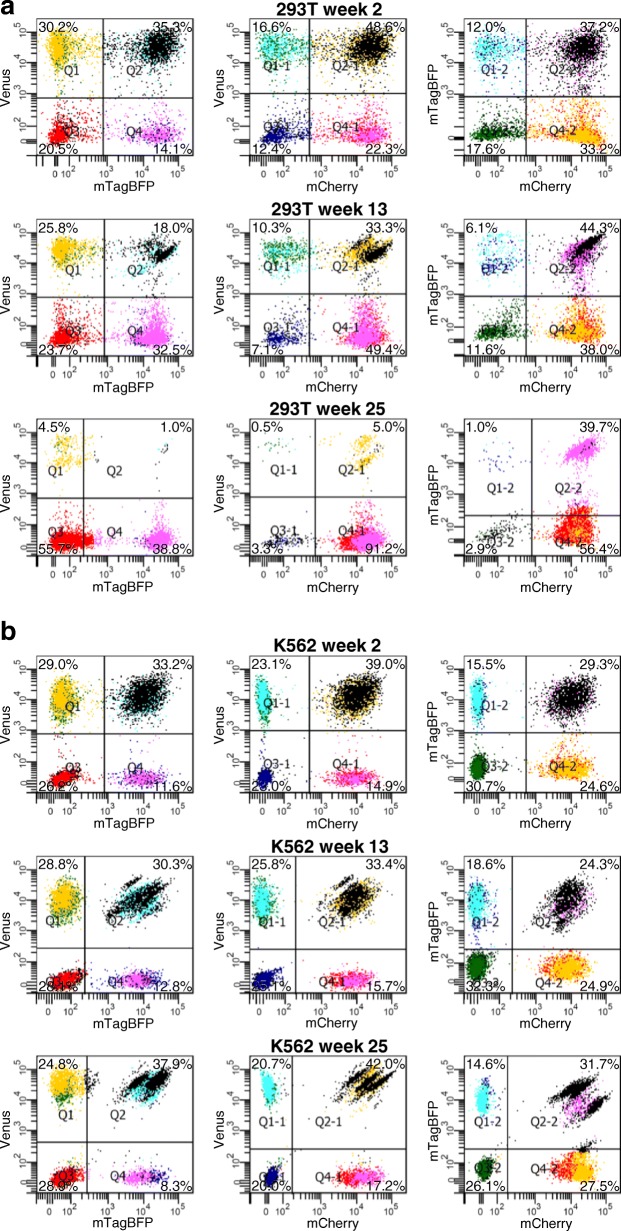
Using red, green, blue marking as a lentiviral multi-colour clonal cell tracking technology, we marked three different iPS cell lines as well as three other cell lines, assigning a unique fluorescent colour to each cell at one point in culture. Subsequently, we followed the sub-clonal distribution over time by flow cytometry and fluorescence microscopy analysis in regular intervals.
In three human iPS cell lines as well as primary human fibroblasts and two widely used human cell lines as controls (K562 and HEK 293 T), we observed a marked reduction in sub-clonal diversity over time of culture (weeks). After 38 passages, all iPS cultures consisted of less than 10 residual clones. Karyotype and function, the latter assessed by cardiomyocyte differentiation and tissue engineering, did not reveal obvious differences.
Our results argue for a quick selection of sub-clones with a growth advantage and flag a normally invisible and potentially undesired behaviour of cultured iPS cells, especially when using long-term cultured iPS cells for experiments or even in-vivo applications.
人类诱导多能干细胞(iPS 细胞)彻底改变了研究,并为未来的组织替代疗法带来了希望。为了获得大量细胞,iPS 细胞可以无限期扩增。然而,由于长期扩增会损害细胞的完整性和质量,我们着手评估固有生长失衡是否会降低克隆多样性。
我们使用红色、绿色、蓝色标记作为慢病毒多色克隆细胞跟踪技术,对三个不同的 iPS 细胞系以及另外三个细胞系进行标记,在培养的某个时间点为每个细胞分配独特的荧光颜色。随后,我们通过流式细胞术和荧光显微镜分析定期跟踪亚克隆分布随时间的变化。
在三个人类 iPS 细胞系以及原代人类成纤维细胞和两个广泛使用的人类细胞系(K562 和 HEK 293T)作为对照中,我们观察到随着培养时间(周)的延长,亚克隆多样性明显减少。经过 38 个传代后,所有 iPS 培养物中少于 10 个残留克隆。核型和功能,后者通过心肌细胞分化和组织工程评估,没有显示出明显的差异。
我们的结果表明,iPS 细胞存在快速选择具有生长优势的亚克隆的现象,这是一种通常看不见的、潜在不受欢迎的培养 iPS 细胞行为,尤其是在使用长期培养的 iPS 细胞进行实验甚至体内应用时。