Helmholtz Institute for Biomedical Engineering, Stem Cell Biology and Cellular Engineering, RWTH Aachen University Medical School, Pauwelsstrasse 20, 52074, Aachen, Germany.
Institute of Experimental Hematology, Hannover Medical School, 30625, Hannover, Germany.
Stem Cell Res Ther. 2020 Mar 5;11(1):105. doi: 10.1186/s13287-020-01619-5.
The use of mesenchymal stromal cells (MSCs) for research and clinical application is hampered by cellular heterogeneity and replicative senescence. Generation of MSC-like cells from induced pluripotent stem cells (iPSCs) may circumvent these limitations, and such iPSC-derived MSCs (iMSCs) are already tested in clinical trials. So far, a comparison of MSCs and iMSCs was particularly addressed in bulk culture. Despite the high hopes in cellular therapy, only little is known how the composition of different subclones changes in these cell preparations during culture expansion.
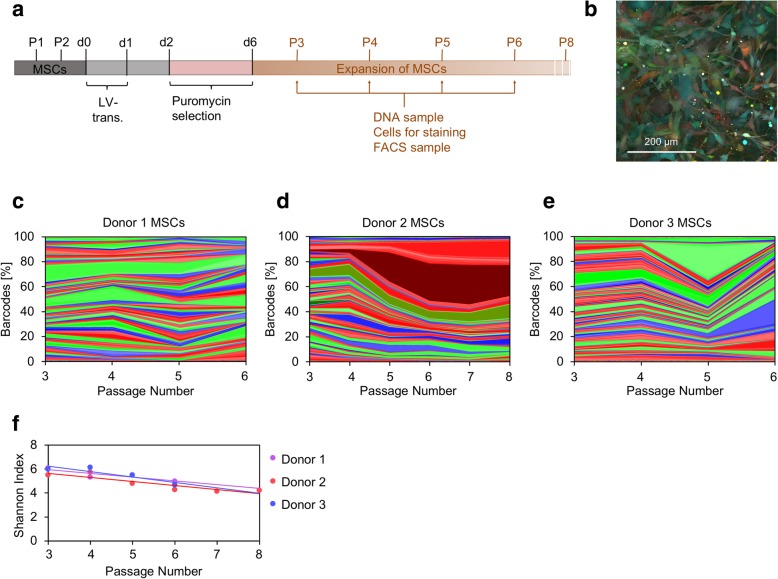
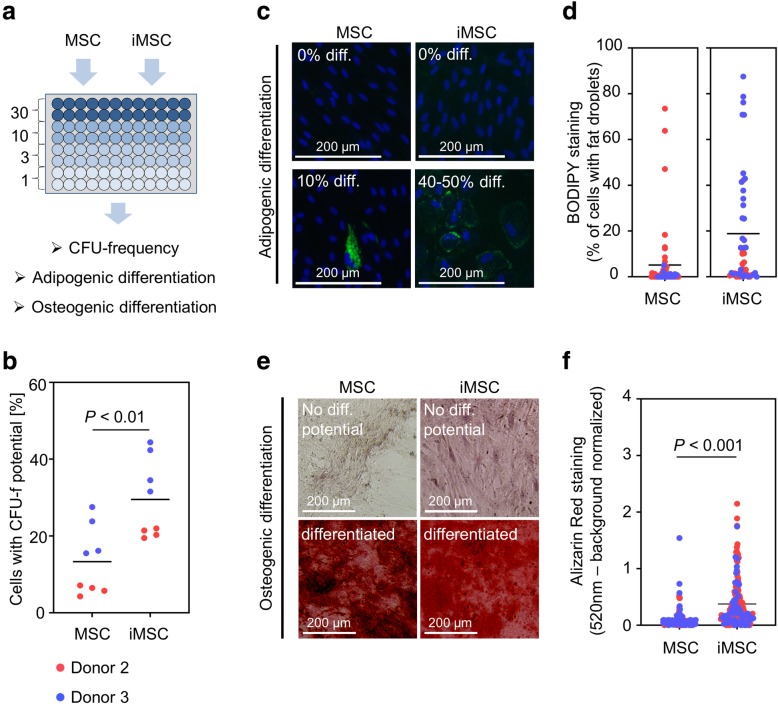
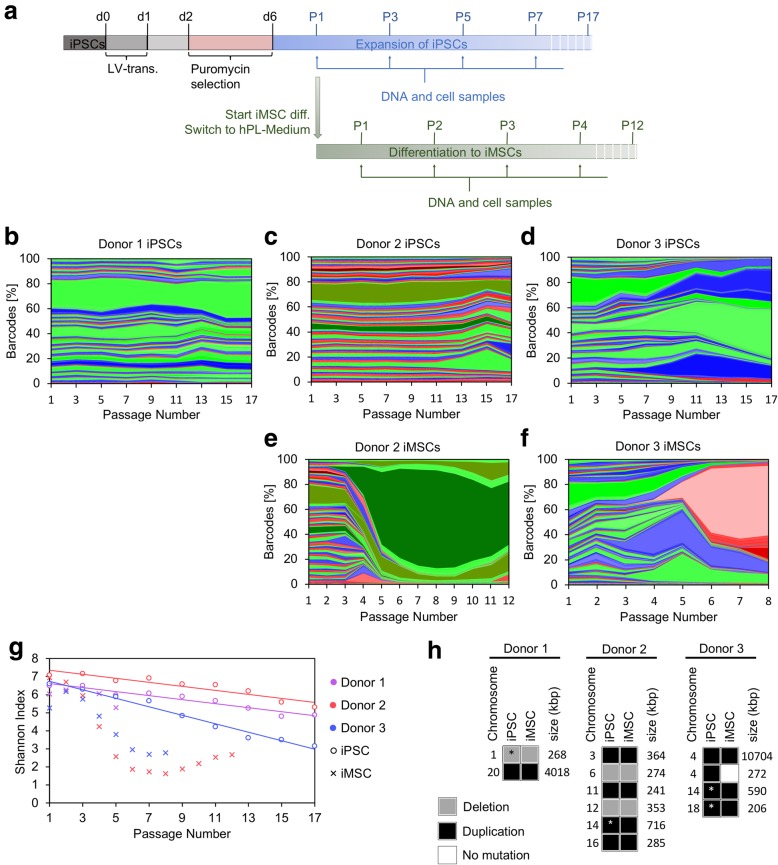
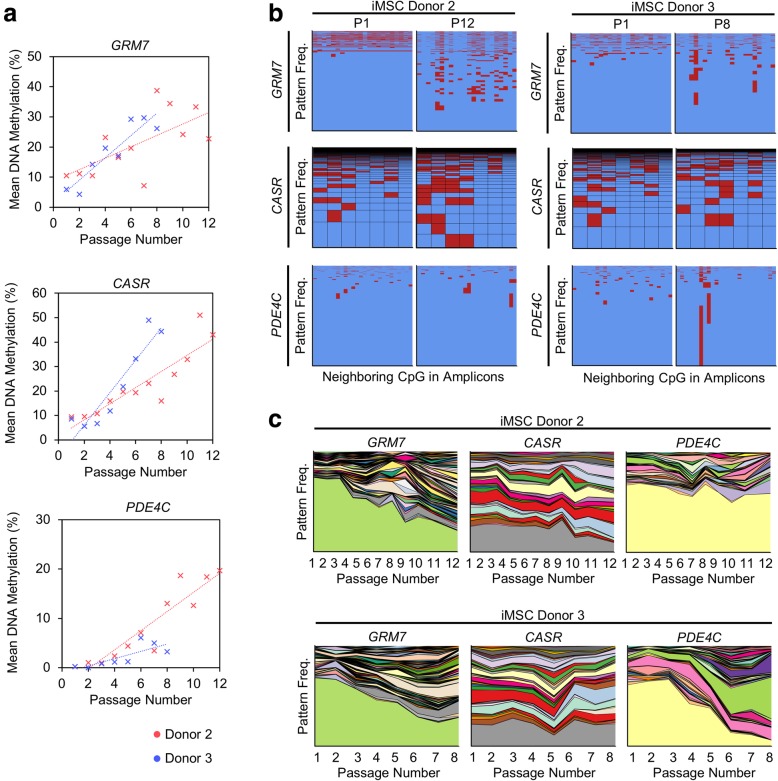
In this study, we used multicolor lentiviral genetic barcoding for the marking of individual cells within cell preparations. Based on this, we could track the clonal composition of syngenic MSCs, iPSCs, and iMSCs during culture expansion. Furthermore, we analyzed DNA methylation patterns at senescence-associated genomic regions by barcoded bisulfite amplicon sequencing. The proliferation and differentiation capacities of individual subclones within MSCs and iMSCs were investigated with limiting dilution assays.
Overall, the clonal composition of primary MSCs and iPSCs gradually declined during expansion. In contrast, iMSCs became oligoclonal early during differentiation, indicating that they were derived from few individual iPSCs. This dominant clonal outgrowth of iMSCs was not associated with changes in chromosomal copy number variation. Furthermore, clonal dynamics were not clearly reflected by stochastically acquired DNA methylation patterns. Limiting dilution assays revealed that iMSCs are heterogeneous in colony formation and in vitro differentiation potential, while this was even more pronounced in primary MSCs.
Our results indicate that the subclonal diversity of MSCs and iPSCs declines gradually during in vitro culture, whereas derivation of iMSCs may stem from few individual iPSCs. Differentiation regimen needs to be further optimized to achieve homogeneous differentiation of iPSCs towards iMSCs.
间充质基质细胞(MSCs)在研究和临床应用中受到细胞异质性和复制性衰老的限制。从诱导多能干细胞(iPSCs)生成 MSC 样细胞可能会规避这些限制,并且这些 iPSC 衍生的 MSC(iMSCs)已经在临床试验中进行了测试。到目前为止,MSCs 和 iMSCs 的比较主要在批量培养中进行。尽管对细胞治疗寄予厚望,但人们对这些细胞在培养过程中如何在不同亚克隆组成的变化知之甚少。
在这项研究中,我们使用多色慢病毒遗传条形码对细胞制剂中的单个细胞进行标记。在此基础上,我们可以跟踪同基因 MSCs、iPSCs 和 iMSCs 在培养过程中的克隆组成。此外,我们通过条形码亚硫酸氢盐扩增测序分析衰老相关基因组区域的 DNA 甲基化模式。通过有限稀释测定法分析 MSCs 和 iMSCs 中单个亚克隆的增殖和分化能力。
总体而言,原代 MSCs 和 iPSCs 的克隆组成在扩增过程中逐渐下降。相比之下,iMSCs 在分化早期就变得寡克隆化,表明它们来自少数个别 iPSCs。iMSCs 的这种主要克隆生长与染色体拷贝数变异无明显关联。此外,随机获得的 DNA 甲基化模式并不能清楚地反映克隆动力学。有限稀释测定法显示,iMSCs 在集落形成和体外分化潜能方面存在异质性,而原代 MSCs 中这种情况更为明显。
我们的结果表明,MSCs 和 iPSCs 的亚克隆多样性在体外培养过程中逐渐下降,而 iMSCs 的产生可能源自少数个别 iPSCs。分化方案需要进一步优化,以实现 iPSCs 向 iMSCs 的均匀分化。