Mendonça Michelle M, Santana Joice S, da Cruz Kellen R, Ianzer Danielle, Ghedini Paulo C, Nalivaiko Eugene, Fontes Marco A P, Ferreira Reginaldo N, Pedrino Gustavo R, Colugnati Diego B, Xavier Carlos H
Department of Physiological Sciences, Institute of Biological Sciences, Federal University of Goiás, Goiânia, Brazil.
Neurocardiology Laboratory, School of Biomedical Sciences and Pharmacy, University of Newcastle, Callaghan, NSW, Australia.
Front Physiol. 2018 Jun 4;9:670. doi: 10.3389/fphys.2018.00670. eCollection 2018.
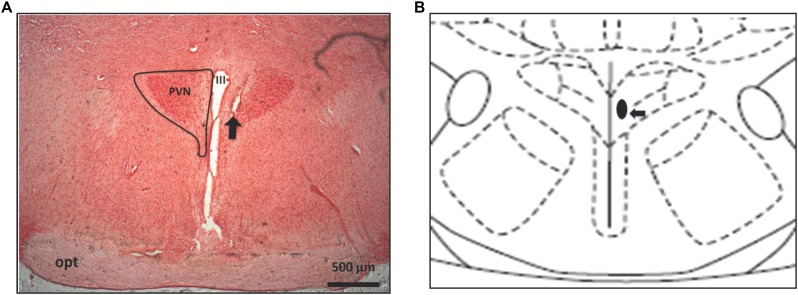
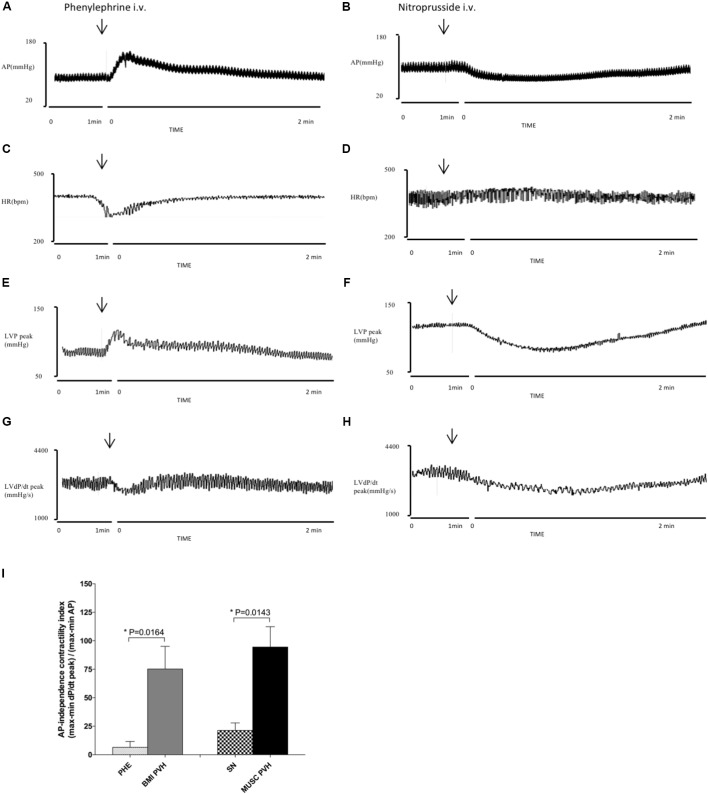
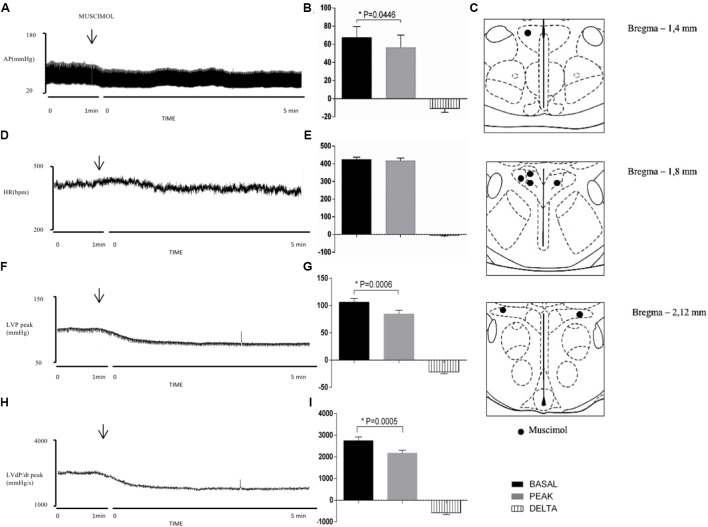
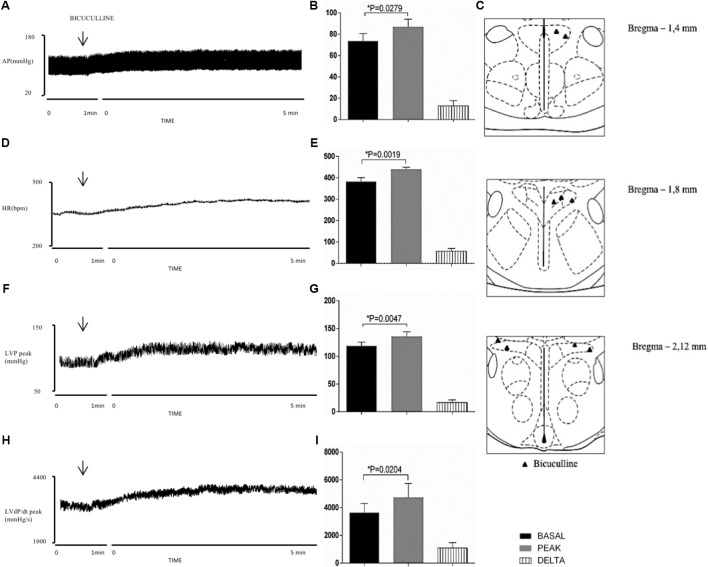
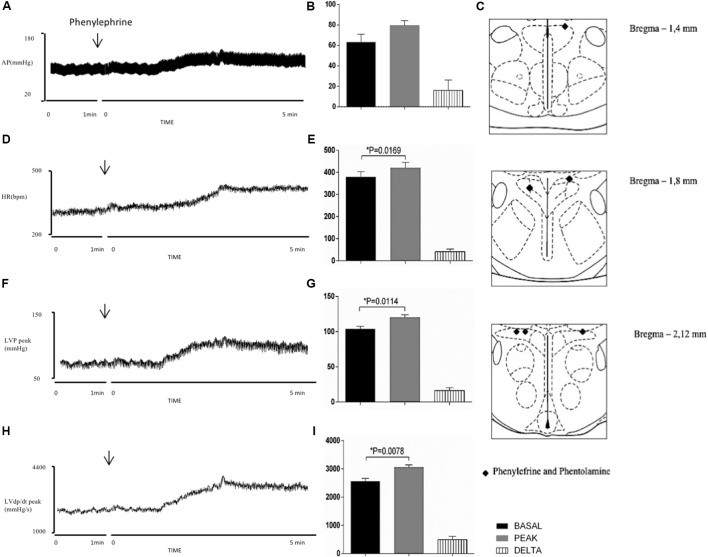
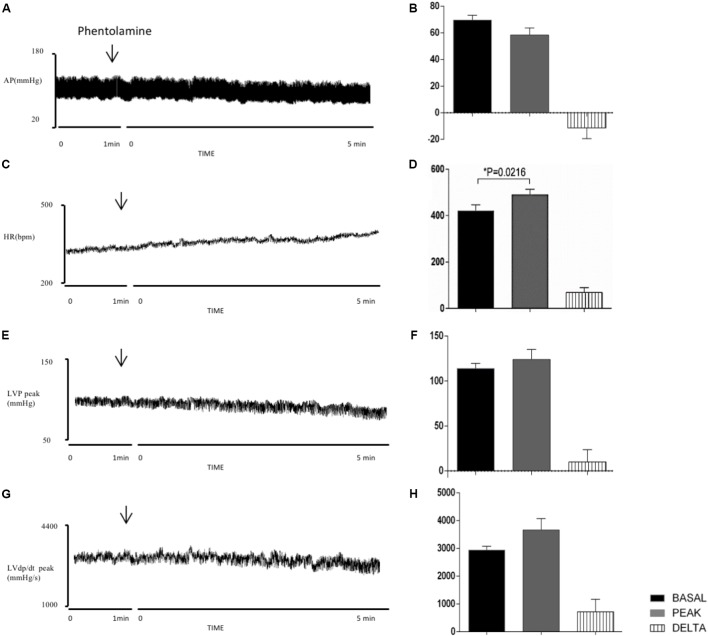
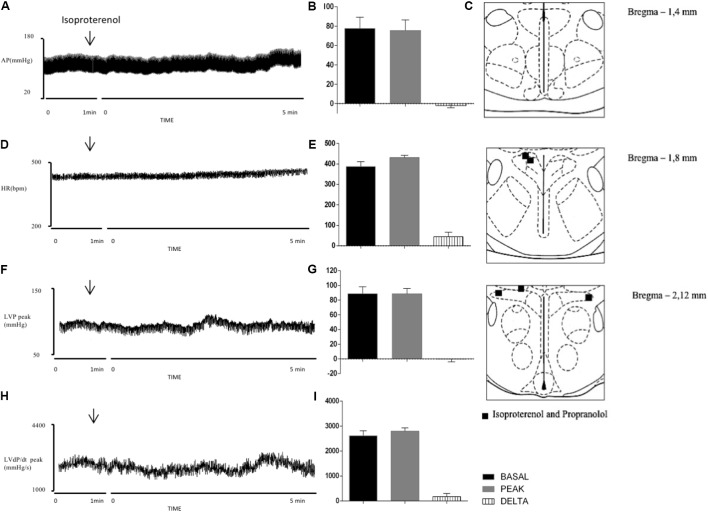
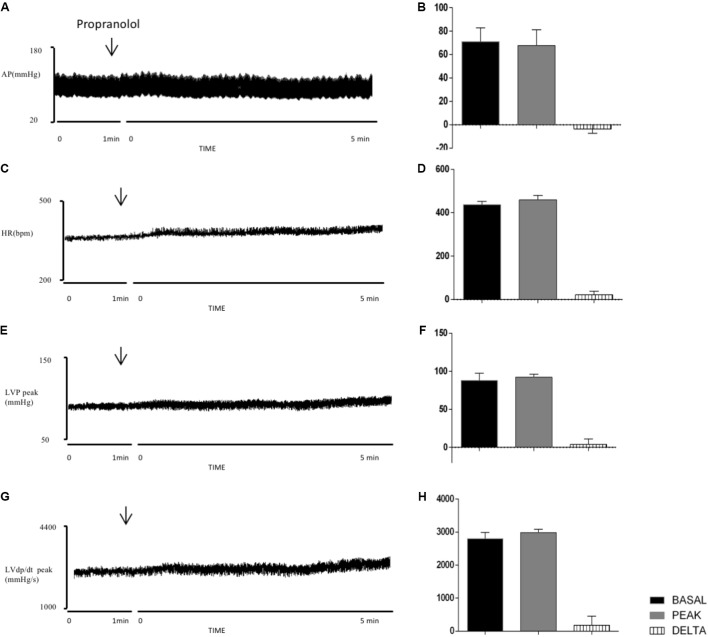
Sympathetic premotor neurons of the paraventricular hypothalamus (PVN) play a role in hemodynamics adjustments during changes in body fluid homeostasis. However, PVN contribution to the tonic control of cardiac function remains to be systematically studied. In this study, we assessed whether GABAergic and adrenergic synapses, known for being active in the PVN, are involved in the control of cardiac function. Adult male Wistar rats (250-350 g; = 27) were anesthetized with urethane (1.2-1.4 g/kg i.p.) and underwent catheterization of femoral artery to record blood pressure and heart rate. The femoral vein was used to inject the vasoactive agents phenylephrine (10 μg/kg) and sodium nitroprusside (10 μg/kg) and to supplement anesthesia. The cardiac left ventricle was catheterized to record left ventricular pressure and its derivative. Craniotomy allowed for injections (100 nL) into the PVN of: muscimol (20 mM), bicuculline methiodide (0.4 mM), propranolol (10 mM), isoproterenol (100 μM), phentolamine (13 mM), phenylephrine (30 nM). We found that: (i) inhibition of PVN by muscimol, reduced arterial pressure, cardiac chronotropy and inotropy; (ii) disinhibition of PVN neurons by bicuculline evoked positive chronotropy and inotropy, and increase blood pressure; (iii) PVN alpha adrenergic receptors control cardiac chronotropy and inotropy; (iv) beta adrenergic receptors of the PVN do not influence cardiac function; (v) afterload does not contribute to the PVN-evoked inotropy. Our results indicate that the modulation of the activity of PVN neurons exerted by GABAergic and adrenergic mechanisms contribute to the control of cardiac function.
室旁核(PVN)的交感运动前神经元在体液稳态变化期间的血流动力学调节中发挥作用。然而,PVN对心脏功能的紧张性控制的贡献仍有待系统研究。在本研究中,我们评估了已知在PVN中活跃的γ-氨基丁酸能和肾上腺素能突触是否参与心脏功能的控制。成年雄性Wistar大鼠(250 - 350克;n = 27)用乌拉坦(1.2 - 1.4克/千克腹腔注射)麻醉,并进行股动脉插管以记录血压和心率。股静脉用于注射血管活性药物去氧肾上腺素(10微克/千克)和硝普钠(10微克/千克)以及补充麻醉。对心脏左心室进行插管以记录左心室压力及其导数。开颅手术允许向PVN注射(100纳升)以下物质:蝇蕈醇(20毫摩尔)、甲磺酸荷包牡丹碱(0.4毫摩尔)、普萘洛尔(10毫摩尔)、异丙肾上腺素(100微摩尔)、酚妥拉明(13毫摩尔)、去氧肾上腺素(30纳摩尔)。我们发现:(i)蝇蕈醇抑制PVN可降低动脉压、心脏变时性和变力性;(ii)甲磺酸荷包牡丹碱解除对PVN神经元的抑制可诱发正性变时性和变力性,并升高血压;(iii)PVN的α肾上腺素能受体控制心脏变时性和变力性;(iv)PVN的β肾上腺素能受体不影响心脏功能;(v)后负荷对PVN诱发的变力性无贡献。我们的结果表明,γ-氨基丁酸能和肾上腺素能机制对PVN神经元活动的调节有助于心脏功能的控制。