Tse Gary, Chan Cynthia, Gong Mengqi, Meng Lei, Zhang Jian, Su Xiao-Ling, Ali-Hasan-Al-Saegh Sadeq, Sawant Abhishek C, Bazoukis George, Xia Yun-Long, Zhao Ji-Chao, Lee Alex Pui Wai, Roever Leonardo, Wong Martin Cs, Baranchuk Adrian, Liu Tong
Department of Medicine and Therapeutics, Faculty of Medicine, Chinese University of Hong Kong, Hong Kong, China.
Li Ka Shing Institute of Health Sciences, Faculty of Medicine, Chinese University of Hong Kong, Hong Kong, China.
J Geriatr Cardiol. 2018 Apr;15(4):298-309. doi: 10.11909/j.issn.1671-5411.2018.04.008.
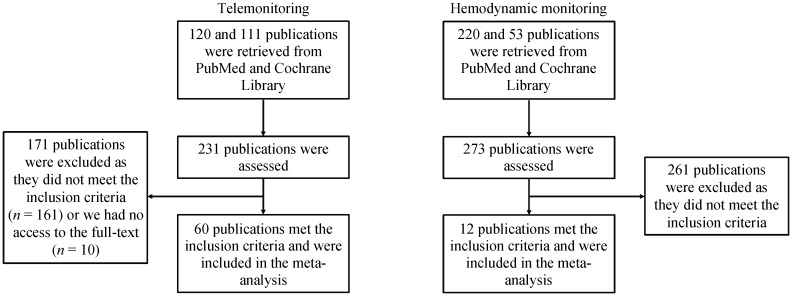
Heart failure is a significant problem leading to repeated hospitalizations. Telemonitoring and hemodynamic monitoring have demonstrated success in reducing hospitalization rates, but not all studies reported significant effects. The aim of this systematic review and meta-analysis is to examine the effectiveness of telemonitoring and wireless hemodynamic monitoring devices in reducing hospitalizations in heart failure.
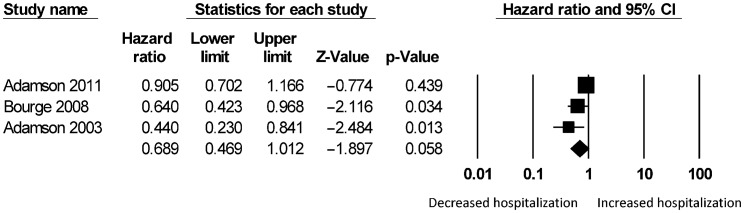
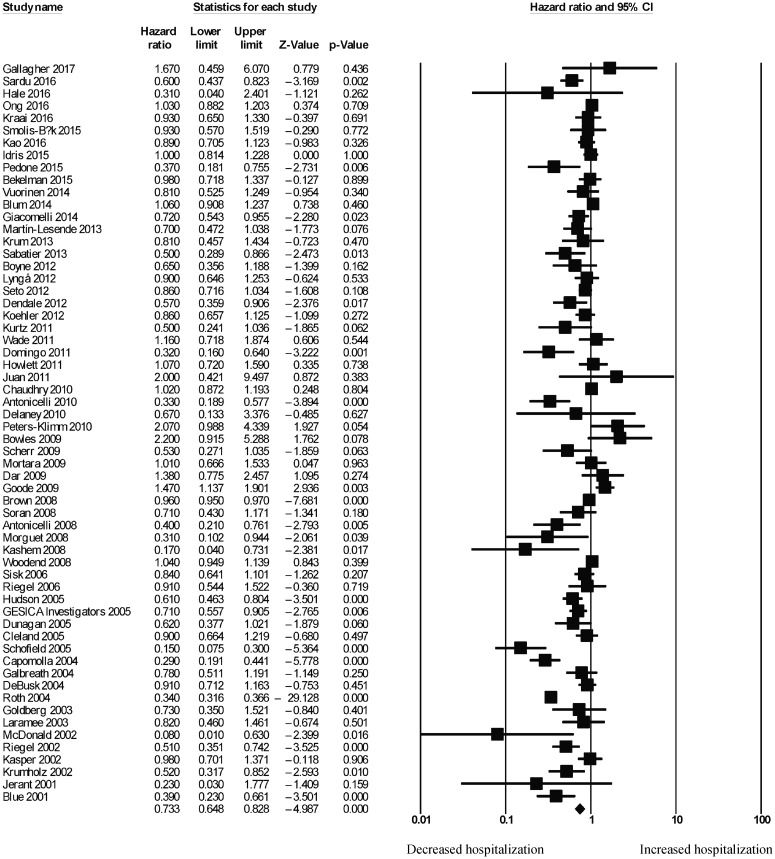
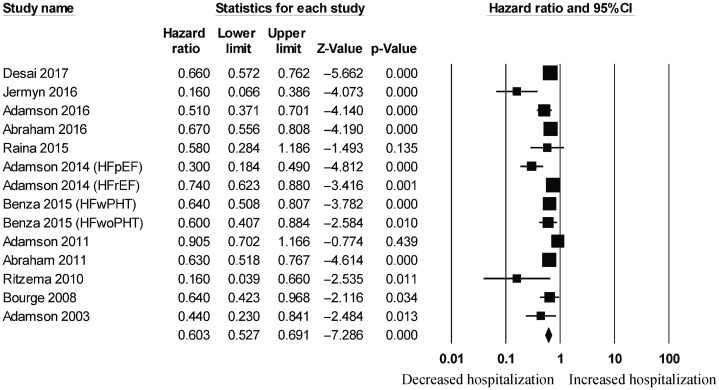
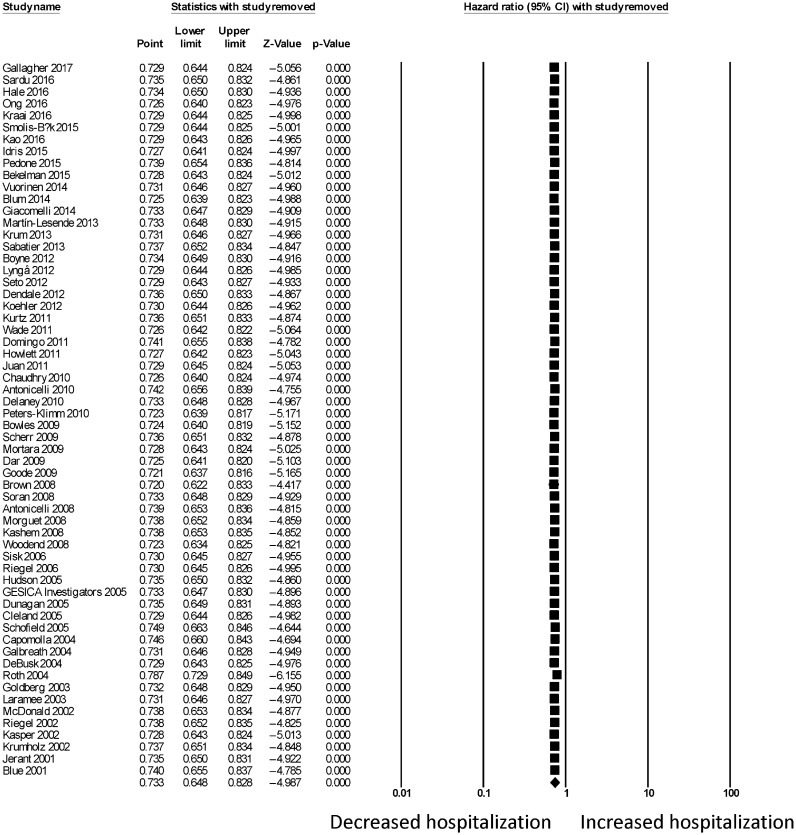
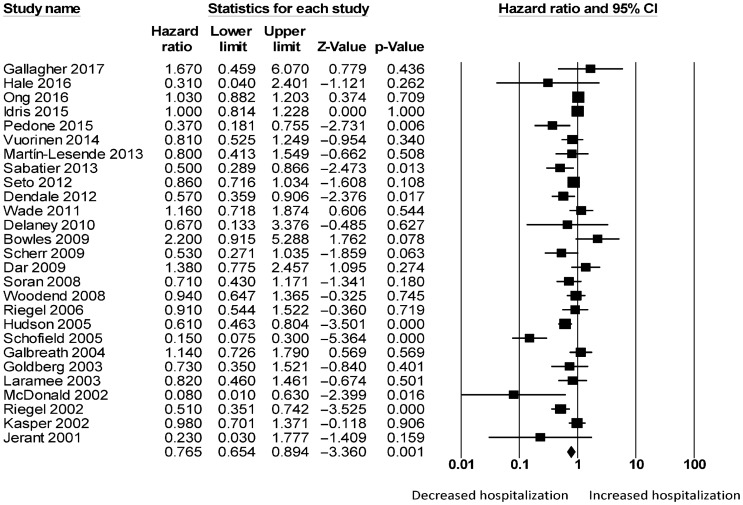
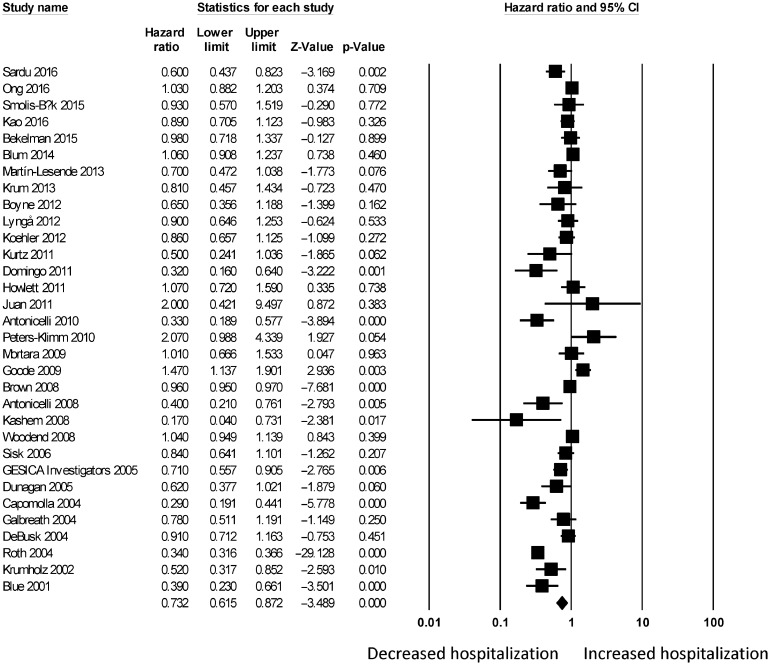
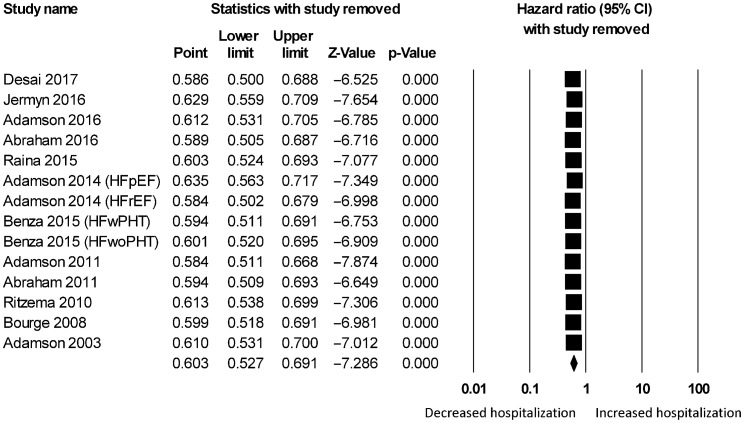
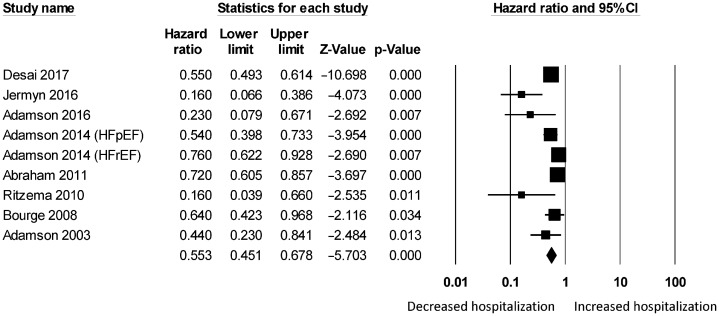
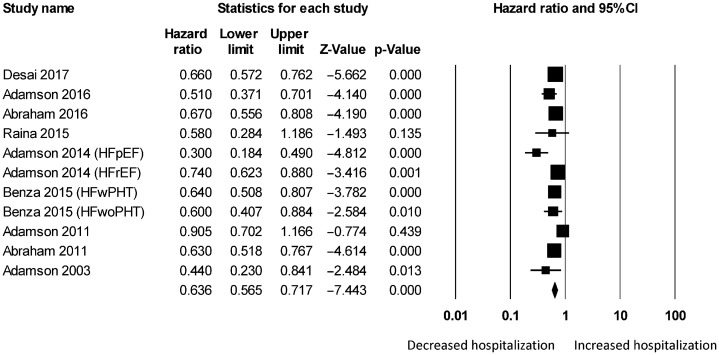
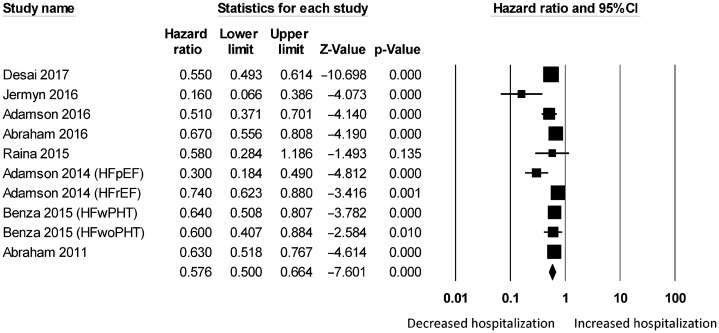
METHODS & RESULTS: PubMed and Cochrane Library were searched up to 1 May 2017 for articles that investigated the effects of telemonitoring or hemodynamic monitoring on hospitalization rates in heart failure. In 31,501 patients (mean age: 68 ± 12 years; 61% male; follow-up 11 ± 8 months), telemonitoring reduced hospitalization rates with a HR of 0.73 (95% CI: 0.65-0.83; < 0.0001) with significant heterogeneity ( = 94%). These effects were observed in the short-term (≤ 6 months: HR = 0.77, 95% CI: 0.65-0.89; < 0.01) and long-term (≥ 12 months: HR = 0.73, 95% CI: 0.62-0.87; < 0.0001). In 4831 patients (mean age 66 ± 18 years; 66% male; follow-up 13 ± 4 months), wireless hemodynamic monitoring also reduced hospitalization rates with a HR of 0.60 (95% CI: 0.53-0.69; < 0.001) with significant heterogeneity ( = 64%).This reduction was observed both in the short-term (HR = 0.55, 95% CI: 0.45-0.68; < 0.001; = 72%) and long-term (HR = 0.64, 95% CI: 0.57-0.72; < 0.001; = 55%).
Telemonitoring and hemodynamic monitoring reduce hospitalization in both short- and long-term in heart failure patients.
心力衰竭是导致反复住院的一个重要问题。远程监测和血流动力学监测已证明在降低住院率方面取得了成功,但并非所有研究都报告了显著效果。本系统评价和荟萃分析的目的是检验远程监测和无线血流动力学监测设备在降低心力衰竭患者住院率方面的有效性。
截至2017年5月1日,对PubMed和Cochrane图书馆进行检索,以查找研究远程监测或血流动力学监测对心力衰竭住院率影响的文章。在31501例患者中(平均年龄:68±12岁;61%为男性;随访11±8个月),远程监测降低了住院率,风险比(HR)为0.73(95%置信区间:0.65 - 0.83;P<0.0001),存在显著异质性(I² = 94%)。在短期(≤6个月:HR = 0.77,95%置信区间:0.65 - 0.89;P<0.01)和长期(≥12个月:HR = 0.73,95%置信区间:0.62 - 0.87;P<0.0001)均观察到了这些效果。在4831例患者中(平均年龄66±18岁;66%为男性;随访13±4个月),无线血流动力学监测也降低了住院率,HR为0.60(95%置信区间:0.53 - 0.69;P<0.001),存在显著异质性(I² = 64%)。在短期(HR = 0.55,95%置信区间:0.45 - 0.68;P<0.001;I² = 72%)和长期(HR = 0.64,95%置信区间:0.57 - 0.72;P<0.001;I² = 55%)均观察到了这种降低。
远程监测和血流动力学监测在心力衰竭患者的短期和长期内均能降低住院率。