Fujii Kazuyasu
Department of Dermatology, Kagoshima University Graduate School of Medical and Dental Sciences, Kagoshima, Japan.
Front Oncol. 2018 Jun 4;8:198. doi: 10.3389/fonc.2018.00198. eCollection 2018.
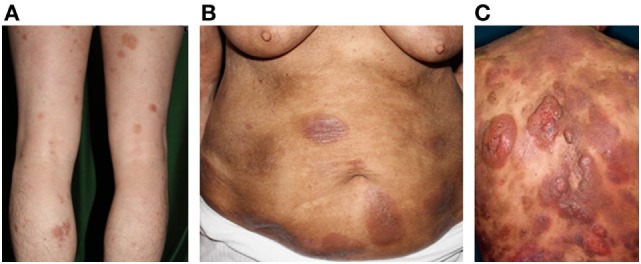
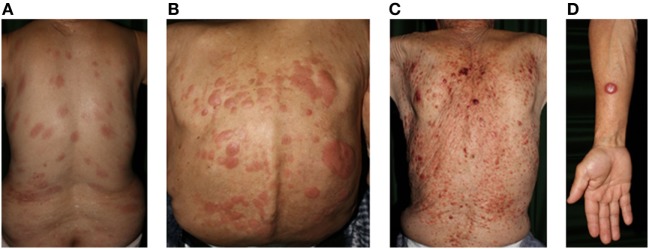
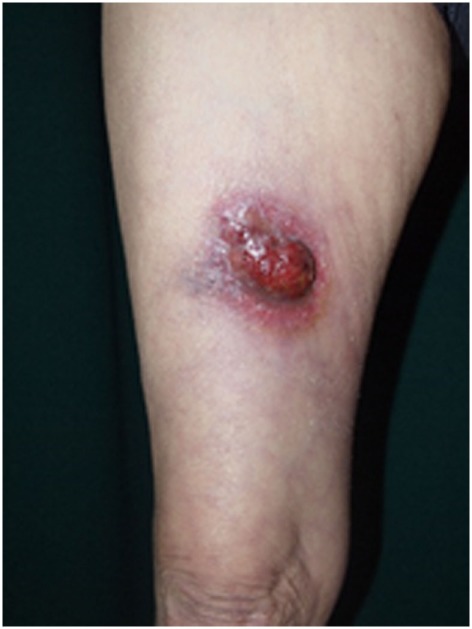
Primary cutaneous lymphomas comprise a group of lymphatic malignancies that occur primarily in the skin. They represent the second most common form of extranodal non-Hodgkin's lymphoma and are characterized by heterogeneous clinical, histological, immunological, and molecular features. The most common type is mycosis fungoides and its leukemic variant, Sézary syndrome. Both diseases are considered T-helper cell type 2 (Th2) diseases. Not only the tumor cells but also the tumor microenvironment can promote Th2 differentiation, which is beneficial for the tumor cells because a Th1 environment enhances antitumor immune responses. This Th2-dominant milieu also underlies the infectious susceptibility of the patients. Many components, such as tumor-associated macrophages, cancer-associated fibroblasts, and dendritic cells, as well as humoral factors, such as chemokines and cytokines, establish the tumor microenvironment and can modify tumor cell migration and proliferation. Multiagent chemotherapy often induces immunosuppression, resulting in an increased risk of serious infection and poor tolerance. Therefore, overtreatment should be avoided for these types of lymphomas. Interferons have been shown to increase the time to next treatment to a greater degree than has chemotherapy. The pathogenesis and prognosis of cutaneous T-cell lymphoma (CTCL) differ markedly among the subtypes. In some aggressive subtypes of CTCLs, such as primary cutaneous gamma/delta T-cell lymphoma and primary cutaneous CD8 aggressive epidermotropic cytotoxic T-cell lymphoma, hematopoietic stem cell transplantation should be considered, whereas overtreatment should be avoided with other, favorable subtypes. Therefore, a solid understanding of the pathogenesis and immunological background of cutaneous lymphoma is required to better treat patients who are inflicted with this disease. This review summarizes the current knowledge in the field to attempt to achieve this objective.
原发性皮肤淋巴瘤是一组主要发生于皮肤的淋巴系统恶性肿瘤。它们是结外非霍奇金淋巴瘤的第二常见形式,具有临床、组织学、免疫学和分子特征的异质性。最常见的类型是蕈样肉芽肿及其白血病变体 Sézary 综合征。这两种疾病都被认为是 2 型辅助性 T 细胞(Th2)疾病。不仅肿瘤细胞,而且肿瘤微环境都可以促进 Th2 分化,这对肿瘤细胞有利,因为 Th1 环境会增强抗肿瘤免疫反应。这种以 Th2 为主导的环境也是患者易感染的基础。许多成分,如肿瘤相关巨噬细胞、癌症相关成纤维细胞和树突状细胞,以及体液因子,如趋化因子和细胞因子,共同构成了肿瘤微环境,并可改变肿瘤细胞的迁移和增殖。多药化疗常诱导免疫抑制,导致严重感染风险增加和耐受性差。因此,对于这类淋巴瘤应避免过度治疗。已证明干扰素比化疗更能延长下次治疗的时间。皮肤 T 细胞淋巴瘤(CTCL)各亚型的发病机制和预后明显不同。在一些侵袭性亚型的 CTCL 中,如原发性皮肤γ/δ T 细胞淋巴瘤和原发性皮肤 CD8 侵袭性亲表皮细胞毒性 T 细胞淋巴瘤,应考虑进行造血干细胞移植,而对于其他预后良好亚型则应避免过度治疗。因此,需要深入了解皮肤淋巴瘤的发病机制和免疫背景,以便更好地治疗罹患此病的患者。本综述总结了该领域的现有知识,以期实现这一目标。