Blizard Institute, Queen Mary University of London, London, UK.
Institute of Psychiatry, Psychology and Neuroscience, Kings College London, London, UK.
J Physiol. 2018 Sep;596(17):4237-4251. doi: 10.1113/JP276300. Epub 2018 Jul 18.
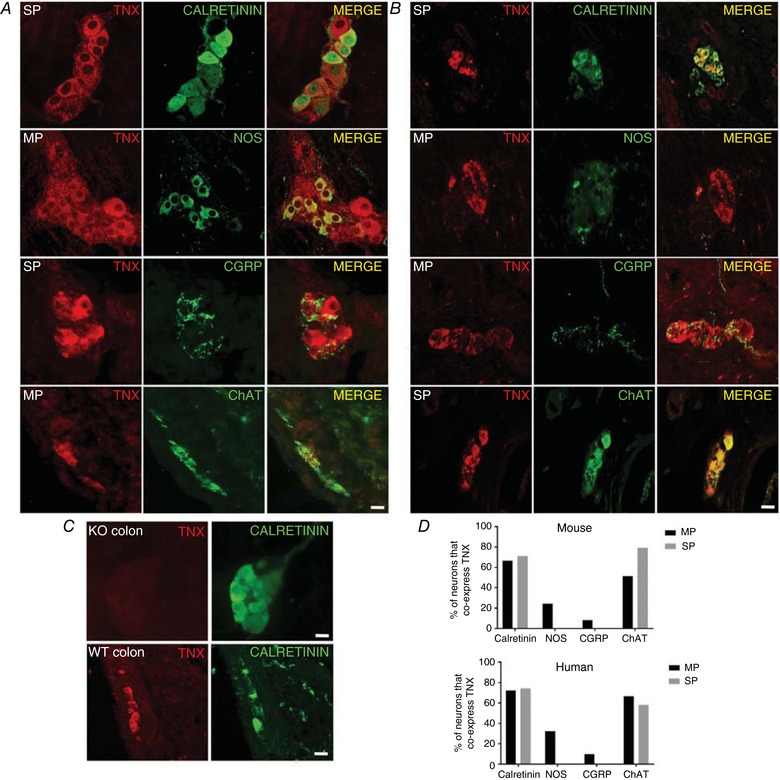
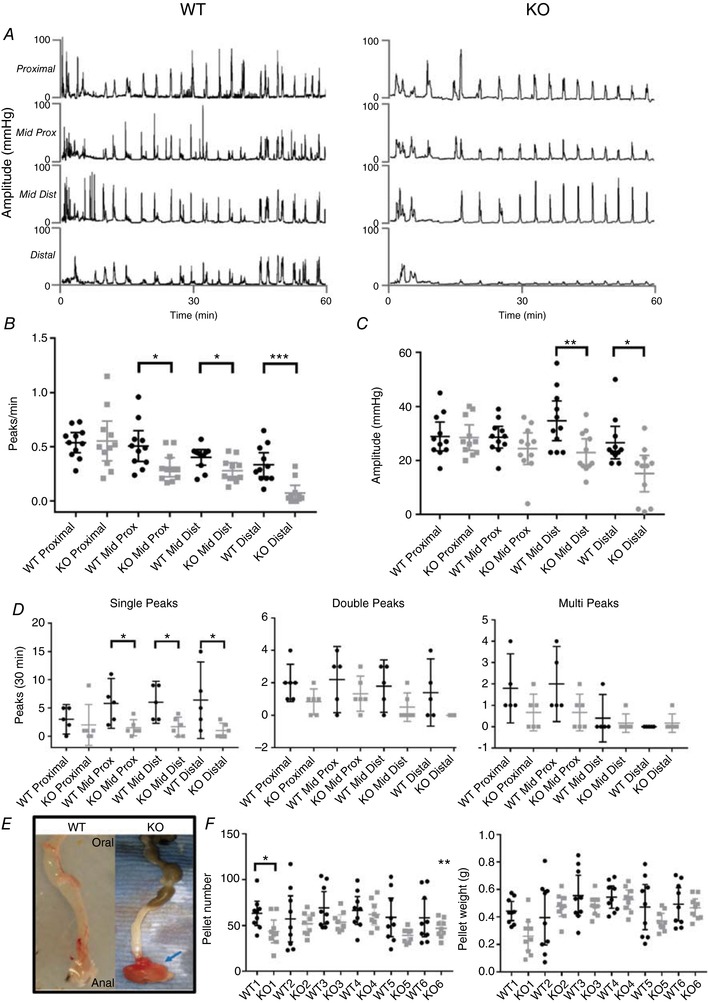
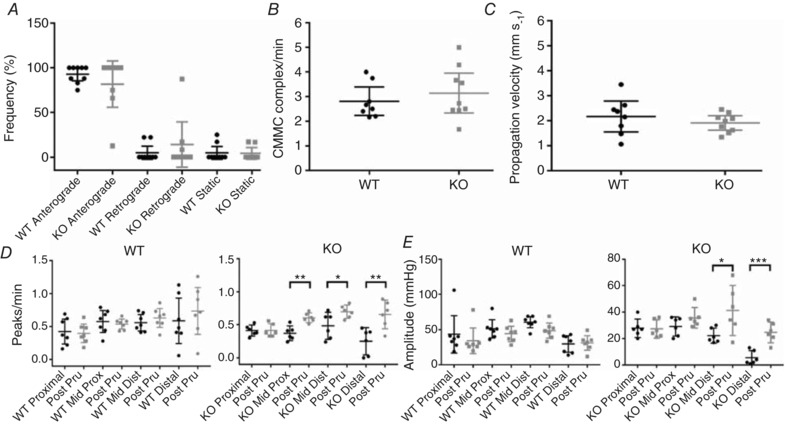
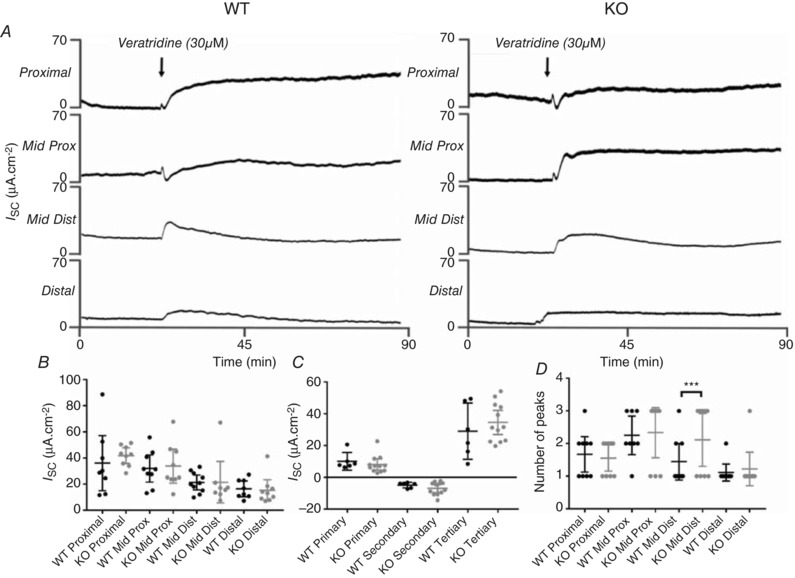
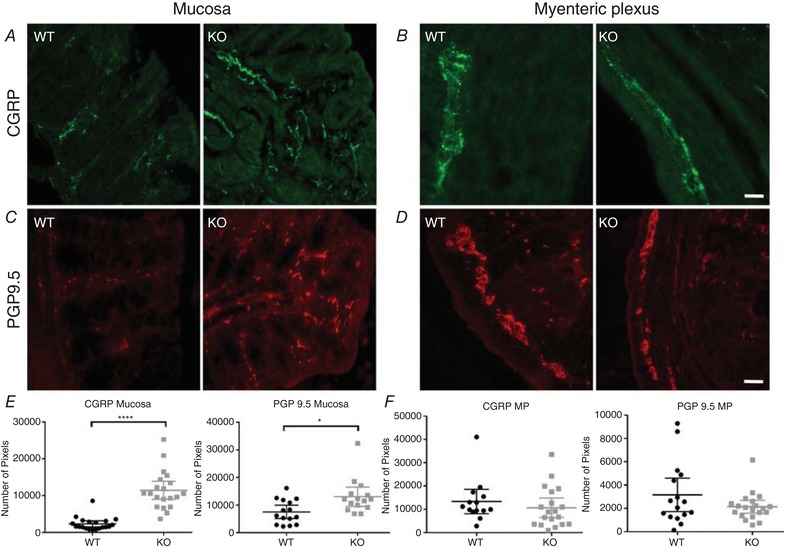
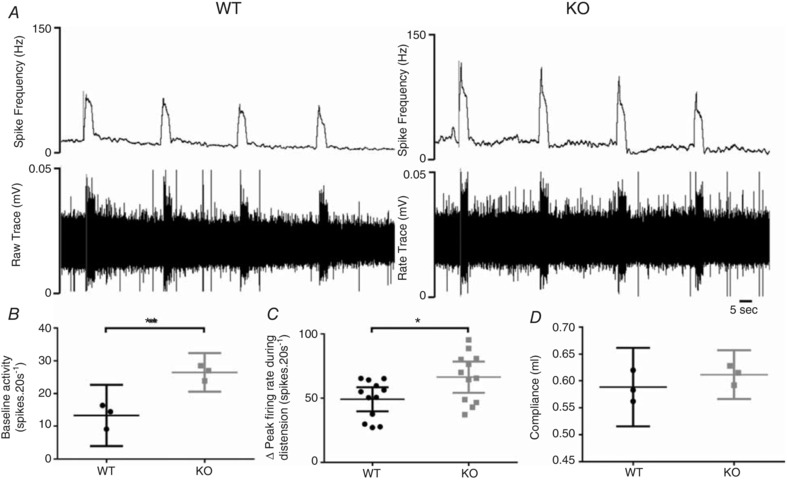
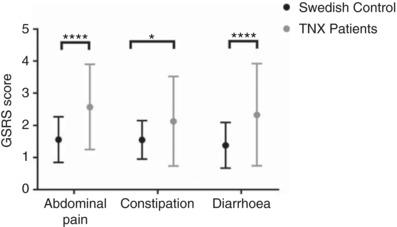
Tenascin-X (TNX) is an extracellular matrix glycoprotein with anti-adhesive properties in skin and joints. Here we report the novel finding that TNX is expressed in human and mouse gut tissue where it is exclusive to specific subpopulations of neurones. Our studies with TNX-deficient mice show impaired defecation and neural control of distal colonic motility that can be rescued with a 5-HT receptor agonist. However, colonic secretion is unchanged. They are also susceptible to internal rectal intussusception. Colonic afferent sensitivity is increased in TNX-deficient mice. Correspondingly, there is increased density of and sensitivity of putative nociceptive fibres in TNX-deficient mucosa. A group of TNX-deficient patients report symptoms highly consistent with those in the mouse model. These findings suggest TNX plays entirely different roles in gut to non-visceral tissues - firstly a role in enteric motor neurones and secondly a role influencing nociceptive sensory neurones Studying further the mechanisms by which TNX influences neuronal function will lead to new targets for future treatment.
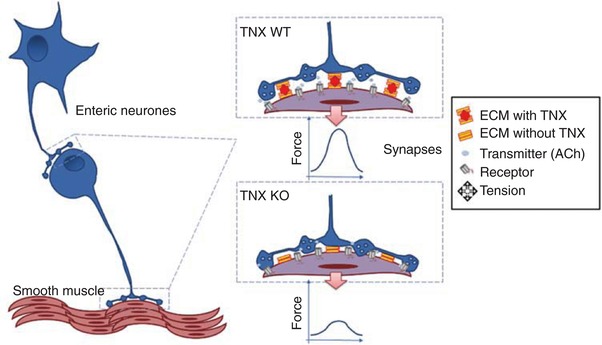
The extracellular matrix (ECM) is not only an integral structural molecule, but is also critical for a wide range of cellular functions. The glycoprotein tenascin-X (TNX) predominates in the ECM of tissues like skin and regulates tissue structure through anti-adhesive interactions with collagen. Monogenic TNX deficiency causes painful joint hypermobility and skin hyperelasticity, symptoms characteristic of hypermobility Ehlers Danlos syndrome (hEDS). hEDS patients also report consistently increased visceral pain and gastrointestinal (GI) dysfunction. We investigated whether there is a direct link between TNX deficiency and GI pain or motor dysfunction. We set out first to learn where TNX is expressed in human and mouse, then determine how GI function, specifically in the colon, is disordered in TNX-deficient mice and humans of either sex. In human and mouse tissue, TNX was predominantly associated with cholinergic colonic enteric neurones, which are involved in motor control. TNX was absent from extrinsic nociceptive peptidergic neurones. TNX-deficient mice had internal rectal prolapse and a loss of distal colonic contractility which could be rescued by prokinetic drug treatment. TNX-deficient patients reported increased sensory and motor GI symptoms including abdominal pain and constipation compared to controls. Despite absence of TNX from nociceptive colonic neurones, neuronal sprouting and hyper-responsiveness to colonic distension was observed in the TNX-deficient mice. We conclude that ECM molecules are not merely support structures but an integral part of the microenvironment particularly for specific populations of colonic motor neurones where TNX exerts functional influences.
Tenascin-X(TNX)是一种细胞外基质糖蛋白,在皮肤和关节中具有抗粘连特性。在这里,我们报告了一个新的发现,即 TNX 表达在人类和小鼠的肠道组织中,仅存在于特定的神经元亚群中。我们对 TNX 缺陷小鼠的研究表明,它们的排便功能受损,并且对远端结肠运动的神经控制受损,而 5-HT 受体激动剂可对此进行挽救。然而,结肠分泌功能没有改变。它们也容易发生直肠内套叠。TNX 缺陷小鼠的结肠传入敏感性增加。相应地,TNX 缺陷黏膜中存在更多数量和更高敏感性的假定伤害感受纤维。一组 TNX 缺陷患者报告的症状与小鼠模型中的症状高度一致。这些发现表明,TNX 在肠道和非内脏组织中发挥着完全不同的作用——首先是在肠运动神经元中的作用,其次是影响伤害感受感觉神经元的作用。进一步研究 TNX 影响神经元功能的机制将为未来的治疗提供新的靶点。
细胞外基质(ECM)不仅是一种完整的结构分子,而且对于多种细胞功能也至关重要。糖蛋白 tenascin-X(TNX)在皮肤等组织的 ECM 中占主导地位,并通过与胶原蛋白的抗粘附相互作用来调节组织结构。单基因 TNX 缺乏会导致关节过度活动和皮肤过度弹性的疼痛,这是高迁移率 Ehlers-Danlos 综合征(hEDS)的特征性症状。hEDS 患者还一致报告增加的内脏疼痛和胃肠道(GI)功能障碍。我们研究了 TNX 缺乏与 GI 疼痛或运动功能障碍之间是否存在直接联系。我们首先研究 TNX 在人类和小鼠中的表达位置,然后确定 TNX 缺陷小鼠和不同性别人类的 GI 功能(特别是结肠)如何出现障碍。在人类和小鼠组织中,TNX 主要与参与运动控制的胆碱能结肠肠神经元相关。TNX 不存在于外在的伤害感受肽能神经元中。TNX 缺陷小鼠发生直肠内套叠和远端结肠收缩力丧失,可通过促动力药物治疗来挽救。与对照组相比,TNX 缺陷患者报告的胃肠道症状包括腹痛和便秘的感觉和运动症状增加。尽管 TNX 不存在于伤害感受性结肠神经元中,但在 TNX 缺陷小鼠中观察到神经元的发芽和对结肠扩张的超敏反应。我们的结论是,细胞外基质分子不仅是支持结构,而且是微环境的一个组成部分,特别是对于 TNX 发挥功能影响的特定结肠运动神经元群体。