Zhang Li, Wang Handong
Department of Neurosurgery, Jinling Hospital, School of Medicine, Nanjing University, Nanjing, China.
Front Mol Neurosci. 2018 Jun 5;11:190. doi: 10.3389/fnmol.2018.00190. eCollection 2018.
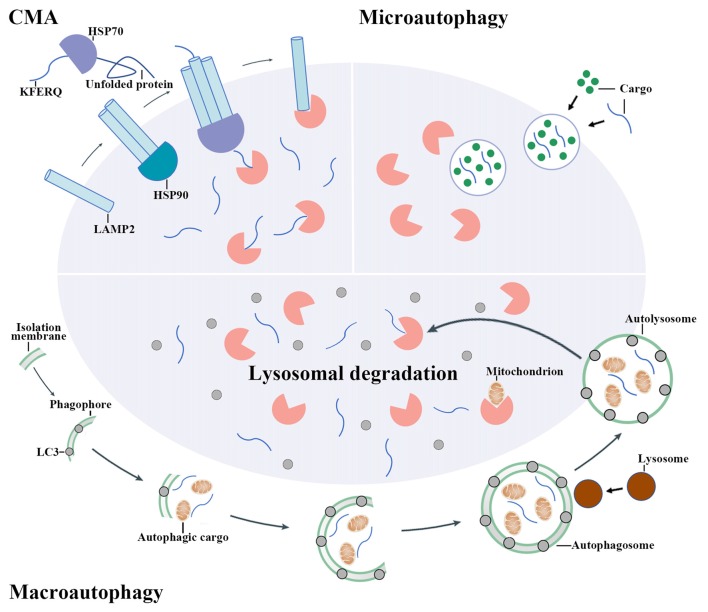
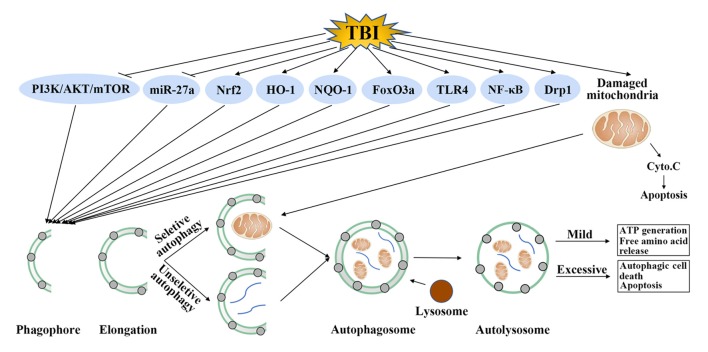
Traumatic brain injury (TBI) is one of the most devastating forms of brain injury. Many pathological mechanisms such as oxidative stress, apoptosis and inflammation all contribute to the secondary brain damage and poor outcomes of TBI. Current therapies are often ineffective and poorly tolerated, which drive the explore of new therapeutic targets for TBI. Autophagy is a highly conserved intracellular mechanism during evolution. It plays an important role in elimination abnormal intracellular proteins or organelles to maintain cell stability. Besides, autophagy has been researched in various models including TBI. Previous studies have deciphered that regulation of autophagy by different molecules and pathways could exhibit anti-oxidative stress, anti-apoptosis and anti-inflammation effects in TBI. Hence, autophagy is a promising target for further therapeutic development in TBI. The present review provides an overview of current knowledge about the mechanism of autophagy, the frequently used methods to monitor autophagy, the functions of autophagy in TBI as well as its potential molecular mechanisms based on the pharmacological regulation of autophagy.
创伤性脑损伤(TBI)是最具毁灭性的脑损伤形式之一。氧化应激、细胞凋亡和炎症等多种病理机制均会导致TBI的继发性脑损伤和不良预后。目前的治疗方法往往效果不佳且耐受性差,这促使人们探索TBI的新治疗靶点。自噬是进化过程中一种高度保守的细胞内机制。它在清除细胞内异常蛋白质或细胞器以维持细胞稳定性方面发挥着重要作用。此外,自噬已在包括TBI在内的各种模型中得到研究。先前的研究表明,不同分子和途径对自噬的调节在TBI中可表现出抗氧化应激、抗细胞凋亡和抗炎作用。因此,自噬是TBI进一步治疗开发的一个有前景的靶点。本综述基于自噬的药理学调节,概述了目前关于自噬机制、监测自噬常用方法、自噬在TBI中的功能及其潜在分子机制的知识。