Engelhardt Institute of Molecular Biology, Russian Academy of Sciences, Moscow, Russia.
Institute of Biology of Komi Science Center of Ural Branch of Russian Academy of Sciences, Syktyvkar, Russia.
BMC Genomics. 2018 Feb 9;19(Suppl 3):77. doi: 10.1186/s12864-018-4471-x.
We have previously showed that the carotenoid fucoxanthin can increase the lifespan in Drosophila melanogaster and Caenorhabditis elegans. However, the molecular mechanisms of the geroprotective effect of fucoxanthin have not been studied so far.
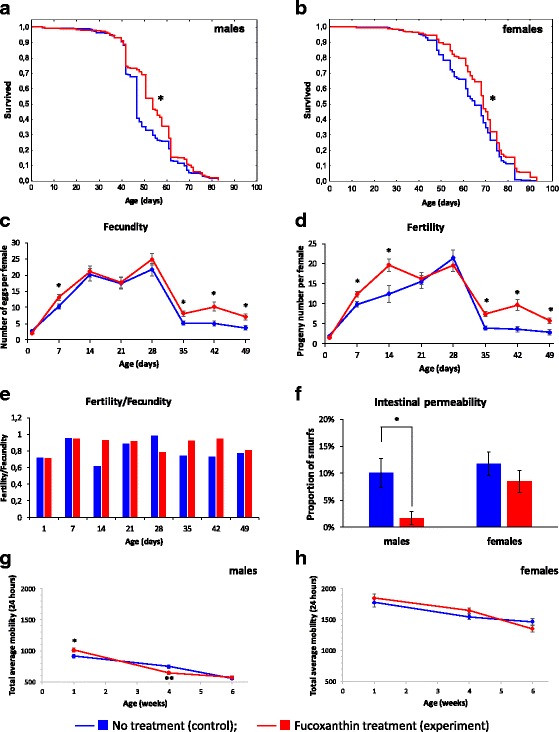
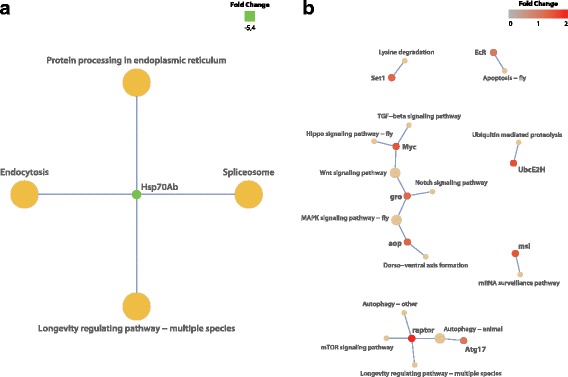
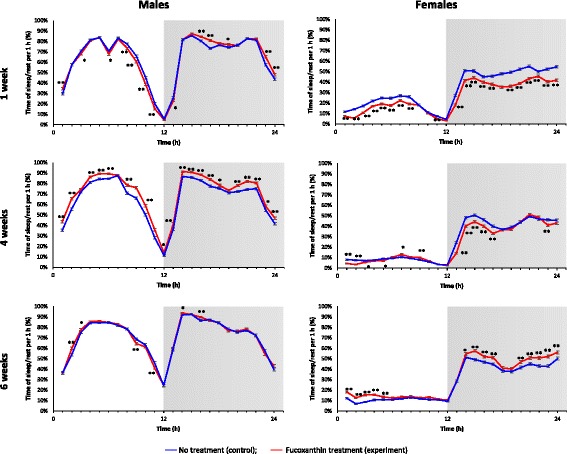
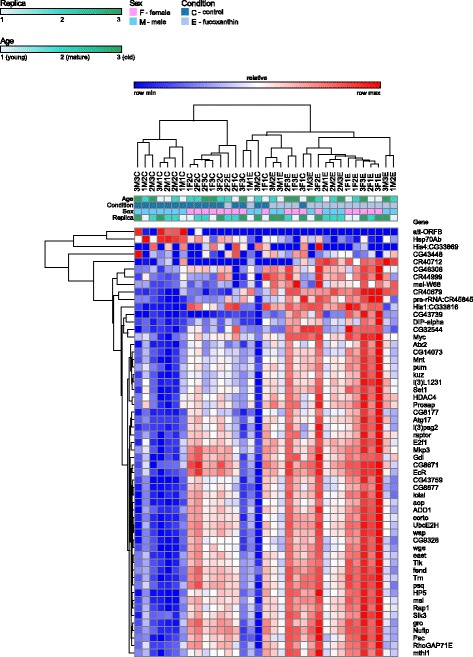
Here, we studied the effects of fucoxanthin on the Drosophila aging process at the molecular and the whole organism levels. At the organismal level, fucoxanthin increased the median lifespan and had a positive effect on fecundity, fertility, intestinal barrier function, and nighttime sleep. Transcriptome analysis revealed 57 differentially expressed genes involved in 17 KEGG (Kyoto Encyclopedia of Genes and Genomes) pathways. Among the most represented molecular pathways induced by fucoxanthin, a significant portion is related to longevity, including MAPK, mTOR, Wnt, Notch, and Hippo signaling pathways, autophagy, translation, glycolysis, oxidative phosphorylation, apoptosis, immune response, neurogenesis, sleep, and response to DNA damage.
Life-extending effects of fucoxanthin are associated with differential expression of longevity-associated genes.
我们之前已经表明,类胡萝卜素岩藻黄质可以延长黑腹果蝇和秀丽隐杆线虫的寿命。然而,岩藻黄质的抗衰老作用的分子机制迄今尚未研究。
在这里,我们在分子和整体水平上研究了岩藻黄质对果蝇衰老过程的影响。在机体水平上,岩藻黄质增加了寿命中位数,并对生殖力、生育力、肠道屏障功能和夜间睡眠有积极影响。转录组分析显示,有 57 个差异表达基因参与了 17 个 KEGG(京都基因与基因组百科全书)途径。在岩藻黄质诱导的最具代表性的分子途径中,很大一部分与长寿有关,包括 MAPK、mTOR、Wnt、Notch 和 Hippo 信号通路、自噬、翻译、糖酵解、氧化磷酸化、细胞凋亡、免疫反应、神经发生、睡眠和对 DNA 损伤的反应。
岩藻黄质的延长寿命作用与长寿相关基因的差异表达有关。