Chen J J
Rotman Research Institute, Baycrest, Toronto, ON, Canada.
Department of Medical Biophysics, University of Toronto, Toronto, ON, Canada.
Front Aging Neurosci. 2018 Jun 5;10:170. doi: 10.3389/fnagi.2018.00170. eCollection 2018.
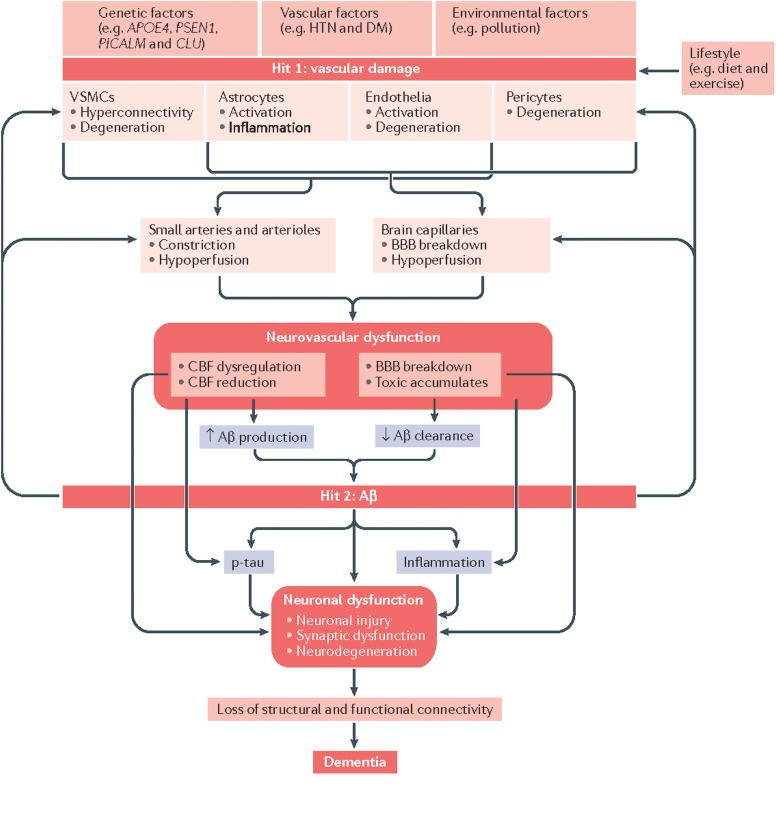
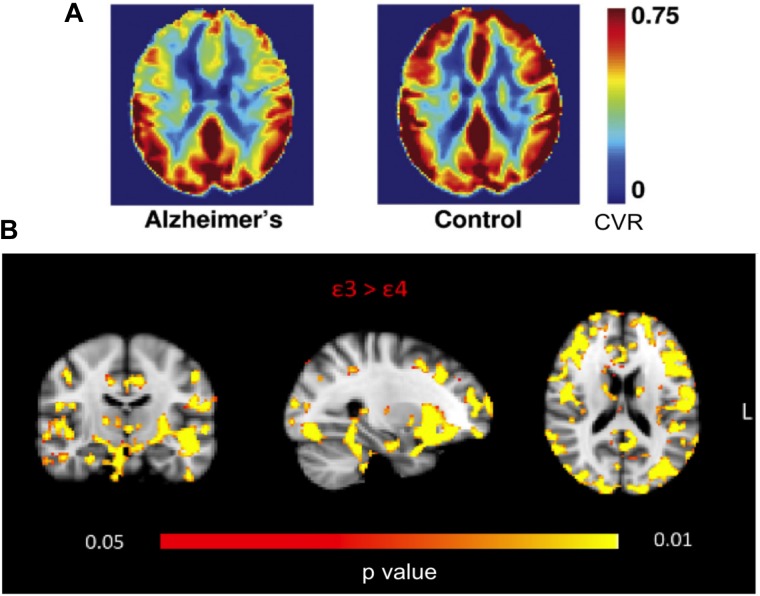
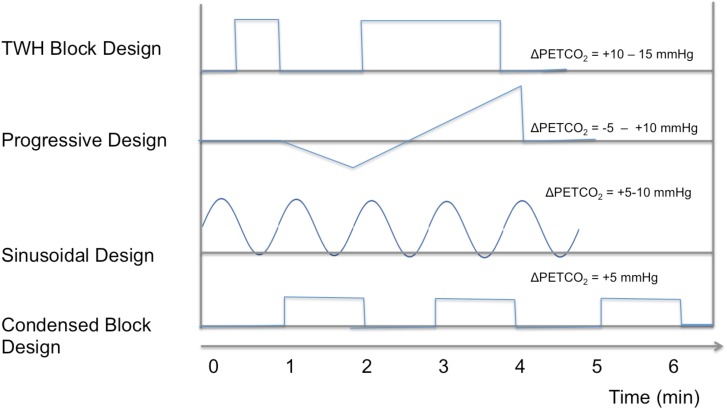
Alzheimer's disease (AD) is associated with well-established macrostructural and cellular markers, including localized brain atrophy and deposition of amyloid. However, there is growing recognition of the link between cerebrovascular dysfunction and AD, supported by continuous experimental evidence in the animal and human literature. As a result, neuroimaging studies of AD are increasingly aiming to incorporate vascular measures, exemplified by measures of cerebrovascular reactivity (CVR). CVR is a measure that is rooted in clinical practice, and as non-invasive CVR-mapping techniques become more widely available, routine CVR mapping may open up new avenues of investigation into the development of AD. This review focuses on the use of MRI to map CVR, paying specific attention to recent developments in MRI methodology and on the emerging stimulus-free approaches to CVR mapping. It also summarizes the biological basis for the vascular contribution to AD, and provides critical perspective on the choice of CVR-mapping techniques amongst frail populations.
阿尔茨海默病(AD)与已明确的宏观结构和细胞标志物相关,包括局部脑萎缩和淀粉样蛋白沉积。然而,脑血管功能障碍与AD之间的联系越来越受到认可,动物和人类文献中的持续实验证据支持了这一点。因此,AD的神经影像学研究越来越旨在纳入血管测量指标,以脑血管反应性(CVR)测量为例。CVR是一种源于临床实践的测量指标,随着非侵入性CVR映射技术越来越广泛地可用,常规CVR映射可能会为AD的发展开辟新的研究途径。本综述重点关注使用MRI来映射CVR,特别关注MRI方法的最新进展以及新兴的无刺激CVR映射方法。它还总结了血管对AD影响的生物学基础,并对脆弱人群中CVR映射技术的选择提供了批判性观点。