Li Yuan-Yuan, Chen Xiao-Mei, Zhang Ying, Cho Yu-Hsiu, Wang Ai-Rong, Yeung Edward C, Zeng Xu, Guo Shun-Xing, Lee Yung-I
Institute of Medicinal Plant Development, Chinese Academy of Medical Sciences and Peking Union Medical College, Beijing, China.
Biology Department, National Museum of Natural Science, Taichung, Taiwan.
Front Plant Sci. 2018 Apr 25;9:552. doi: 10.3389/fpls.2018.00552. eCollection 2018.
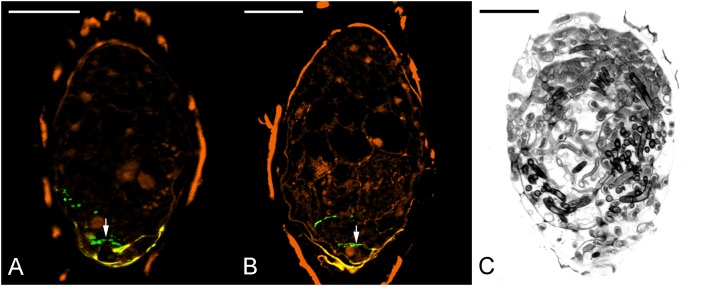
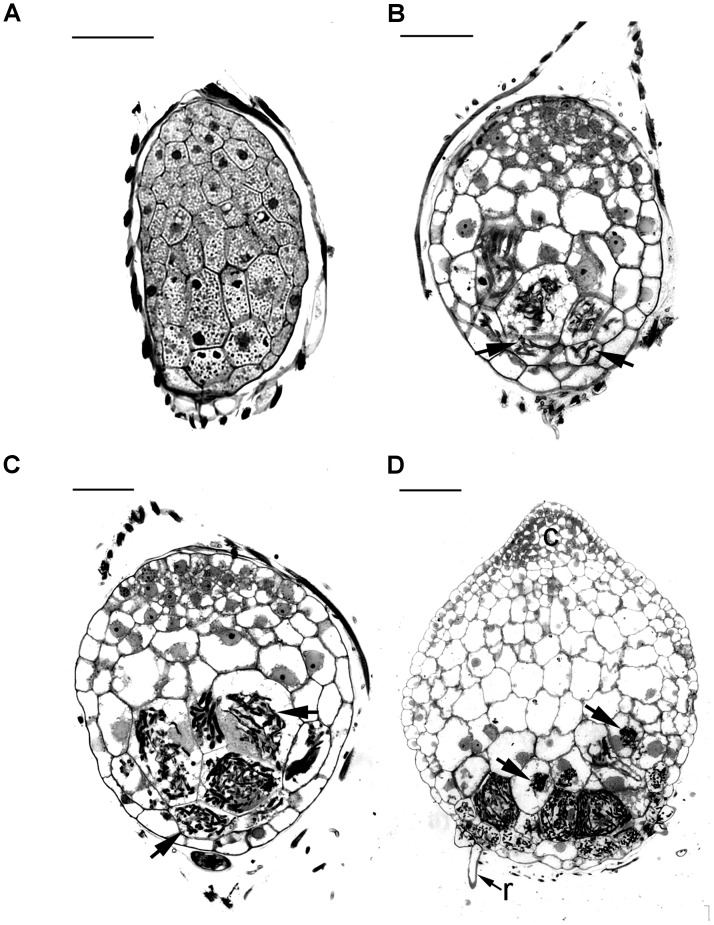
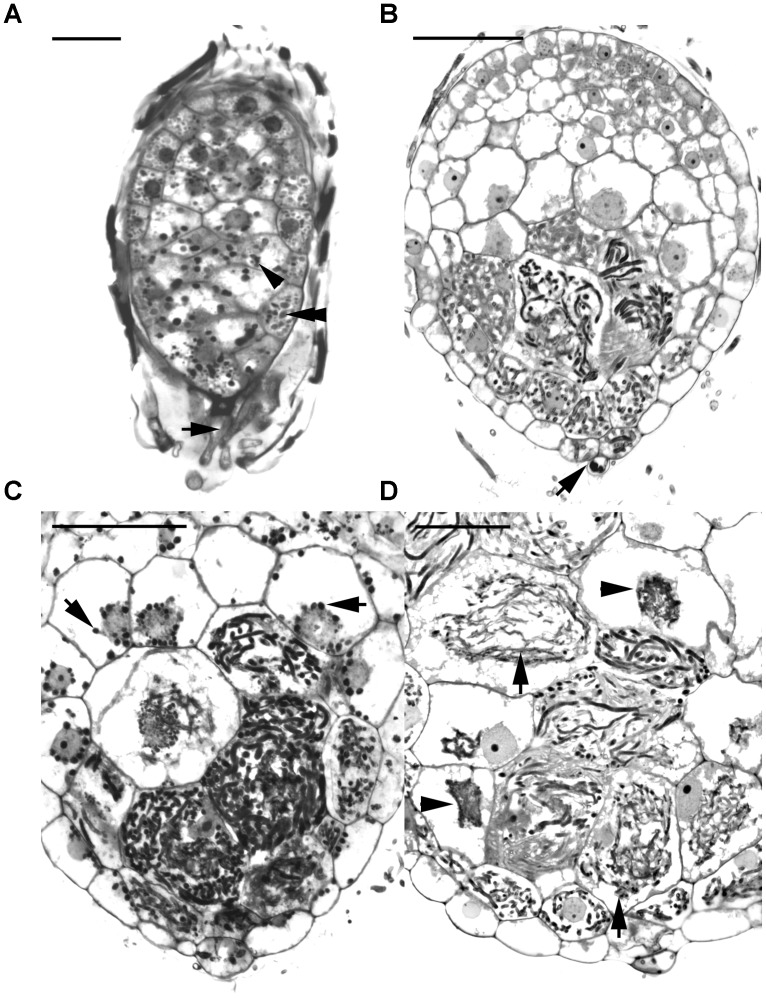
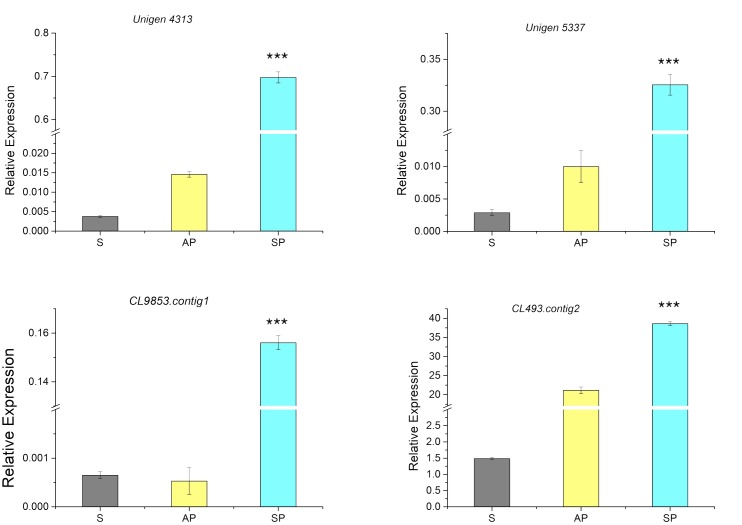
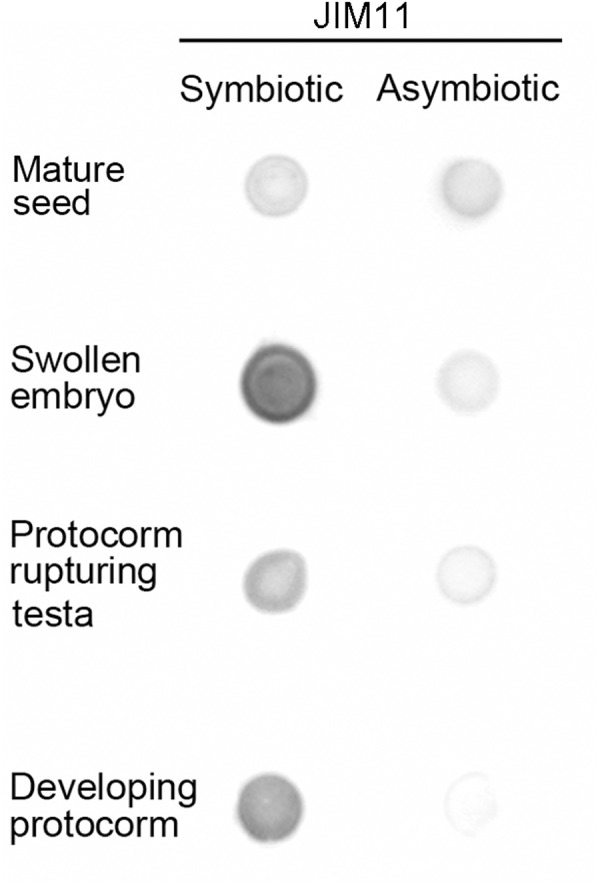
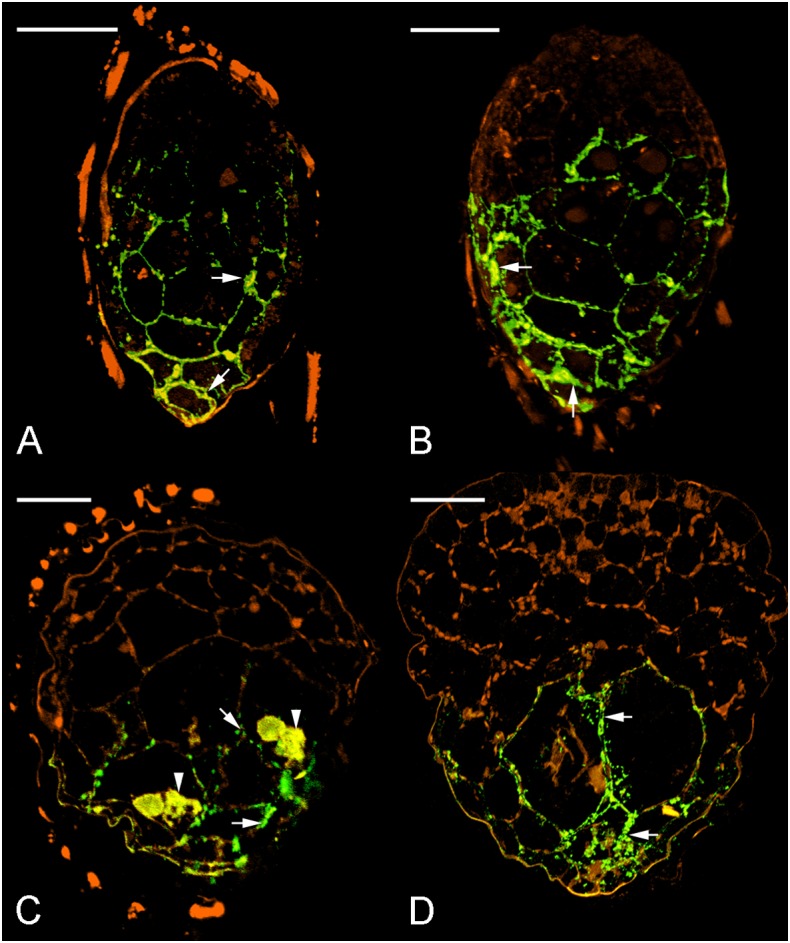
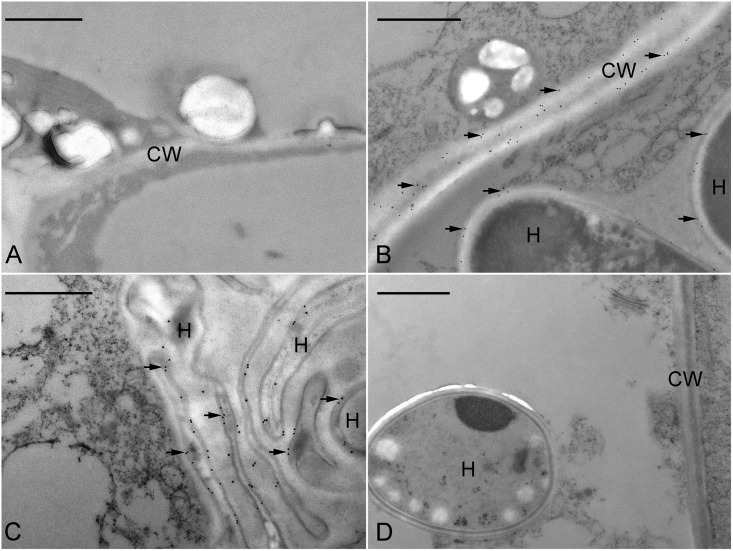
Hydroxyproline-rich glycoproteins (HRGPs) are abundant cell wall components involved in mycorrhizal symbiosis, but little is known about their function in orchid mycorrhizal association. To gain further insight into the role of HRGPs in orchid symbiosis, the location and function of HRGPs were investigated during symbiotic germination of . The presence of JIM11 epitope in developing protocorms was determined using immunodot blots and immunohistochemical staining procedures. Real-time PCR was also employed to verify the expression patterns of genes coding for extensin-like genes selected from the transcriptomic database. The importance of HRGPs in symbiotic germination was further investigated using 3,4-dehydro-L-proline (3,4-DHP), an inhibitor of HRGP biosynthesis. In symbiotic cultures, immunodot blots of JIM11 signals were moderate in mature seeds, and the signals became stronger in swollen embryos. After germination, signal intensities decreased in developing protocorms. In contrast, in asymbiotic cultures, JIM11 signals were much lower as compared with those stages in symbiotic cultures. Immunofluorescence staining enabled the visualization of JIM11 epitope in mature embryo and protocorm cells. Positive signals were initially localized in the larger cells near the basal (suspensor) end of uninfected embryos, marking the future colonization site of fungal hyphae. After 1 week of inoculation, the basal end of embryos had been colonized, and a strong signal was detected mostly at the mid- and basal regions of the enlarging protocorm. As protocorm development progressed, the signal was concentrated in the colonized cells at the basal end. In colonized cells, signals were present in the walls and intracellularly associated with hyphae and the pelotons. The precise localization of JIM11 epitope is further examined by immunogold labeling. In the colonized cells, gold particles were found mainly in the cell wall and the interfacial matrix near the fungal cell wall. Four extensin-like genes were verified to be highly up-regulated in symbiotically germinated protocorms as compared to asymbiotically germinated ones. The 3,4-DHP treatment inhibited the accumulation of HRGPs and symbiotic seed germination. In these protocorms, fungal hyphae could be found throughout the protocorms. Our results indicate that HRGPs play an important role in symbiotic germination. They can serve as markers for fungal colonization, establishing a symbiotic compartment and constraining fungal colonization inside the basal cells of protocorms.
富含羟脯氨酸的糖蛋白(HRGPs)是参与菌根共生的丰富细胞壁成分,但关于它们在兰花菌根共生中的功能知之甚少。为了进一步深入了解HRGPs在兰花共生中的作用,研究了HRGPs在共生萌发过程中的定位和功能。使用免疫斑点印迹和免疫组织化学染色程序确定了发育中的原球茎中JIM11表位的存在。还采用实时PCR来验证从转录组数据库中选择的编码类伸展蛋白基因的基因表达模式。使用HRGP生物合成抑制剂3,4-脱氢-L-脯氨酸(3,4-DHP)进一步研究了HRGPs在共生萌发中的重要性。在共生培养中,JIM11信号的免疫斑点印迹在成熟种子中中等强度,在肿胀的胚中信号变强。萌发后,发育中的原球茎中信号强度降低。相比之下,在非共生培养中,JIM11信号与共生培养中的那些阶段相比要低得多。免疫荧光染色能够在成熟胚和原球茎细胞中可视化JIM11表位。阳性信号最初定位于未感染胚基部(胚柄)末端附近的较大细胞中,标记着真菌菌丝未来的定殖位点。接种1周后,胚的基部末端已被定殖,并且在扩大的原球茎的中部和基部区域大多检测到强信号。随着原球茎发育的进行,信号集中在基部末端的定殖细胞中。在定殖细胞中,信号存在于细胞壁中,并在细胞内与菌丝和菌根团相关联。通过免疫金标记进一步检查JIM11表位的精确定位。在定殖细胞中,金颗粒主要存在于细胞壁和真菌细胞壁附近的界面基质中。与非共生萌发的原球茎相比,四个类伸展蛋白基因在共生萌发的原球茎中被验证为高度上调。3,4-DHP处理抑制HRGPs的积累和共生种子萌发。在这些原球茎中,真菌菌丝可在整个原球茎中发现。我们的结果表明,HRGPs在共生萌发中起重要作用。它们可作为真菌定殖的标记,建立共生区室并限制真菌在原球茎基部细胞内的定殖。