Khalil Haitham H, Kalkat Maninder, Malahias Marco N, Rhobaye Saif, Ashour Tarek, Djearaman Madava G, Naidu Babu
Department of Oncoplasty and Reconstructive Surgery, Good Hope Hospital, Heart of England NHS Foundation Trust, Birmingham, West Midlands, United Kingdom.
Department of Thoracic Surgery, Heartlands Hospital, Heart of England NHS Foundation Trust, Birmingham, West Midlands, United Kingdom.
Plast Reconstr Surg Glob Open. 2018 May 18;6(5):e1703. doi: 10.1097/GOX.0000000000001703. eCollection 2018 May.
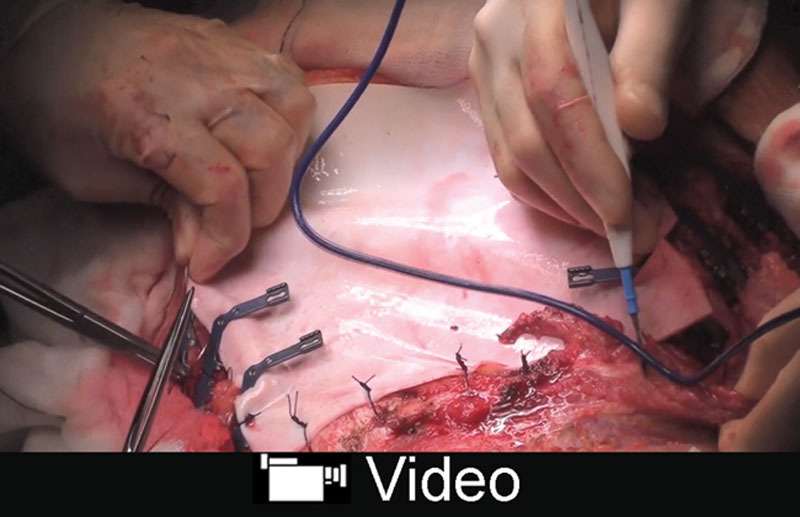
Tenets of chest wall reconstruction for malignancy are well known; however, the insertion of synthetic prosthetic material to achieve rigid and nonrigid skeletal reconstruction could be associated with more complications including infection and extrusion especially in high risk patients. This includes fungating, infected tumors, previous radiotherapy, scars, smoking, diabetes, and morbid obesity. Bioprosthesis Acelluar Dermal Matrix Strattice would be a substitute to resist infection and provide stable coverage.
A retrospective data analysis study on 8 high-risk patients who underwent chest wall resection and reconstruction with bioprosthesis (Strattice) with/without titanium plates in the period between 2012 and 2017 was performed. Patient's demographics, risk factors, clinico-pathological, radiological, operative details, adjuvant therapy, postoperative morbidity, and follow-up data were recorded.
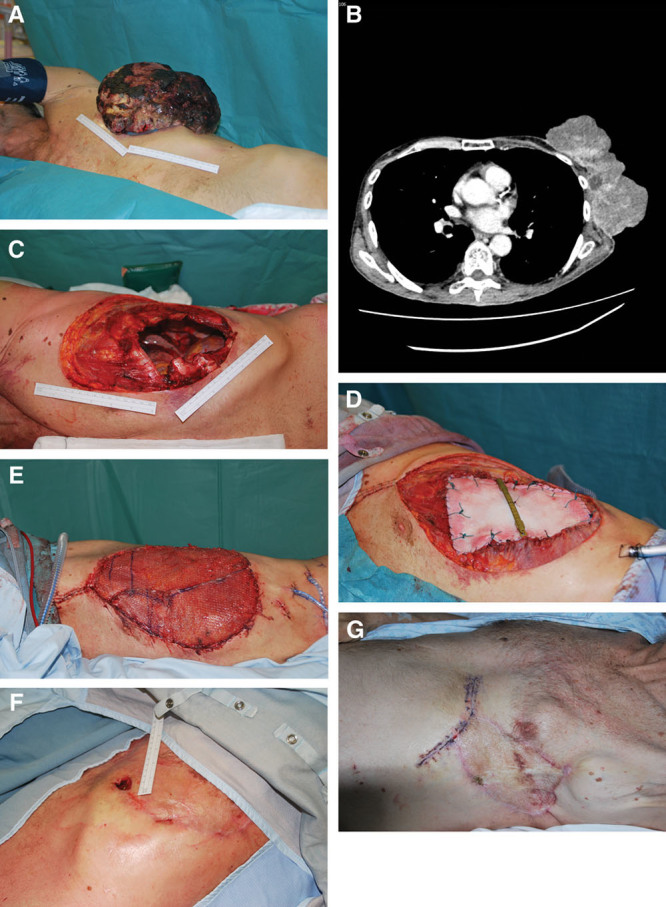
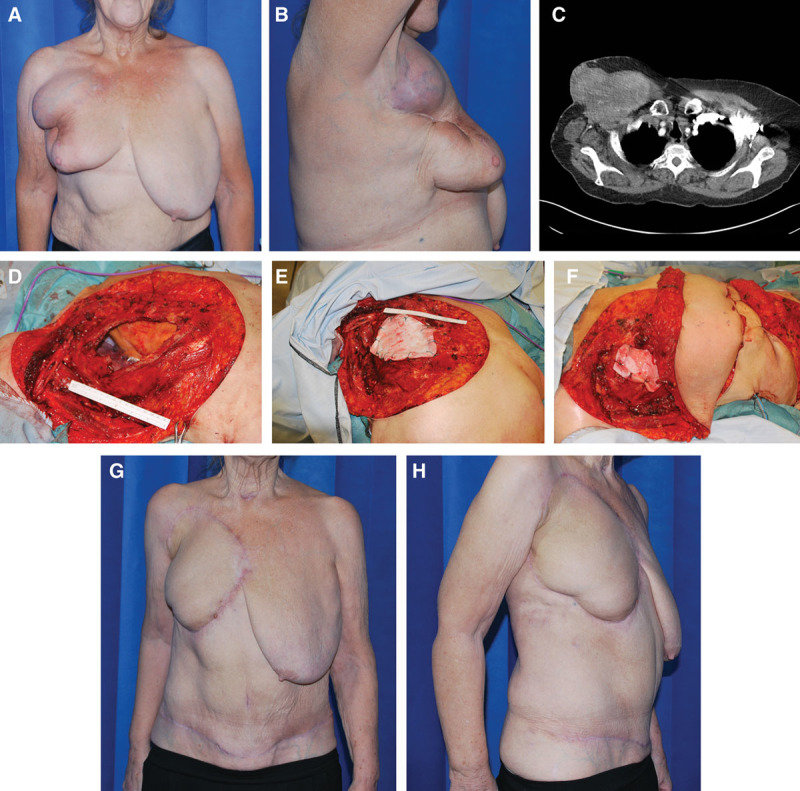
Sarcoma was the pathology in 7 and recurrent breast cancer in 1 with age range from 21 to 71 years (mean, 50) and preponderance of female patients (n = 5). Defects were located anterior/anterolateral with size ranging from 270 to 1,050 cm (mean, 511). Reconstruction was performed using Strattice only in 4 patients, whereas in 4 it was combined with titanium plates. All patients required flap reconstruction (3 pedicled and 5 free). The follow-up ranged from 9 to 52 months (mean, 24.8). Minor complications occurred in 2 patients; however, good functional outcome was achieved in all.
Strattice would act as a safe alternative modality for chest wall reconstruction to resist infection in high-risk patients with extensive defects. It should be considered as a valuable tool in the armamentarium of chest wall reconstruction.
恶性肿瘤胸壁重建的原则广为人知;然而,植入合成假体材料以实现刚性和非刚性骨骼重建可能会引发更多并发症,包括感染和假体挤出,尤其是在高危患者中。这包括溃疡型、感染性肿瘤、既往放疗史、瘢痕、吸烟、糖尿病和病态肥胖。生物假体脱细胞真皮基质Strattice可作为一种替代物,以抵抗感染并提供稳定的覆盖。
对2012年至2017年间8例行胸壁切除并用生物假体(Strattice)联合/不联合钛板进行重建的高危患者进行回顾性数据分析研究。记录患者的人口统计学资料、危险因素、临床病理、影像学、手术细节、辅助治疗、术后发病率及随访数据。
7例病理诊断为肉瘤,1例为复发性乳腺癌,年龄范围为21至71岁(平均50岁),女性患者居多(n = 5)。缺损位于前侧/前外侧,大小从270至1050平方厘米(平均511平方厘米)。4例患者仅使用Strattice进行重建,4例则联合钛板使用。所有患者均需皮瓣重建(3例带蒂皮瓣和5例游离皮瓣)。随访时间为9至52个月(平均24.8个月)。2例患者出现轻微并发症;然而,所有患者均获得了良好的功能结局。
对于有广泛缺损的高危患者,Strattice可作为胸壁重建的一种安全替代方式,以抵抗感染。它应被视为胸壁重建手段中的一种有价值的工具。