Yu Jinming, Ding Zhaoyan, Yang Yuanming, Liu Shanli
Department of Laboratory, Linzi District People's Hospital, Zibo Department of Ultrasound Department of Blood Transfusion, Affiliated Hospital of Medical College, Qingdao University, Qingdao Department of Laboratory, Changle People's Hospital, Changle, China.
Medicine (Baltimore). 2018 Jun;97(25):e11002. doi: 10.1097/MD.0000000000011002.
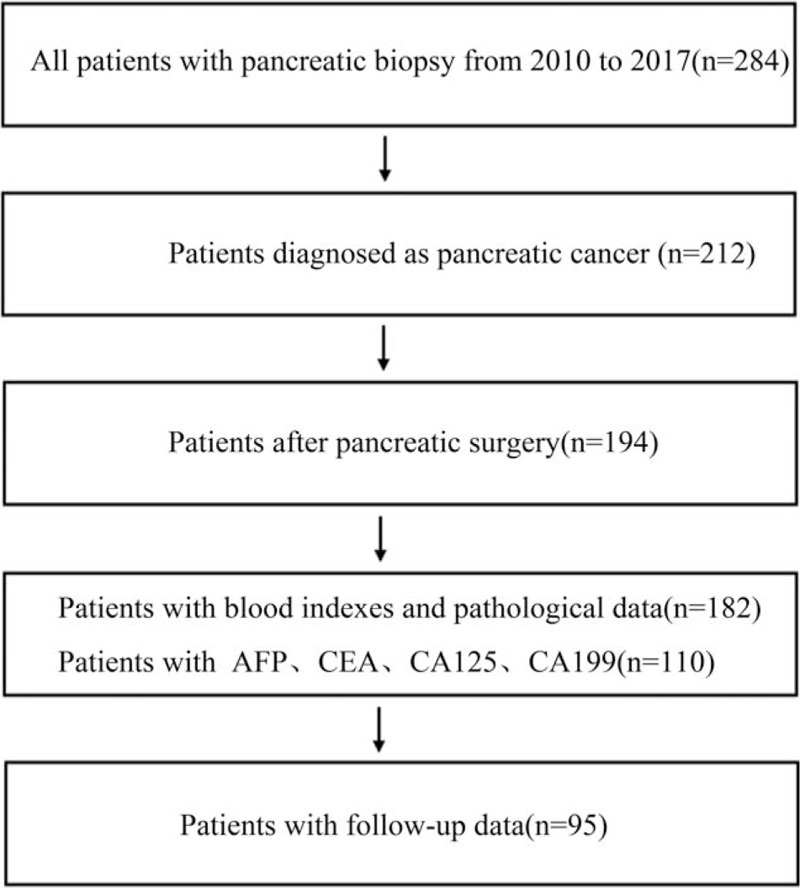
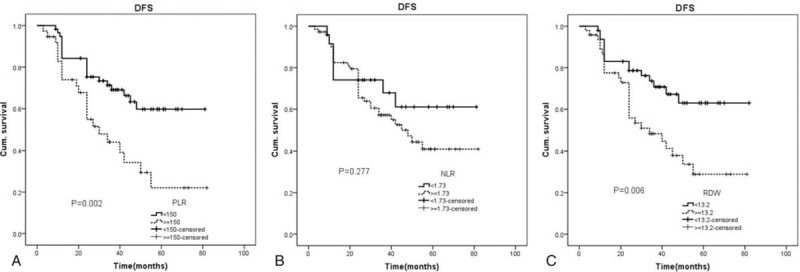
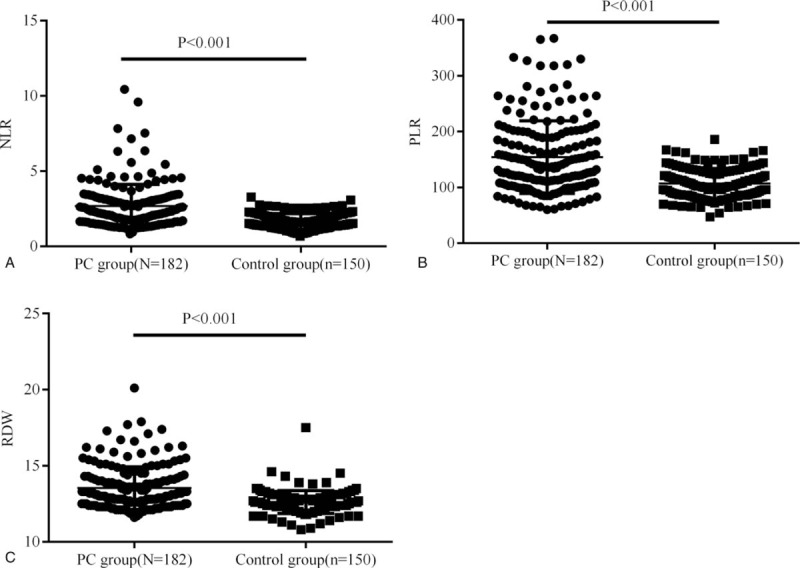
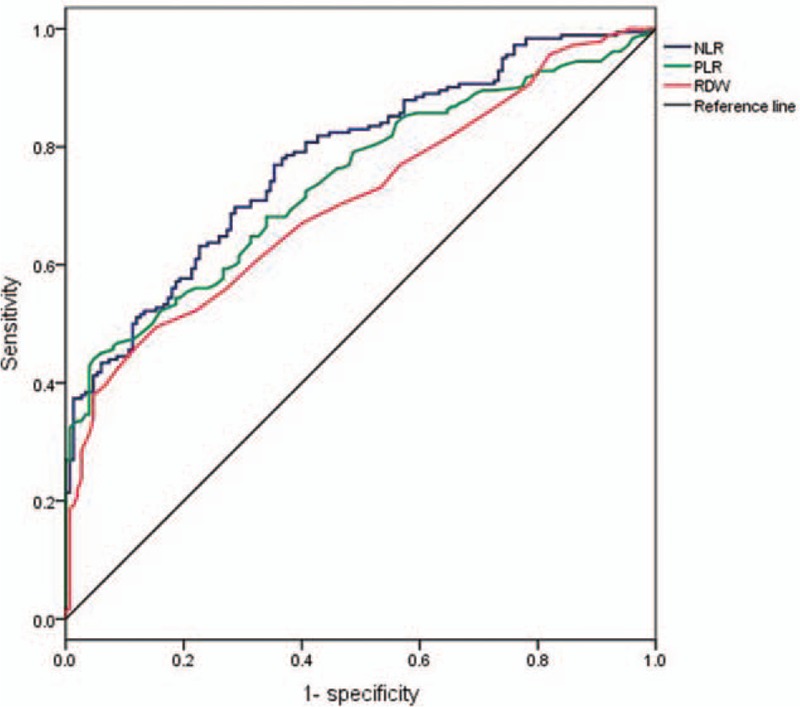
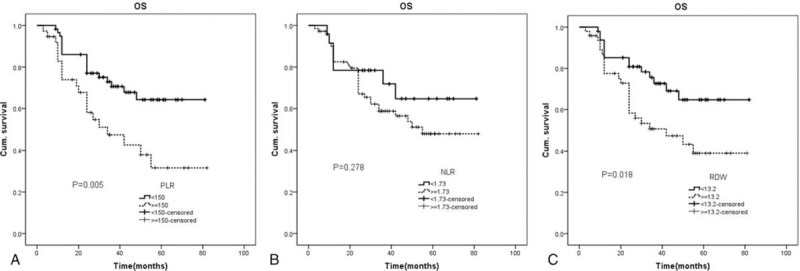
Several studies reported platelet-to-lymphocytes ratio (PLR), neutrophil-to-lymphocyte ratio (NLR) and red blood cell distribution width (RDW) were associated with the mid-term survival or cancer stage in pancreatic cancer. However, the relationship between these markers and the long-term prognosis of pancreatic cancer is still unknown. We investigated the relationship between PLR, NLR, RDW, and the long-term prognosis of pancreatic cancer.We included 182 pancreatic cancer patients who received operation at Linzi District People 's Hospital between August 2010 and January 2017. PLR, NLR, and RDW control data was obtained from 150 health volunteers from January 2011 to January 2017. Blood biochemical data before operation, preoperative computed tomography information, and pathological data of the pancreatic cancer patients were retrospectively collected for further analysis. Independent long-term prognostic significance of PLR, NLR, and RDW were analyzed in pancreatic cancer patients.PLR, NLR, and RDW were significantly increased in pancreatic cancer group compared with the control. Receiver operating characteristic (ROC) curve analysis showed the optimal cut-off values of PLR, NLR, and RDW were 150, 1.73, and 13.2 respectively. Overall survival (OS) analysis showed pancreatic cancer patients with PLR≥150 (median time, 24 vs 37.5 months, P = .005) or RDW≥13.2 (median time, 27 months vs 37.5 months, P = .018) had lower postoperative 5 year OS compared with pancreatic cancer patients with PLR<150 or RDW<13.2. Univariate and multivariable Cox regression analysis for postoperative 5 year OS data showed PLR≥150 (HR = 2.451, 95% CI 1.215-4.947; P = .012) was still associated with the OS independently. Disease free survival (DFS) analysis showed pancreatic cancer patients with PLR≥150 (median time, 24 months vs 38 months, P = .002) or RDW≥13.2 (median time, 24 months vs 37.5 months, P = .006) had lower postoperative 5 year DFS compared with pancreatic cancer patients with PLR<150 or RDW<13.2. Univariate and multivariable Cox regression analysis for postoperative 5 year DFS data showed PLR≥150 (HR = 2.712, 95% CI 1.367-5.379; P = .004) was independently associated with the DFS.In the present study, we find hematological biomarkers PLR≥150 is an independently predictive risk factor for the postoperative long-term prognosis in pancreatic cancer patients. Our study may provide a convenient way for the prognostic assessment of pancreatic cancer patients.
多项研究报告称,血小板与淋巴细胞比值(PLR)、中性粒细胞与淋巴细胞比值(NLR)以及红细胞分布宽度(RDW)与胰腺癌的中期生存或癌症分期相关。然而,这些标志物与胰腺癌长期预后之间的关系仍不清楚。我们调查了PLR、NLR、RDW与胰腺癌长期预后之间的关系。我们纳入了2010年8月至2017年1月期间在临淄区人民医院接受手术的182例胰腺癌患者。PLR、NLR和RDW对照数据来自2011年1月至2017年1月的150名健康志愿者。回顾性收集胰腺癌患者术前的血液生化数据、术前计算机断层扫描信息和病理数据,以进行进一步分析。分析PLR、NLR和RDW在胰腺癌患者中的独立长期预后意义。与对照组相比,胰腺癌组的PLR、NLR和RDW显著升高。受试者工作特征(ROC)曲线分析显示,PLR、NLR和RDW的最佳临界值分别为150、1.73和13.2。总生存(OS)分析显示,与PLR<150或RDW<13.2的胰腺癌患者相比,PLR≥150(中位时间,24个月对37.5个月,P = 0.005)或RDW≥13.2(中位时间,27个月对37.5个月,P = 0.018)的胰腺癌患者术后5年总生存率较低。对术后5年总生存数据进行单因素和多因素Cox回归分析显示,PLR≥150(HR = 2.451,95%CI 1.215 - 4.947;P = 0.012)仍与总生存独立相关。无病生存(DFS)分析显示,与PLR<150或RDW<13.2的胰腺癌患者相比,PLR≥150(中位时间,24个月对38个月,P = 0.002)或RDW≥13.2(中位时间,24个月对37.5个月,P = 0.006)的胰腺癌患者术后5年无病生存率较低。对术后5年无病生存数据进行单因素和多因素Cox回归分析显示,PLR≥150(HR = 2.712,95%CI 1.367 - 5.379;P = 0.004)与无病生存独立相关。在本研究中,我们发现血液生物标志物PLR≥150是胰腺癌患者术后长期预后的独立预测危险因素。我们的研究可能为胰腺癌患者的预后评估提供一种便捷的方法。