Zheng Chuanxi, You Wei, Wan Peng, Jiang Xiaochun, Chen Jinquan, Zheng Yuchen, Li Wei, Tan Jifeng, Zhang Shiquan
The First Affiliated Hospital of Shenzhen University, Department of Joint and Musculoskeletal Tumor The First Affiliated Hospital of Shenzhen University, Department of Spine Surgery, Shenzhen Second People's Hospital, Shenzhen, China.
Medicine (Baltimore). 2018 Jun;97(25):e11004. doi: 10.1097/MD.0000000000011004.
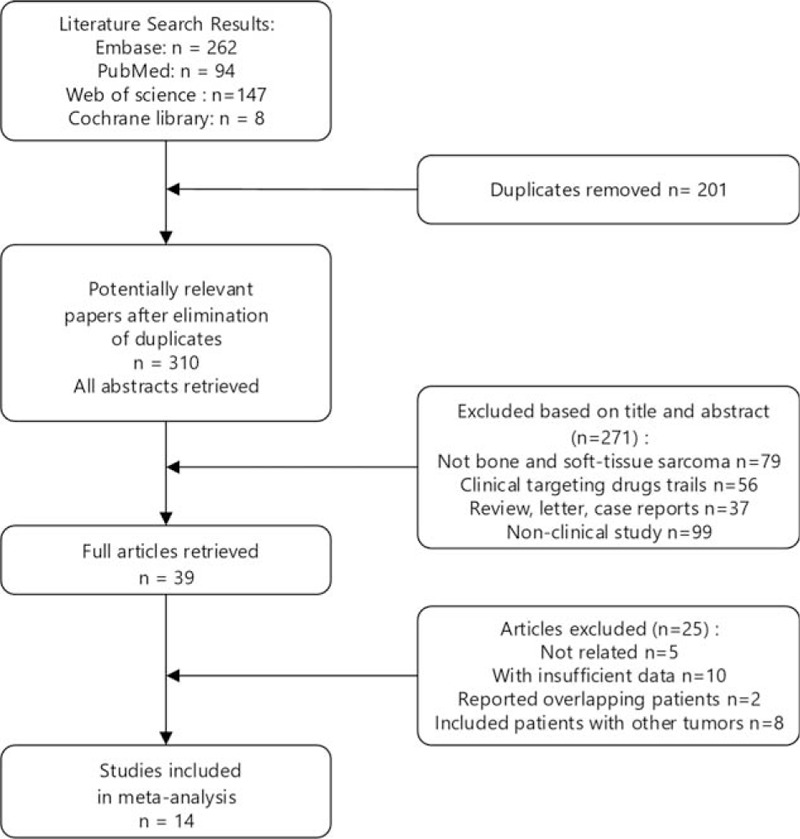
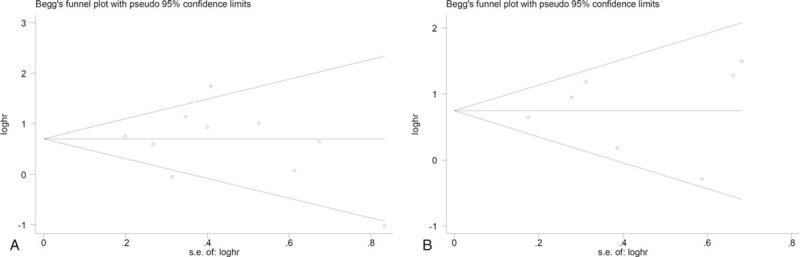
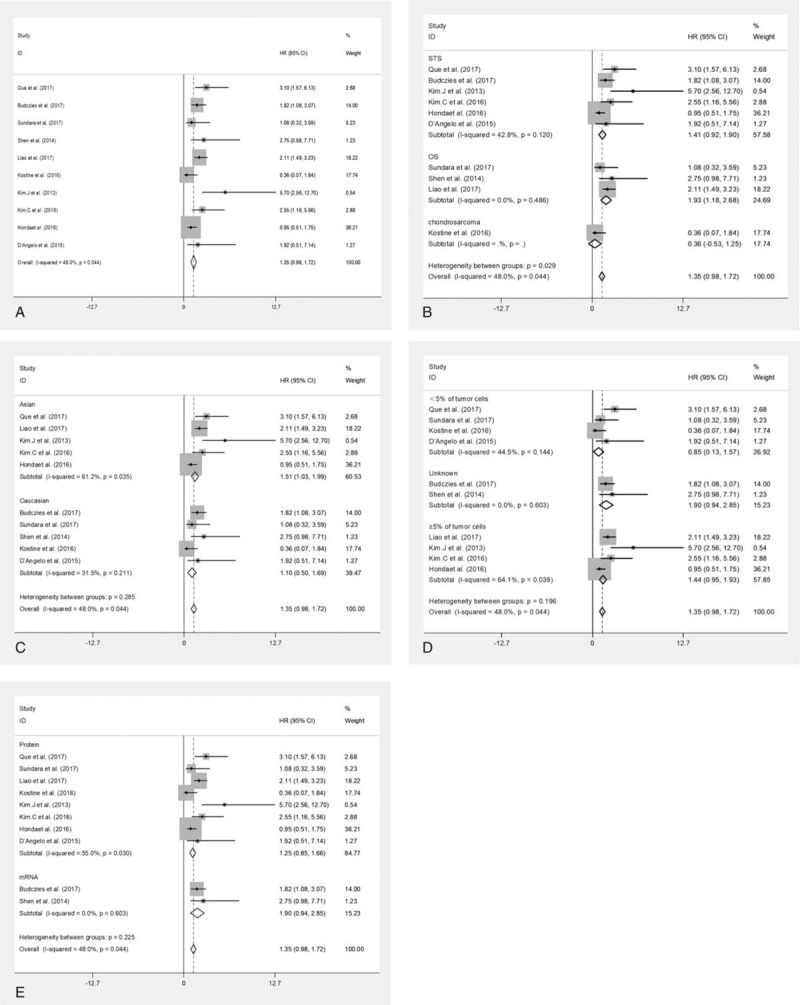
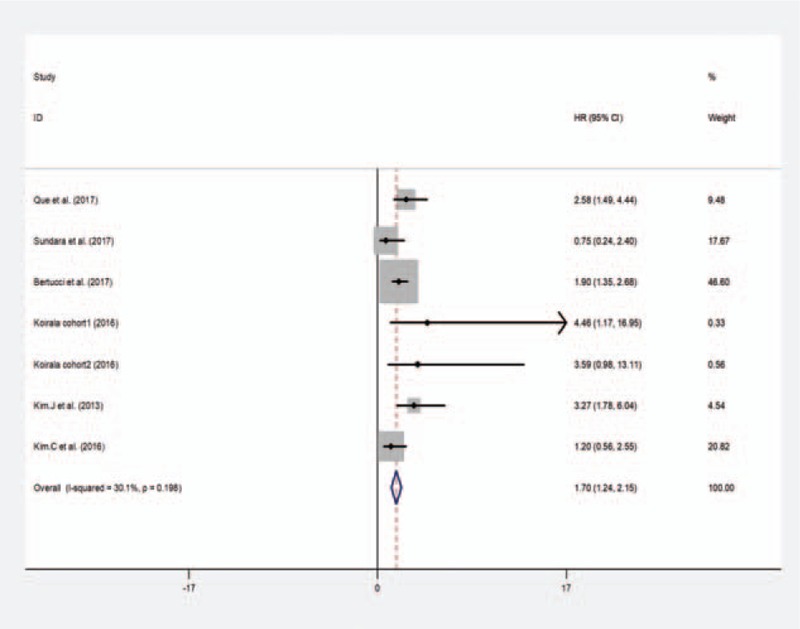
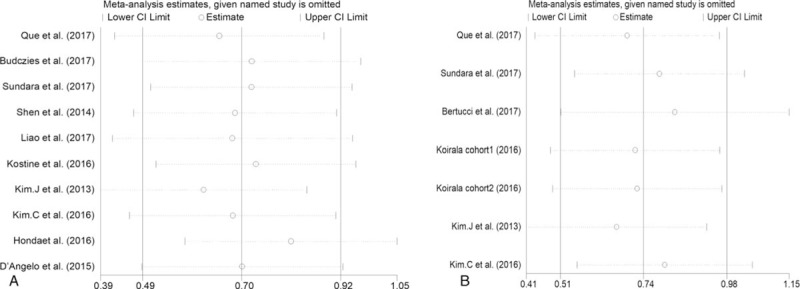
Programmed cell death-ligands 1 (PD-L1) is a key immune checkpoint protein and a promising therapeutic target for malignancy tumor immunotherapy. The prognostic value of PD-L1 in patients with bone and soft tissue sarcoma remains controversial. Therefore, this meta-analysis is conducted to evaluate the associations of PD-L1 expression with overall survival (OS), progression-free survival (PFS), and clinicopathological characteristics of sarcomaA comprehensive literature search of PubMed, Web of Science, Embase, and Cochrane Library was conducted for relevant studies. A total of 14 studies published from 2013 to 2017 were included. The pooled hazard ratios (HRs) with 95% confidence intervals (CIs) were extracted from included studies to assess the association between PD-L1 expression and OS, PFS of patients with sarcoma. Other relevant data were extracted to evaluate the correlations of PD-L1 expression with risk and clinicopathological characteristics of sarcoma. Stata 12.0 software was applied to calculate the strength of association between PD-L1 expression and sarcoma.In total, 14 articles containing 15 independent studies and 1,451 patients were included in this meta-analysis. We found that the high PD-L1 expression was associated with poorer overall survival (HR 1.27, 95% CI: 0.70-1.84 P = .000) and poorer events-free survival (HR 2.05, 95% CI: 1.55-2.70, P = .000) in bone and soft-tissue sarcoma patients. Additionally, we conducted subgroup analysis according to histology type, ethnicity, target of PD-L1 assessment, cutoff, the significant correlations with poor overall survival and events-free survival were also observed. In contrast none of the clinicopathological characteristics (gender, age, tumor site, tumor grade, tumor depth, tumor necrosis rate, metastasis, recurrence, chemotherapy, radiotherapy) was found to be associated with PD-L1 expression in our analysis.The findings from this meta-analysis indicate that PD-L1 expression might be a useful predicative factor of poor prognosis for patients with bone and soft tissue sarcoma.
程序性细胞死亡配体1(PD-L1)是一种关键的免疫检查点蛋白,也是恶性肿瘤免疫治疗中一个很有前景的治疗靶点。PD-L1在骨肉瘤和软组织肉瘤患者中的预后价值仍存在争议。因此,进行这项荟萃分析以评估PD-L1表达与肉瘤总生存期(OS)、无进展生存期(PFS)及临床病理特征之间的关联。
对PubMed、Web of Science、Embase和Cochrane图书馆进行了全面的文献检索,以查找相关研究。共纳入了2013年至2017年发表的14项研究。从纳入的研究中提取了合并风险比(HRs)及95%置信区间(CIs),以评估PD-L1表达与肉瘤患者OS、PFS之间的关联。提取了其他相关数据,以评估PD-L1表达与肉瘤风险及临床病理特征之间的相关性。应用Stata 12.0软件计算PD-L1表达与肉瘤之间的关联强度。
本荟萃分析共纳入14篇文章,包含15项独立研究及1451例患者。我们发现,在骨肉瘤和软组织肉瘤患者中,高PD-L1表达与较差的总生存期(HR 1.27,95% CI:0.70 - 1.84,P = 0.000)及较差的无事件生存期(HR 2.05,95% CI:1.55 - 2.70,P = 0.000)相关。此外,我们根据组织学类型、种族、PD-L1评估靶点、截断值进行了亚组分析,也观察到与较差的总生存期和无事件生存期存在显著相关性。相比之下,在我们的分析中,未发现任何临床病理特征(性别、年龄、肿瘤部位、肿瘤分级、肿瘤深度、肿瘤坏死率、转移、复发、化疗、放疗)与PD-L1表达相关。
这项荟萃分析的结果表明,PD-L1表达可能是骨肉瘤和软组织肉瘤患者预后不良的一个有用预测因素。