Zhu Hong, Ma Xiaojun, Zhao Yaqin, Duo Ji
Department of Medical Oncology, West China Hospital, Sichuan University Department of Medical Oncology, The People's Hospital of Ganzi Tibetan Autonomous Prefecture, Sichuan, P.R. China.
Medicine (Baltimore). 2018 Jun;97(25):e11214. doi: 10.1097/MD.0000000000011214.
Hepatocellular carcinoma (HCC) is a highly invasive cancer associated with high mortality rates. Although sorafenib is currently recommended as standard treatment for advanced HCC, its treatment efficacy is limited. Effective treatments for patients with advanced HCC that progresses on or after sorafenib treatment or patients who are intolerant of sorafenib remain an unmet medical need.
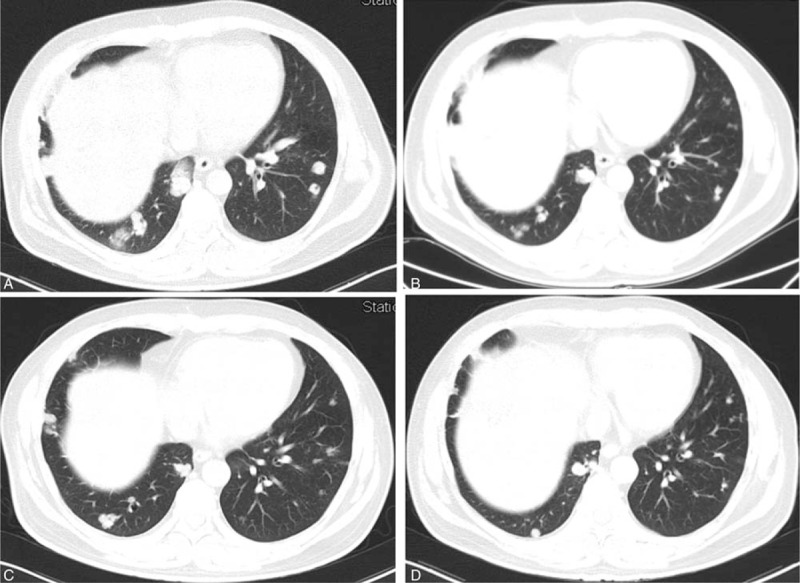
We report an advanced HCC patient with many lung metastases who failed sorafenib treatment.
Sorafenib refractory HCC patient with a large number of lung metastases.
The apatinib alone was used as second line therapy.
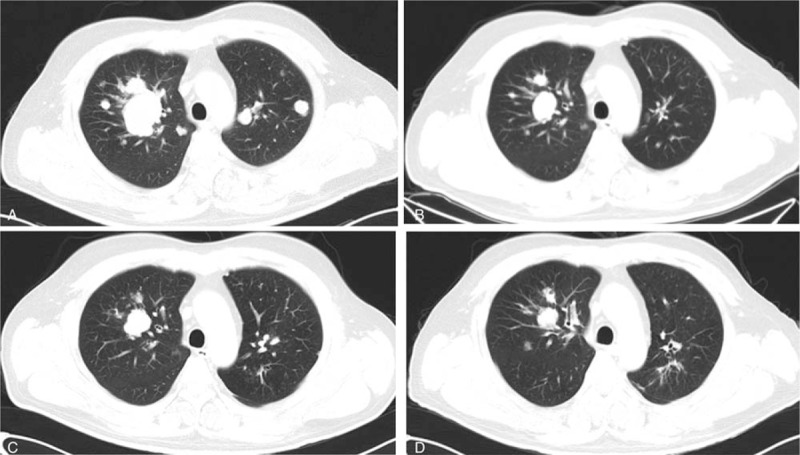
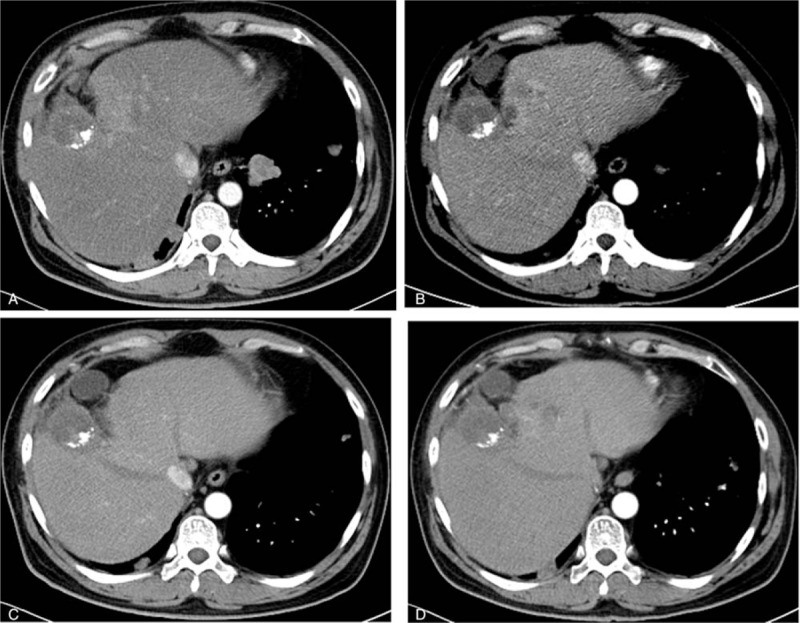
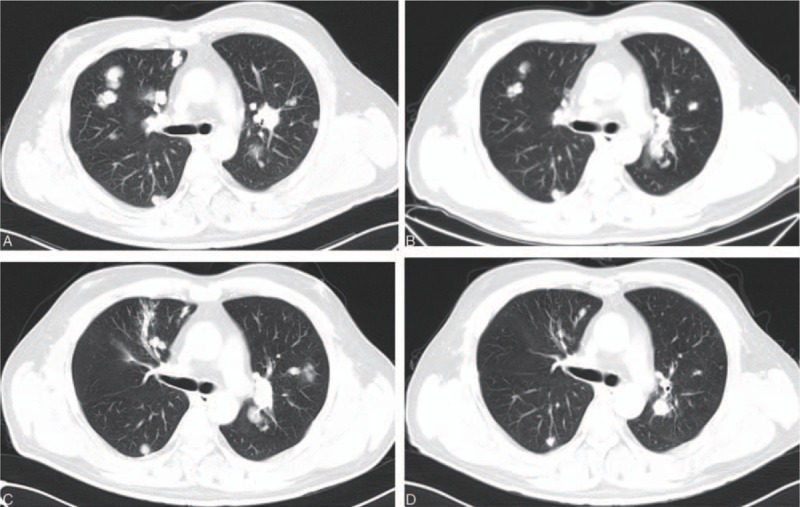
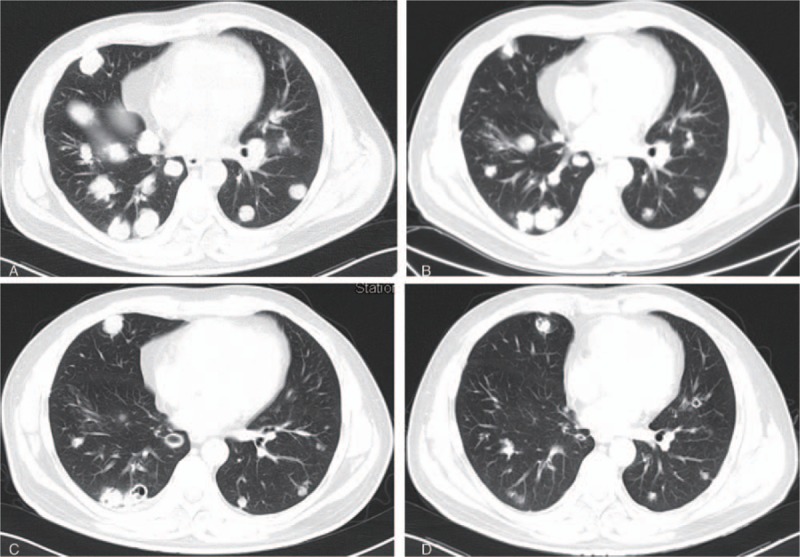
The patient achieved partial response (PR) soon after the treatment, which was maintained for approximately 1 year. During the entire process, the lung metastases continued to diminish. Finally, only a few lesions remained LESSONS:: Apatinib alone may be a good second-line therapy for advanced HCC patients who are refractory to sorafenib. However, further investigation in future prospective clinical studies is warranted.
肝细胞癌(HCC)是一种具有高侵袭性且死亡率高的癌症。尽管索拉非尼目前被推荐作为晚期HCC的标准治疗药物,但其治疗效果有限。对于在索拉非尼治疗期间或之后病情进展的晚期HCC患者,或对索拉非尼不耐受的患者,有效的治疗方法仍然是未被满足的医疗需求。
我们报告了一名晚期HCC患者,有多处肺转移,索拉非尼治疗失败。
索拉非尼难治性HCC患者,伴有大量肺转移。
单独使用阿帕替尼作为二线治疗。
治疗后患者很快获得了部分缓解(PR),并维持了约1年。在此过程中,肺转移灶持续缩小。最后,仅残留少数病灶。
对于对索拉非尼难治的晚期HCC患者,单独使用阿帕替尼可能是一种较好的二线治疗方法。然而,未来有必要进行进一步的前瞻性临床研究。