Rotter Anita, Samorano Luciana Paula, Rivitti-Machado Maria Cecília, Oliveira Zilda Najjar Prado, Gontijo Bernardo
Hospital das Clínicas, Faculdade de Medicina, Universidade de São Paulo, São Paulo, Brazil.
Hospital das Clínicas, Universidade Federal de Minas Gerais, Belo Horizonte, MG, Brazil.
An Bras Dermatol. 2018 Jun;93(3):405-411. doi: 10.1590/abd1806-4841.20187693.
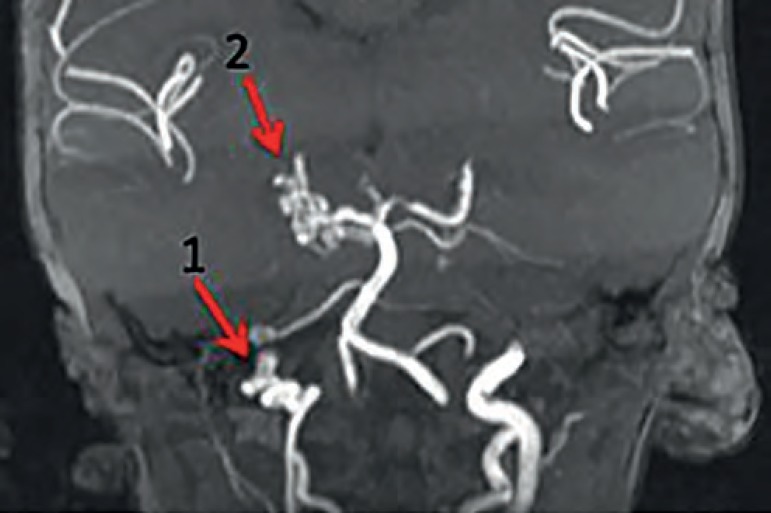
Infantile hemangioma can be linked to other organ malformations. In 1996, PHACE syndrome was first defined as the association of large and segmental infantile hemangioma, usually on the face, head, or cervical region, with malformations of the posterior fossa of the brain, arterial anomalies of the central nervous system, coarctation of the aorta, cardiac defects, and ocular abnormalities. Over 300 cases of PHACE syndrome have been reported, and it is cconsidered one of the most common neurocutaneous vascular disorders in childhood. Knowledge of the features and locations of lesions that imply a greater risk of systemic involvement is crucial for the diagnosis and proper management of PHACE syndrome patients. This review highlights the diagnostic criteria for PHACE syndrome, the imaging workup for extracutaneous involvement, the treatment of infantile hemangioma, and the importance of a multidisciplinary approach in the management of these patients.
婴儿血管瘤可能与其他器官畸形有关。1996年,PHACE综合征首次被定义为通常位于面部、头部或颈部的大型节段性婴儿血管瘤与脑后窝畸形、中枢神经系统动脉异常、主动脉缩窄、心脏缺陷和眼部异常的关联。已报告了300多例PHACE综合征病例,它被认为是儿童期最常见的神经皮肤血管疾病之一。了解提示全身受累风险较高的病变特征和部位对于PHACE综合征患者的诊断和恰当管理至关重要。本综述重点介绍了PHACE综合征的诊断标准、皮肤外受累的影像学检查、婴儿血管瘤的治疗以及多学科方法在这些患者管理中的重要性。