Section of Virology, Department of Microbial Sciences, Faculty of Health & Medical Sciences, University of Surrey, Guildford, United Kingdom
Section of Virology, Department of Microbial Sciences, Faculty of Health & Medical Sciences, University of Surrey, Guildford, United Kingdom.
J Virol. 2018 Aug 16;92(17). doi: 10.1128/JVI.00818-18. Print 2018 Sep 1.
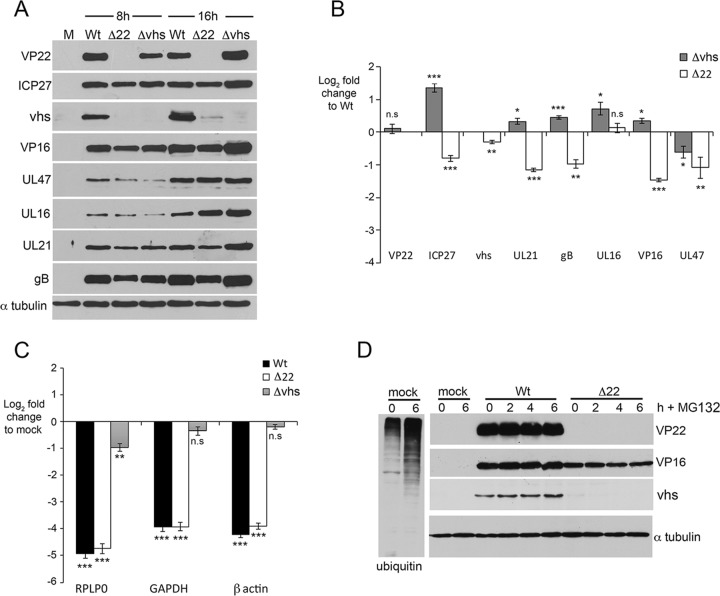
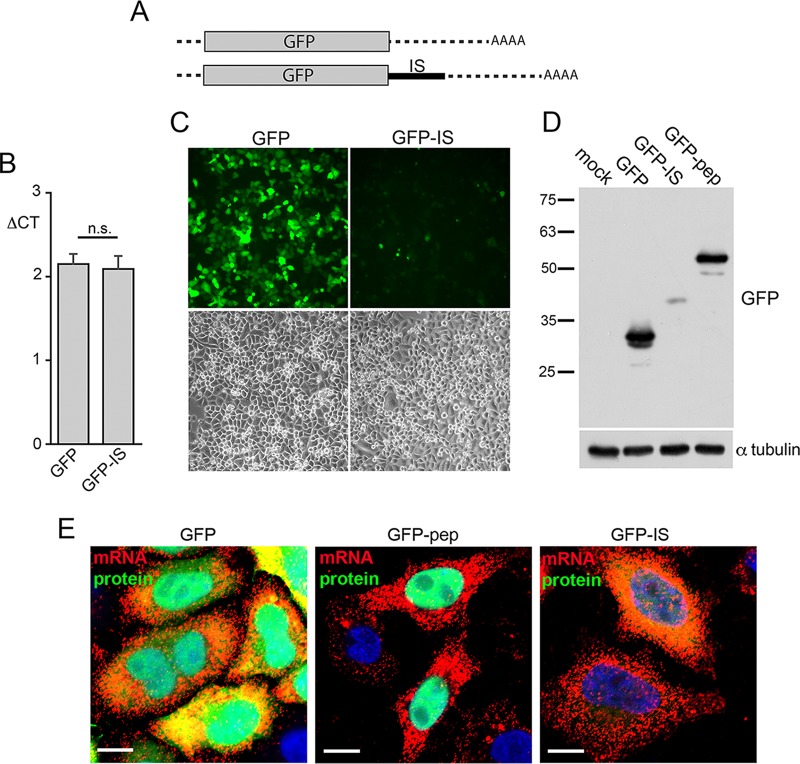
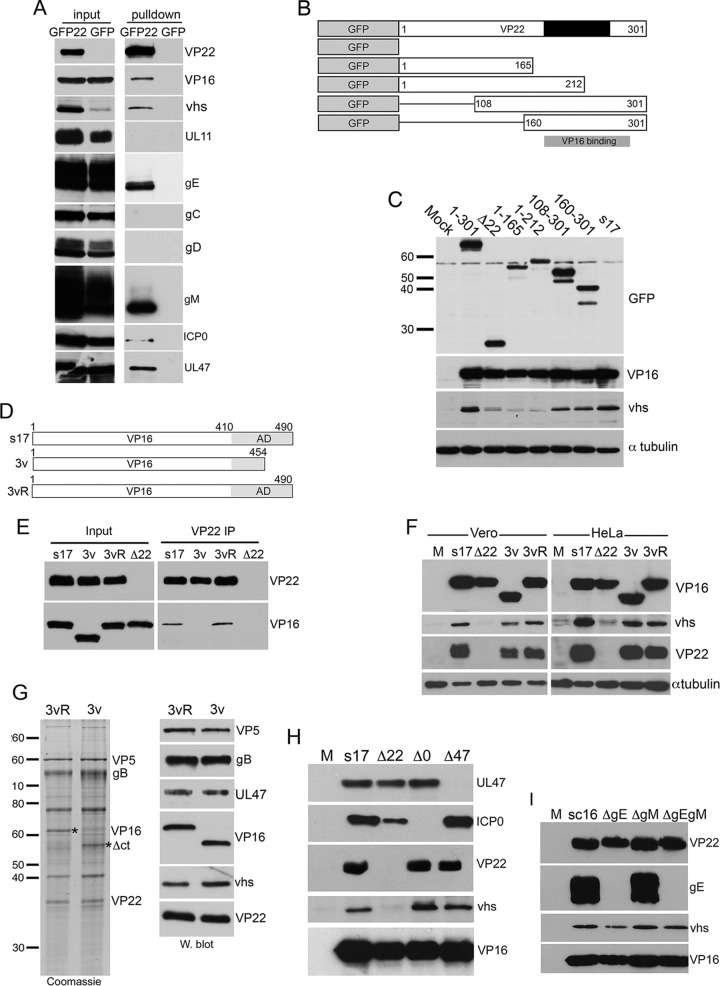
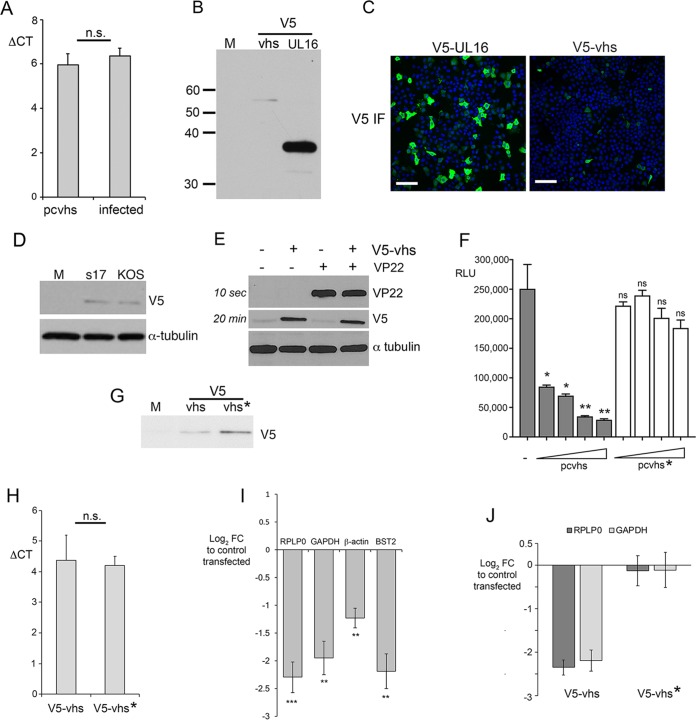
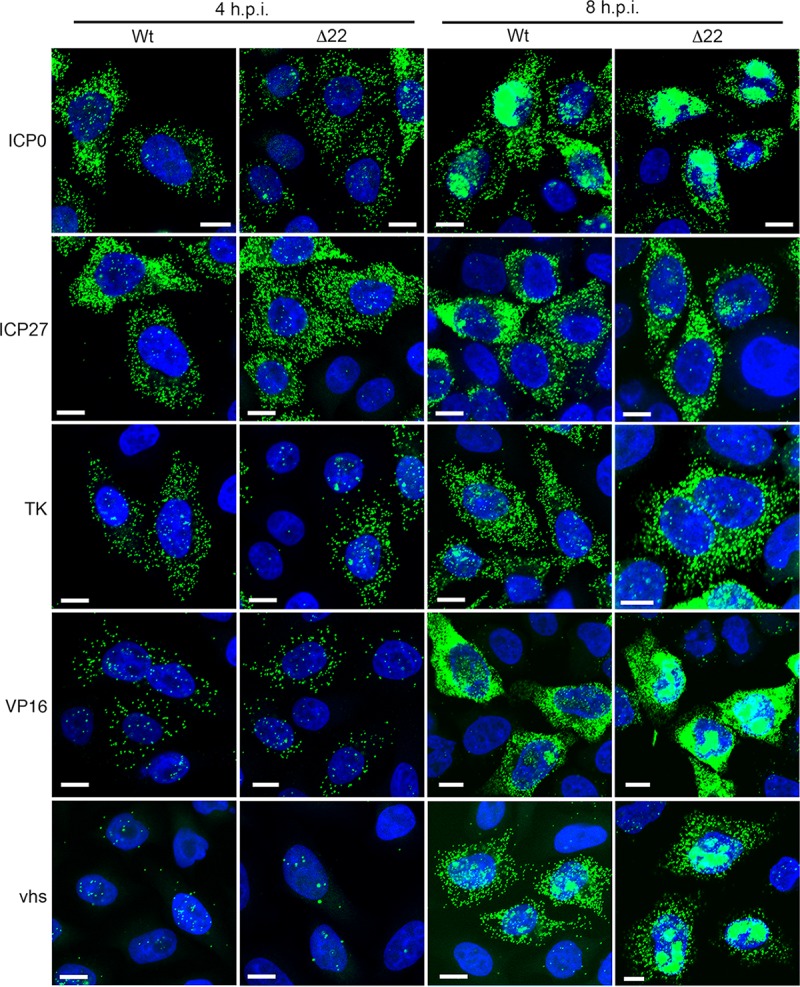
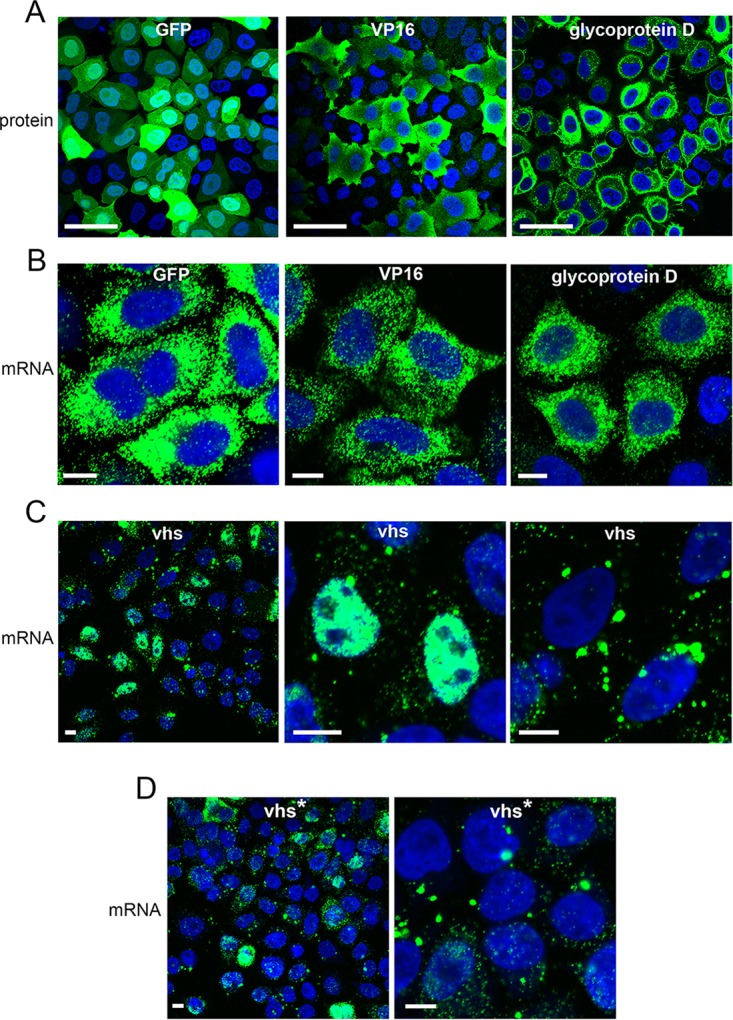
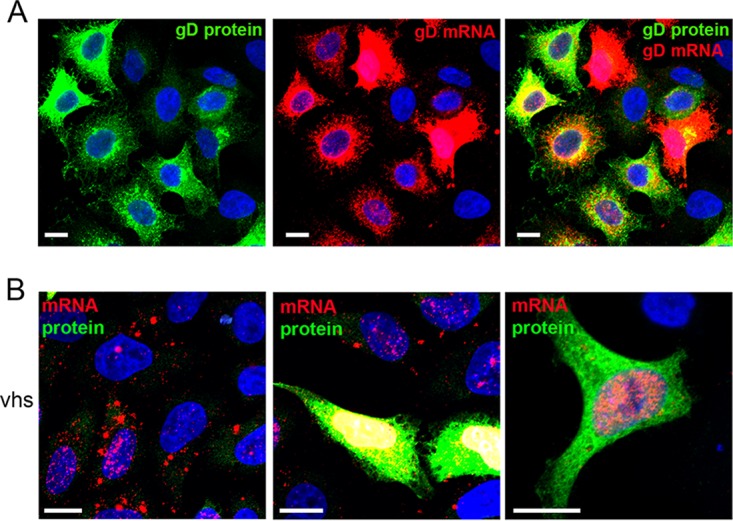
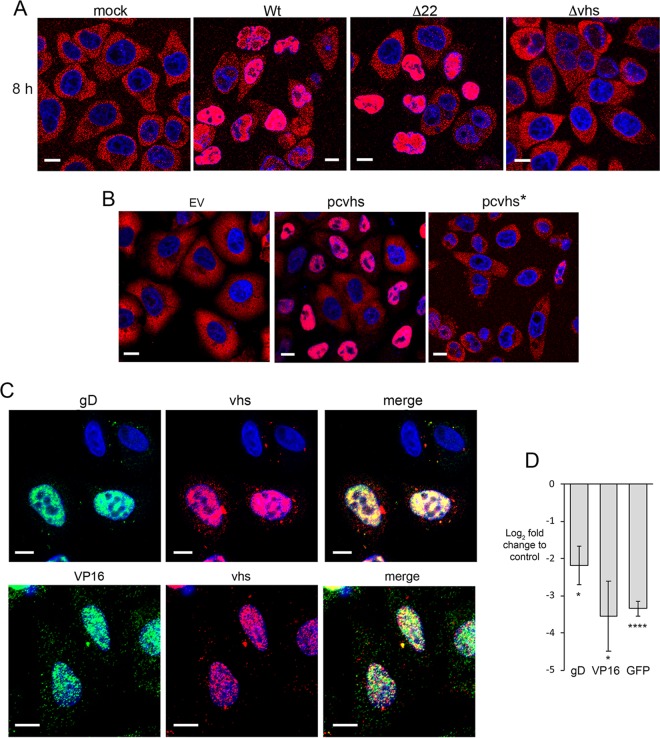
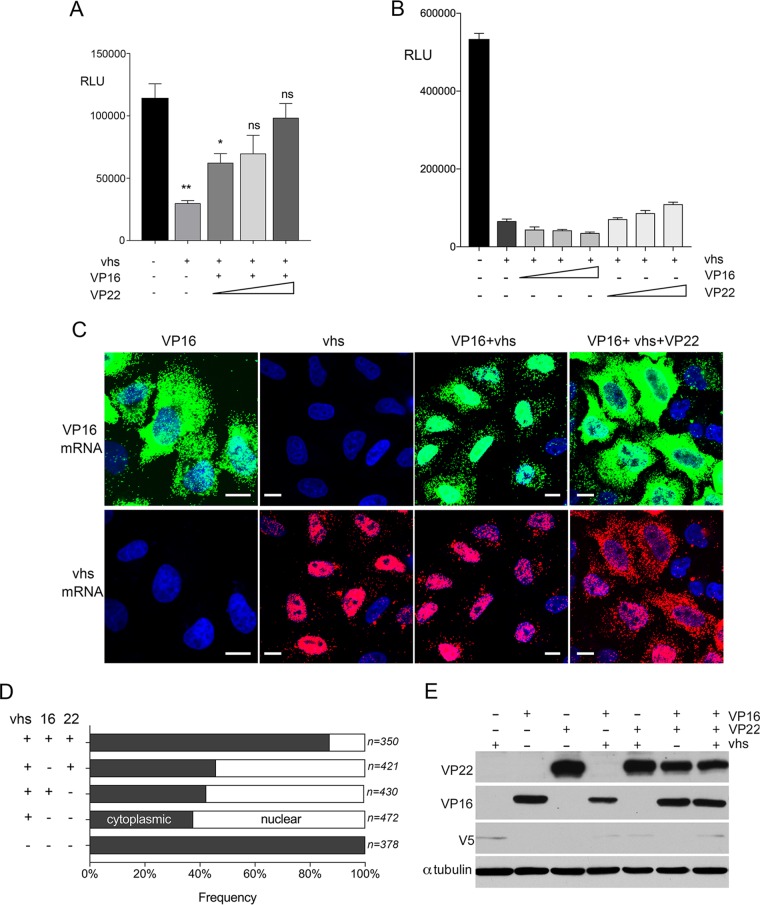
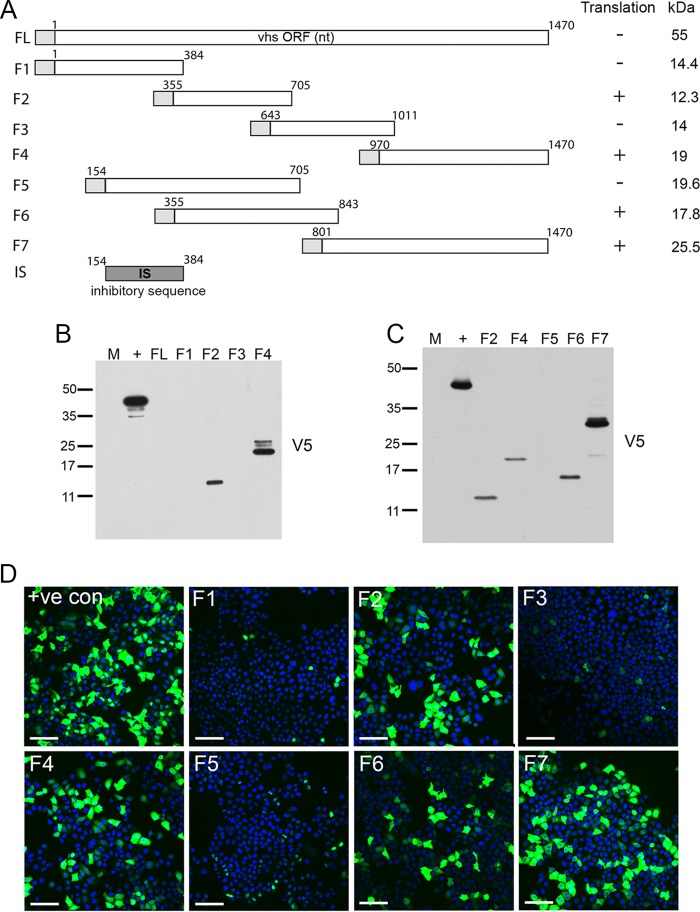
The herpes simplex virus 1 (HSV-1) virion host shutoff (vhs) protein is an endoribonuclease that binds to the cellular translation initiation machinery and degrades associated mRNAs, resulting in the shutoff of host protein synthesis. Hence, its unrestrained activity is considered lethal, and it has been proposed that vhs is regulated by two other virus proteins, VP22 and VP16. We have found that during infection, translation of vhs requires VP22 but not the VP22-VP16 complex. Moreover, in the absence of VP22, vhs is not overactive against cellular or viral transcripts. In transfected cells, vhs was also poorly translated, correlating with the aberrant localization of its mRNA. Counterintuitively, vhs mRNA was predominantly nuclear in cells where vhs protein was detected. Likewise, transcripts from cotransfected plasmids were also retained in the same nuclei where vhs mRNA was located, while poly(A) binding protein (PABP) was relocalized to the nucleus in a vhs-dependent manner, implying a general block to mRNA export. Coexpression of VP16 and VP22 rescued the cytoplasmic localization of vhs mRNA but failed to rescue vhs translation. We identified a 230-nucleotide sequence in the 5' region of vhs that blocked its translation and, when transferred to a heterologous green fluorescent protein transcript, reduced translation without altering mRNA levels or localization. We propose that expression of vhs is tightly regulated by a combination of inherent untranslatability and autoinduced nuclear retention of its mRNA that results in a negative feedback loop, with nuclear retention but not translation of vhs mRNA being the target of rescue by the vhs-VP16-VP22 complex. A myriad of gene expression strategies has been discovered through studies carried out on viruses. This report concerns the regulation of the HSV-1 vhs endoribonuclease, a virus factor that is important for counteracting host antiviral responses by degrading their mRNAs but that must be regulated during infection to ensure that it does not act against and inhibit the virus itself. We show that regulation of vhs involves multifaceted posttranscriptional cellular and viral processes, including aberrant mRNA localization and a novel, autoregulated negative feedback loop to target its own and coexpressed mRNAs for nuclear retention, an activity that is relieved by coexpression of two other virus proteins, VP22 and VP16. These studies reveal the interplay of strategies by which multiple virus-encoded factors coordinate gene expression at the time that they are needed. These findings are broadly relevant to both virus and cellular gene expression.
单纯疱疹病毒 1 (HSV-1) 病毒宿主关闭 (vhs) 蛋白是一种内切核糖核酸酶,它与细胞翻译起始机制结合并降解相关的 mRNA,导致宿主蛋白合成关闭。因此,它的无限制活性被认为是致命的,并且已经提出 vhs 受两种其他病毒蛋白 VP22 和 VP16 调节。我们发现,在感染过程中,vhs 的翻译需要 VP22,但不需要 VP22-VP16 复合物。此外,在没有 VP22 的情况下,vhs 对细胞或病毒转录物的过度活跃作用。在转染细胞中,vhs 的翻译也很差,与 mRNA 的异常定位有关。违反直觉的是,vhs mRNA 在检测到 vhs 蛋白的细胞中主要位于核内。同样,来自共转染质粒的转录物也保留在 vhs mRNA 所在的相同核内,而 poly(A) 结合蛋白 (PABP) 以 vhs 依赖的方式重新定位到核内,暗示 mRNA 输出普遍受阻。VP16 和 VP22 的共表达挽救了 vhs mRNA 的细胞质定位,但未能挽救 vhs 翻译。我们鉴定了 vhs 5' 区域的一个 230 个核苷酸序列,该序列阻断了其翻译,并且当转移到异源绿色荧光蛋白转录物时,降低了翻译而不改变 mRNA 水平或定位。我们提出,vhs 的表达受到其 mRNA 的固有翻译能力不足和自动诱导核内保留的组合的严格调节,这导致负反馈回路,其中 vhs mRNA 的核内保留而不是翻译是 vhs-VP16-VP22 复合物拯救的靶标。通过对病毒进行研究,已经发现了多种基因表达策略。本报告涉及 HSV-1 vhs 内切核糖核酸酶的调节,该酶是一种对抗宿主抗病毒反应的病毒因子,通过降解它们的 mRNA 来实现,但在感染期间必须进行调节,以确保它不会针对并抑制自身病毒。我们表明,vhs 的调节涉及多种细胞和病毒的转录后过程,包括异常的 mRNA 定位和一种新的、自我调节的负反馈回路,以针对自身和共表达的 mRNA 进行核内保留,这种活性被两种其他病毒蛋白 VP22 和 VP16 的共表达所缓解。这些研究揭示了多种病毒编码因子在需要时协调基因表达的策略相互作用。这些发现与病毒和细胞基因表达都广泛相关。