Department of Neuroscience, Mayo Clinic, 4500 San Pablo Road, Jacksonville, FL, 32224, USA.
Department of Pathology, Boston Children's Hospital, Boston, MA, USA.
Acta Neuropathol. 2018 Sep;136(3):389-404. doi: 10.1007/s00401-018-1878-z. Epub 2018 Jun 20.
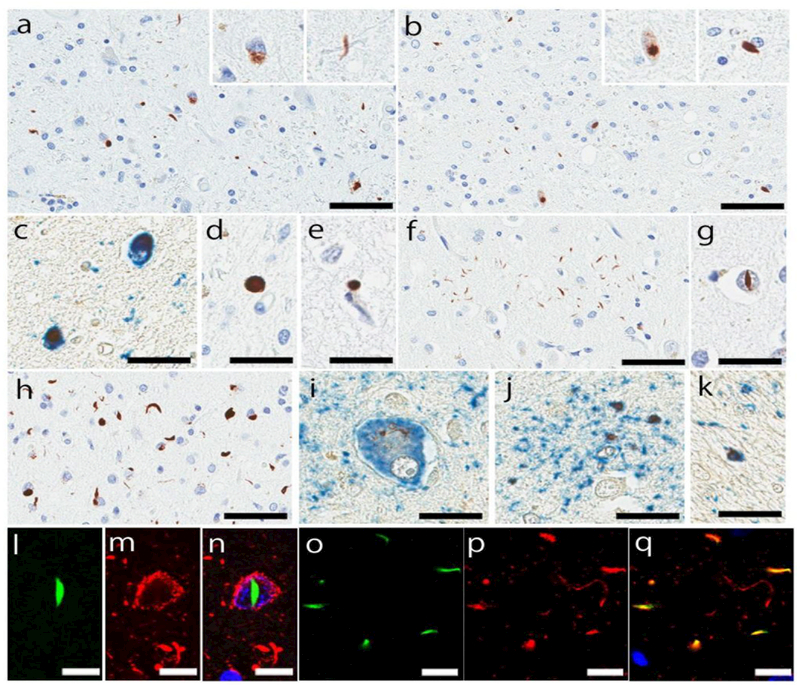
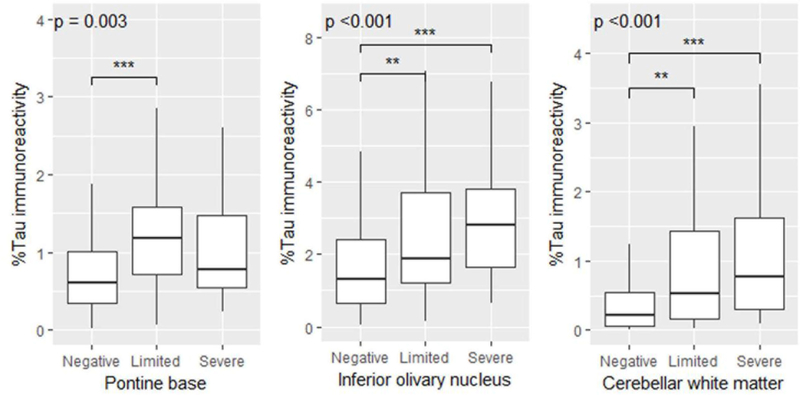
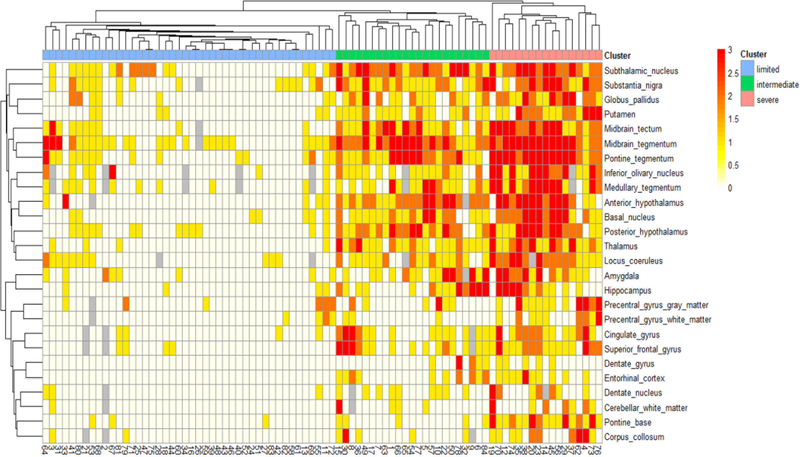
Corticobasal degeneration (CBD) is a clinically heterogeneous tauopathy, which has overlapping clinicopathologic and genetic characteristics with progressive supranuclear palsy (PSP). This study aimed to elucidate whether transactive response DNA-binding protein of 43 kDa (TDP-43) pathology contributes to clinicopathologic heterogeneity of CBD. Paraffin-embedded sections of the midbrain, pons, subthalamic nucleus, and basal forebrain from 187 autopsy-confirmed CBD cases were screened with immunohistochemistry for phospho-TDP-43. In cases with TDP-43 pathology, additional brain regions (i.e., precentral, cingulate, and superior frontal gyri, hippocampus, medulla, and cerebellum) were immunostained. Hierarchical clustering analysis was performed based on the topographical distribution and severity of TDP-43 pathology, and clinicopathologic and genetic features were compared between the clusters. TDP-43 pathology was observed in 45% of CBD cases, most frequently in midbrain tegmentum (80% of TDP-43-positive cases), followed by subthalamic nucleus (69%). TDP-43-positive CBD was divided into TDP-limited (52%) and TDP-severe (48%) by hierarchical clustering analysis. TDP-severe patients were more likely to have been diagnosed clinically as PSP compared to TDP-limited and TDP-negative patients (80 vs 32 vs 30%, P < 0.001). The presence of downward gaze palsy was the strongest factor for the antemortem diagnosis of PSP, and severe TDP-43 pathology in the midbrain tectum was strongly associated with downward gaze palsy. In addition, tau burden in the olivopontocerebellar system was significantly greater in TDP-positive than TDP-negative CBD. Genetic analyses revealed that MAPT H1/H1 genotype frequency was significantly lower in TDP-severe than in TDP-negative and TDP-limited CBD (65 vs 89 vs 91%, P < 0.001). The homozygous minor allele frequencies in GRN rs5848 and TMEM106B rs3173615 were not significantly different between the three groups. In conclusion, the present study indicates that CBD with severe TDP-43 pathology is a distinct clinicopathologic subtype of CBD, characterized by PSP-like clinical presentations, severe tau pathology in the olivopontocerebellar system, and low frequency of MAPT H1 haplotype.
皮质基底节变性(CBD)是一种临床上异质的 tau 病,与进行性核上性麻痹(PSP)具有重叠的临床病理和遗传特征。本研究旨在阐明转导反应 DNA 结合蛋白 43kDa(TDP-43)病理学是否有助于 CBD 的临床病理异质性。使用免疫组织化学方法对 187 例经尸检证实的 CBD 病例的中脑、脑桥、丘脑底核和基底前脑的石蜡包埋切片进行磷酸化 TDP-43 的筛选。在存在 TDP-43 病理学的病例中,对其他脑区(即中央前回、扣带回和额上回、海马体、延髓和小脑)进行免疫染色。基于 TDP-43 病理学的拓扑分布和严重程度进行层次聚类分析,并比较聚类之间的临床病理和遗传特征。在 45%的 CBD 病例中观察到 TDP-43 病理学,最常见于中脑被盖(80%的 TDP-43 阳性病例),其次是丘脑底核(69%)。通过层次聚类分析,将 TDP-43 阳性的 CBD 分为 TDP 局限型(52%)和 TDP 严重型(48%)。与 TDP 局限型和 TDP 阴性患者相比,TDP 严重型患者更有可能在临床上被诊断为 PSP(80%比 32%比 30%,P<0.001)。下视麻痹是 PSP 生前诊断的最强因素,中脑被盖的严重 TDP-43 病理学与下视麻痹密切相关。此外,TDP 阳性 CBD 的橄榄脑桥小脑系统 tau 负担明显大于 TDP 阴性 CBD。遗传分析显示,在 TDP 严重型 CBD 中,MAPT H1/H1 基因型频率明显低于 TDP 阴性和 TDP 局限型 CBD(65%比 89%比 91%,P<0.001)。GRN rs5848 和 TMEM106B rs3173615 的纯合子小等位基因频率在三组之间无显著差异。总之,本研究表明,伴有严重 TDP-43 病理学的 CBD 是 CBD 的一个独特的临床病理亚型,其特征为 PSP 样临床表现、橄榄脑桥小脑系统严重的 tau 病理学以及 MAPT H1 单倍型频率低。