Department I3 (Air Pollution Control, Emission), Hessian Agency for Nature Conservation, Environment and Geology, Kassel, Germany.
Environ Sci Pollut Res Int. 2018 Sep;25(25):24787-24797. doi: 10.1007/s11356-018-2515-z. Epub 2018 Jun 20.
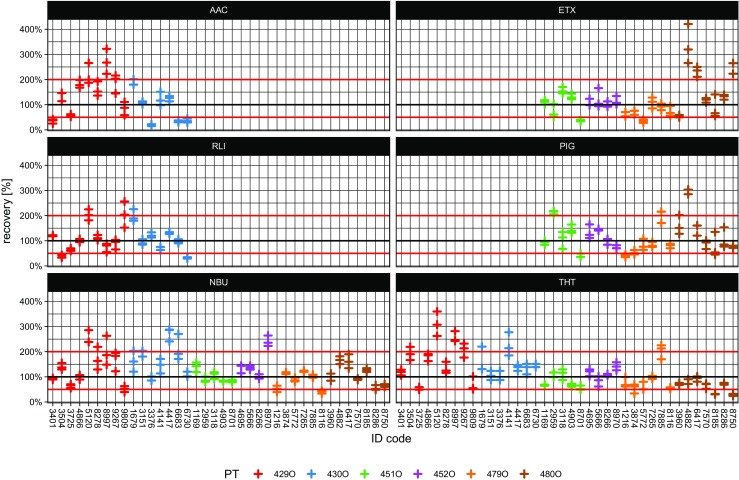
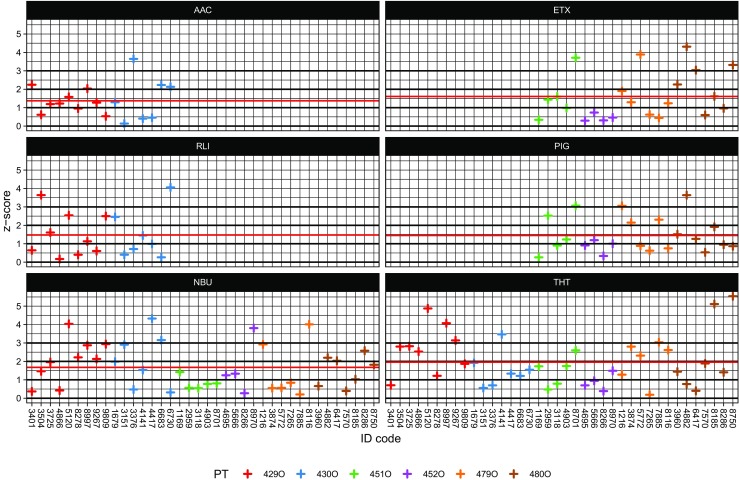
Olfactometry is globally acknowledged as a technique to determine odor concentrations, which are used to characterize odors for regulatory purposes, e.g., to protect the general public against harmful effects of air pollution. Although the determination procedure for odor concentrations is standardized in some countries, continued research is required to understand uncertainties of odor monitoring and prediction. In this respect, the present paper strives to provide answers of paramount importance in olfactometry. To do so, a wealth of measurement data originating from six large-scale olfactometric stack emission proficiency tests conducted from 2015 to 2017 was retrospectively analyzed. The tests were hosted at a unique emission simulation apparatus-a replica of an industry chimney with 23 m in height-so that for the first time, conventional proficiency testing (no sampling) with real measurements (no reference concentrations) was combined. Surprisingly, highly variable recovery rates of the odorants were observed-no matter, which of the very different odorants was analyzed. Extended measurement uncertainties with roughly 30-300% up to 20-520% around a single olfactometric measurement value were calculated, which are way beyond the 95% confidence interval given by the widely used standard EN 13725 (45-220%) for assessment and control of odor emissions. Also, no evidence has been found that mixtures of odorants could be determined more precisely than single-component odorants. This is an important argument in the intensely discussed topic, whether n-butanol as current reference substance in olfactometry should be replaced by multi-component odorants. However, based on our data, resorting to an alternative reference substance will not solve the inherent problem of high uncertainty levels in dynamic olfactometry. Finally, robust statistics allowed to calculate reliable odor thresholds, which are an important prerequisite to convert mass concentrations to odor concentrations and vice versa.
嗅辨测试被全球公认为一种测定气味浓度的技术,该技术被用于对气味进行特征描述,以达到监管目的,例如,保护公众免受空气污染的有害影响。尽管一些国家已经对气味浓度的测定程序进行了标准化,但仍需要进一步的研究来了解气味监测和预测的不确定性。在这方面,本文旨在为嗅辨测试提供至关重要的答案。为此,对 2015 年至 2017 年期间进行的六次大型嗅辨烟囱排放效能测试的大量测量数据进行了回顾性分析。这些测试在一个独特的排放模拟装置上进行,该装置是一个 23 米高的工业烟囱的复制品,因此首次实现了常规的能力验证测试(无采样)与实际测量(无参考浓度)的结合。令人惊讶的是,无论分析的是哪种非常不同的气味剂,都观察到气味剂的回收率存在高度的可变性。计算出的扩展测量不确定度约为单个嗅辨测量值的 30-300%,甚至高达 20-520%,远远超过广泛使用的标准 EN 13725(45-220%)规定的评估和控制气味排放的 95%置信区间。此外,也没有证据表明混合气味剂可以比单一气味剂更精确地测定。这是在激烈讨论的话题中一个重要的论点,即在嗅辨测试中,当前的参考物质正丁醇是否应被多组分气味剂所取代。然而,根据我们的数据,使用替代参考物质并不能解决动态嗅辨测试中固有不确定性水平高的问题。最后,稳健的统计方法允许计算可靠的气味阈值,这是将质量浓度转换为气味浓度和反之亦然的重要前提。