Pang Tao, Zhao Jing, Zhang Feng, Piao Shujuan, Yang Hong, Jiao Jianpeng, Tang Lei, Lu Wenquan, Chen Wansheng
Department of Pharmacy, Changzheng Hospital, Navy Medical University (Second Military Medical University), Shanghai 200003, China.
Department of Traditional Chinese Medicine, Changzheng Hospital, Navy Medical University (Second Military Medical University), Shanghai 200003, China.
Evid Based Complement Alternat Med. 2020 Aug 25;2020:3268047. doi: 10.1155/2020/3268047. eCollection 2020.
This study aimed to investigate the effects of different concentrations of Yiqi Xingnao (YQXN) oral liquid on cerebral ischemia/reperfusion (I/R) injury in rats and YQXN's related mechanisms.
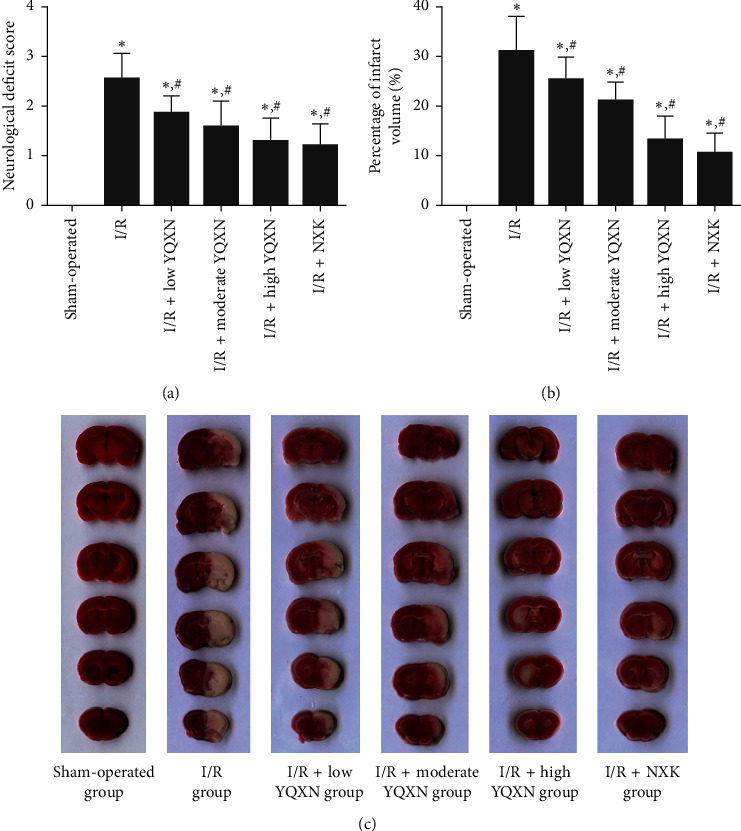
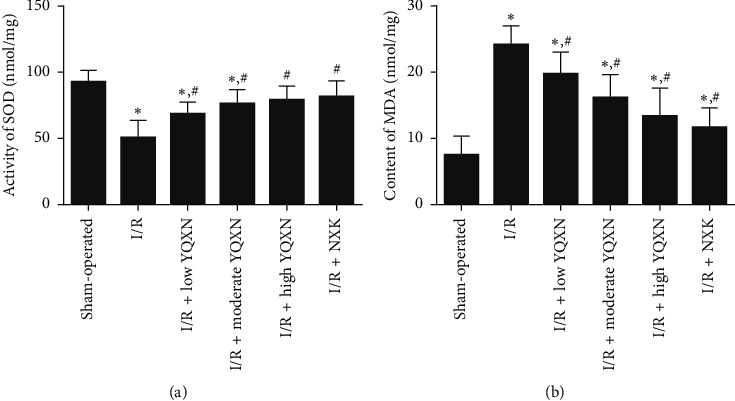
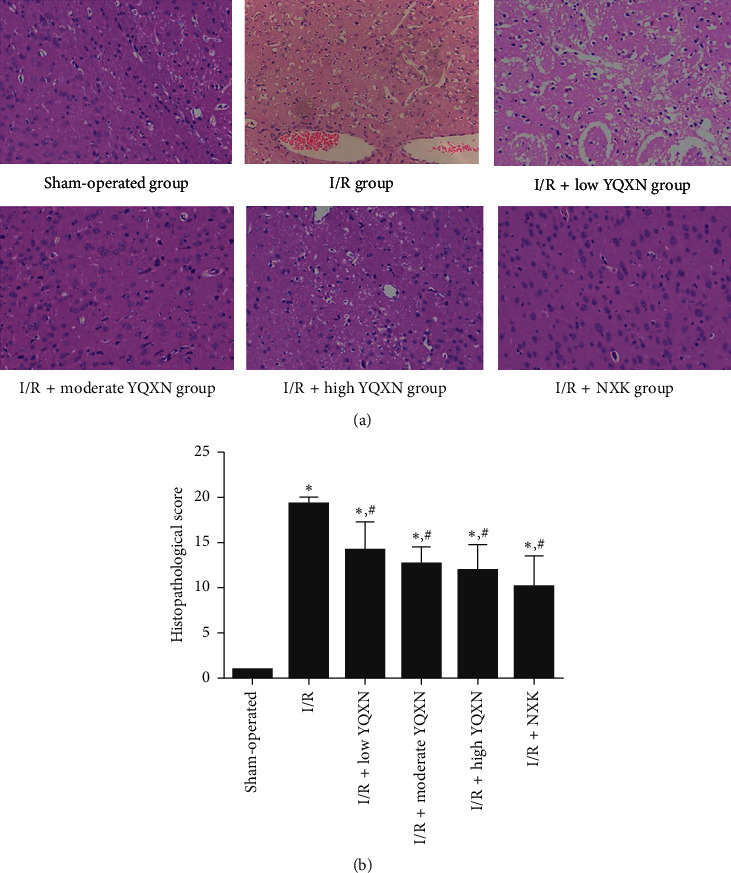
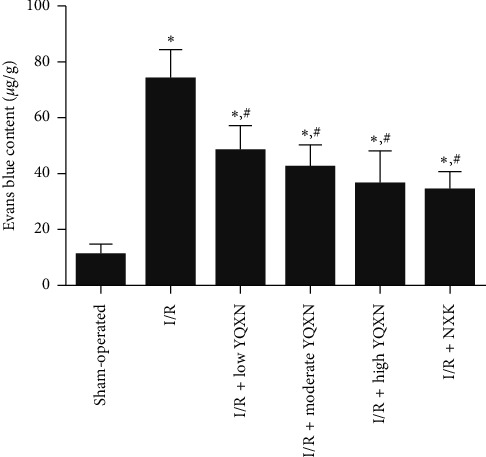
Rats were pretreated with 3 mL/kg, 6 mL/kg, and 12 mL/kg YQXN and Naoxuekang capsule (NXK). Afterwards, cerebral I/R model rats were established by a middle cerebral artery occlusion surgery. Neurological deficits, histopathology, and cerebral infarction volume were used to evaluate the effects of YQXN. Evans blue and terminal deoxynucleotidyl transferase-mediated dUTP nick end labeling (TUNEL) staining were utilized to determine the blood-brain barrier permeability and cell apoptosis, respectively. The expression of VEGF and Bcl-2 was analyzed by real-time quantification PCR (RT-qPCR) and western blot. The malondialdehyde (MDA) content and superoxide dismutase (SOD) activity were measured using corresponding assay kits.
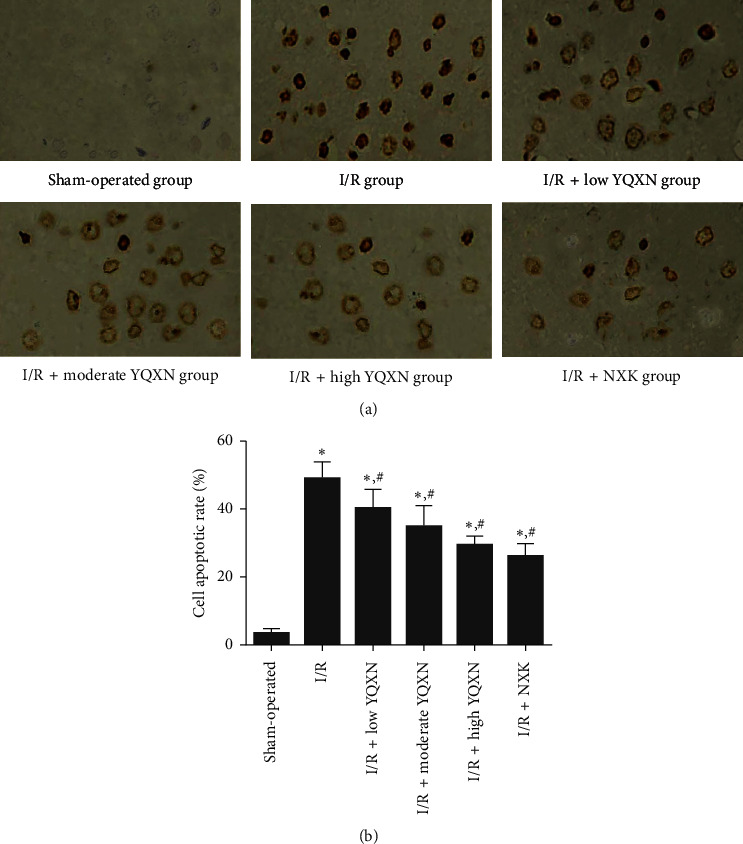
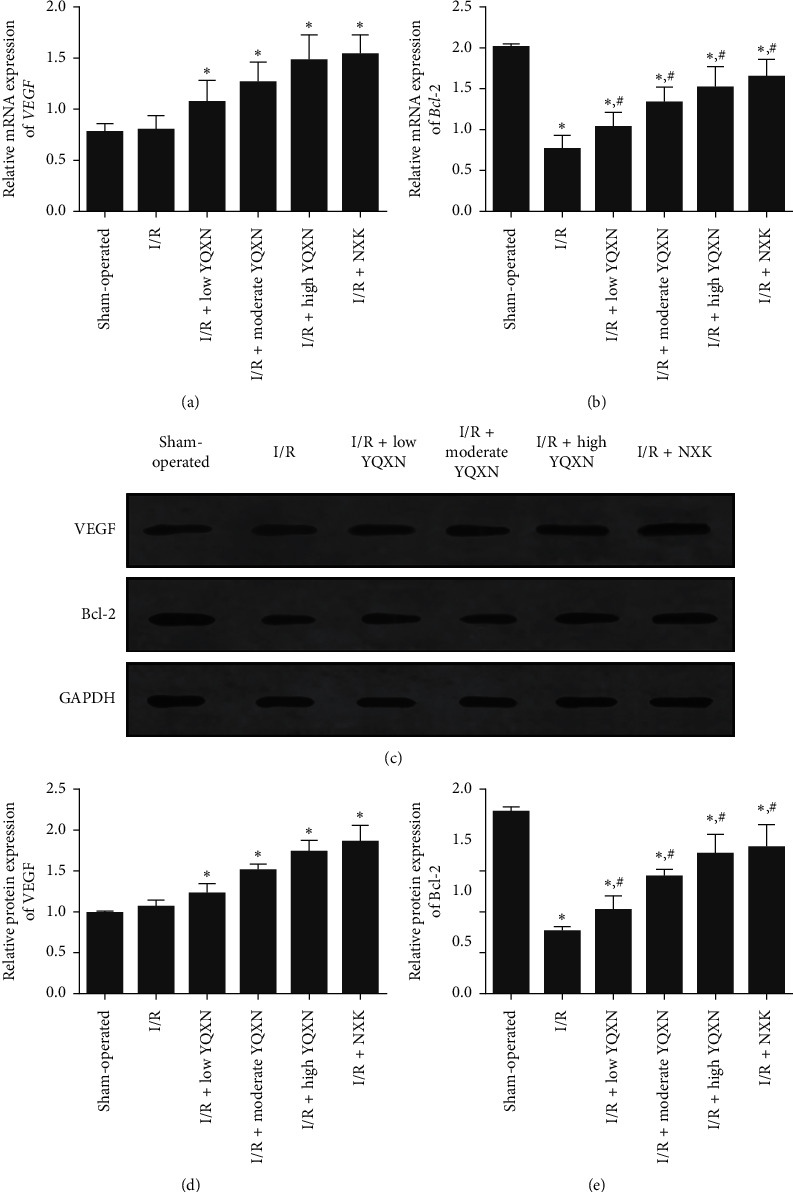
The rats pretreated with YQXN had improved neurological deficits, reduced infarct volume and blood-brain barrier permeability, and ameliorated ischemia-induced morphology change in injured brain tissues. TUNEL staining results showed that different concentrations of YQXN inhibited cell apoptosis of neurocytes in I/R rats. Besides, RT-qPCR and western blot analyses indicated that the expression levels of VEGF and Bcl-2 were significantly upregulated by YQXN compared with the I/R group ( < 0.05). Additionally, rats in the I/R group had lower SOD activity and higher MDA content than those in the sham-operated group, while their levels were recovered by YQXN ( < 0.05).
YQXN could alleviate cerebral I/R injury by suppressing blood-brain barrier permeability, neuron apoptosis, and oxidative stress, promoting angiogenesis.
本研究旨在探讨不同浓度的益气醒脑(YQXN)口服液对大鼠脑缺血/再灌注(I/R)损伤的影响及其相关机制。
将大鼠分别用3 mL/kg、6 mL/kg和12 mL/kg的YQXN以及脑血康胶囊(NXK)进行预处理。之后,通过大脑中动脉闭塞手术建立脑I/R模型大鼠。采用神经功能缺损、组织病理学和脑梗死体积来评估YQXN的作用。分别利用伊文思蓝和末端脱氧核苷酸转移酶介导的dUTP缺口末端标记(TUNEL)染色来测定血脑屏障通透性和细胞凋亡。通过实时定量PCR(RT-qPCR)和蛋白质印迹法分析血管内皮生长因子(VEGF)和Bcl-2的表达。使用相应的检测试剂盒测量丙二醛(MDA)含量和超氧化物歧化酶(SOD)活性。
用YQXN预处理的大鼠神经功能缺损得到改善,梗死体积和血脑屏障通透性降低,受损脑组织中缺血诱导的形态学变化得到改善。TUNEL染色结果显示,不同浓度的YQXN可抑制I/R大鼠神经细胞的凋亡。此外,RT-qPCR和蛋白质印迹分析表明,与I/R组相比,YQXN可显著上调VEGF和Bcl-2的表达水平(<0.05)。此外,I/R组大鼠的SOD活性低于假手术组,MDA含量高于假手术组,而YQXN可使其水平恢复(<0.05)。
YQXN可通过抑制血脑屏障通透性、神经元凋亡和氧化应激,促进血管生成来减轻脑I/R损伤。