Department of Molecular Genetics, Kanazawa University Graduate School of Medical Sciences, Kanazawa, Japan.
Department of Radiology and Cancer Biology, Nagasaki University Graduate School of Biomedical Sciences, Nagasaki, Japan.
PLoS Pathog. 2018 Jun 21;14(6):e1007124. doi: 10.1371/journal.ppat.1007124. eCollection 2018 Jun.
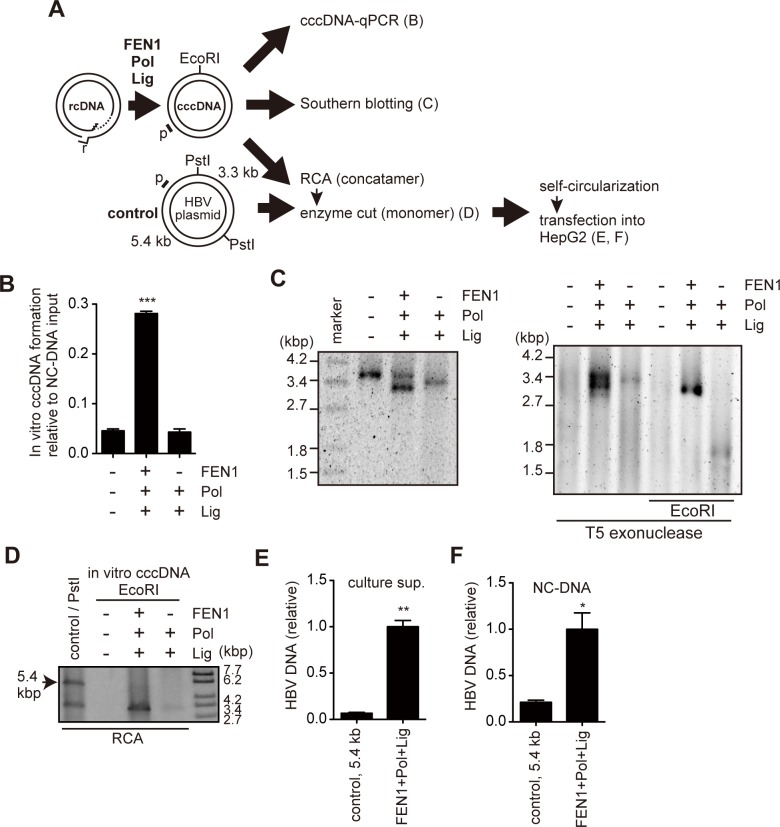
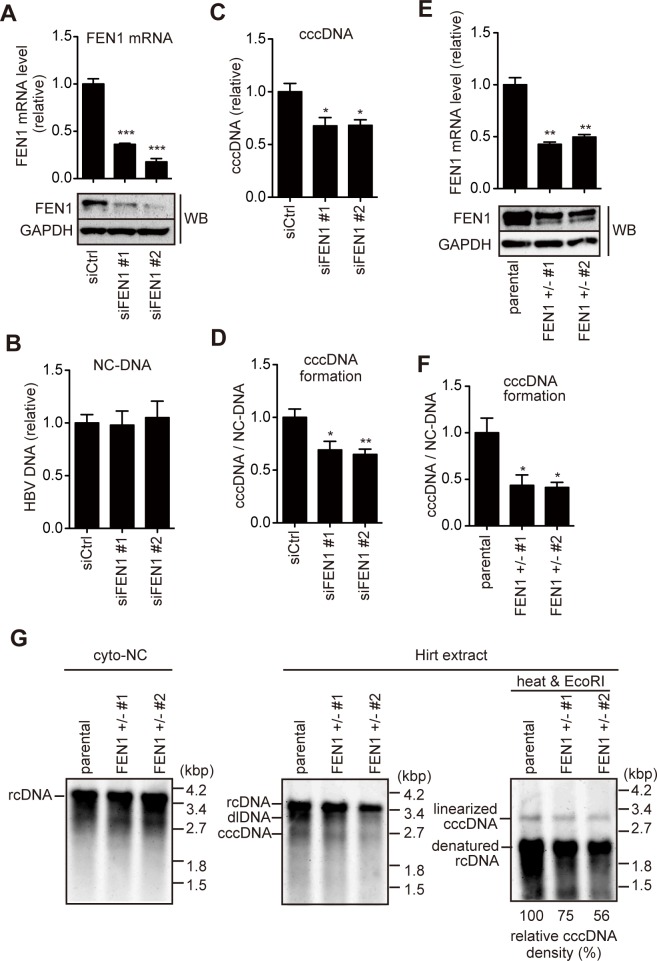
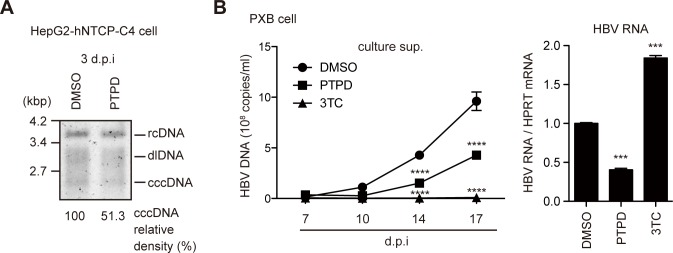
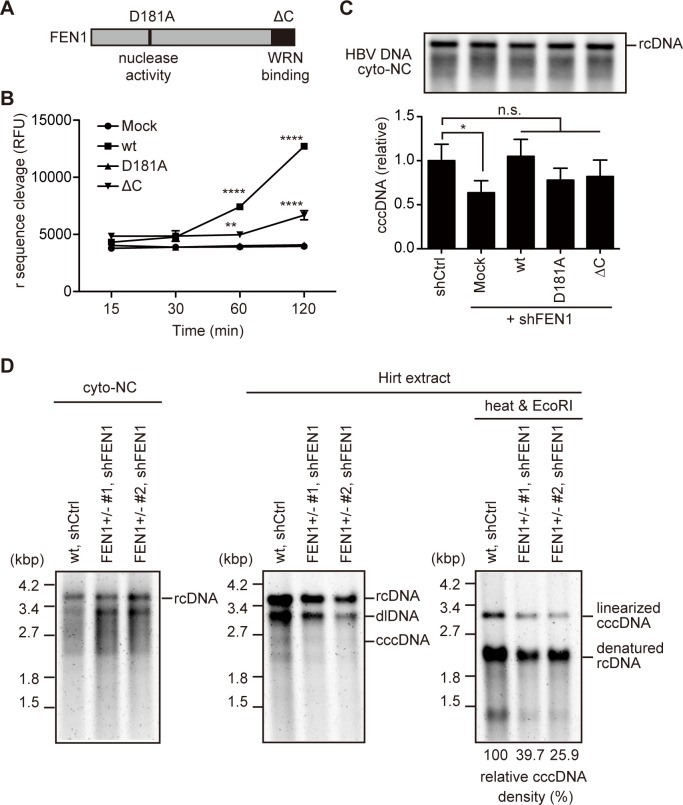
Hepatitis B virus (HBV) is one of the major etiological pathogens for liver cirrhosis and hepatocellular carcinoma. Chronic HBV infection is a key factor in these severe liver diseases. During infection, HBV forms a nuclear viral episome in the form of covalently closed circular DNA (cccDNA). Current therapies are not able to efficiently eliminate cccDNA from infected hepatocytes. cccDNA is a master template for viral replication that is formed by the conversion of its precursor, relaxed circular DNA (rcDNA). However, the host factors critical for cccDNA formation remain to be determined. Here, we assessed whether one potential host factor, flap structure-specific endonuclease 1 (FEN1), is involved in cleavage of the flap-like structure in rcDNA. In a cell culture HBV model (Hep38.7-Tet), expression and activity of FEN1 were reduced by siRNA, shRNA, CRISPR/Cas9-mediated genome editing, and a FEN1 inhibitor. These reductions in FEN1 expression and activity did not affect nucleocapsid DNA (NC-DNA) production, but did reduce cccDNA levels in Hep38.7-Tet cells. Exogenous overexpression of wild-type FEN1 rescued the reduced cccDNA production in FEN1-depleted Hep38.7-Tet cells. Anti-FEN1 immunoprecipitation revealed the binding of FEN1 to HBV DNA. An in vitro FEN activity assay demonstrated cleavage of 5'-flap from a synthesized HBV DNA substrate. Furthermore, cccDNA was generated in vitro when purified rcDNA was incubated with recombinant FEN1, DNA polymerase, and DNA ligase. Importantly, FEN1 was required for the in vitro cccDNA formation assay. These results demonstrate that FEN1 is involved in HBV cccDNA formation in cell culture system, and that FEN1, DNA polymerase, and ligase activities are sufficient to convert rcDNA into cccDNA in vitro.
乙型肝炎病毒(HBV)是肝硬化和肝细胞癌的主要病因之一。慢性 HBV 感染是这些严重肝脏疾病的关键因素。在感染过程中,HBV 以共价闭合环状 DNA(cccDNA)的形式形成核病毒附加体。目前的治疗方法不能有效地从感染的肝细胞中消除 cccDNA。cccDNA 是病毒复制的主要模板,由其前体松弛环状 DNA(rcDNA)的转化形成。然而,对于 cccDNA 形成至关重要的宿主因素仍有待确定。在这里,我们评估了一种潜在的宿主因素,即 flap 结构特异性内切酶 1(FEN1),是否参与 rcDNA 中 flap 样结构的切割。在 Hep38.7-Tet 细胞培养 HBV 模型中,通过 siRNA、shRNA、CRISPR/Cas9 介导的基因组编辑和 FEN1 抑制剂降低 FEN1 的表达和活性。FEN1 表达和活性的降低并不影响核衣壳 DNA(NC-DNA)的产生,但确实降低了 Hep38.7-Tet 细胞中的 cccDNA 水平。野生型 FEN1 的外源性过表达挽救了 FEN1 耗尽的 Hep38.7-Tet 细胞中减少的 cccDNA 产生。抗 FEN1 免疫沉淀显示 FEN1 与 HBV DNA 的结合。体外 FEN 活性测定显示,从合成的 HBV DNA 底物上切割 5'-flap。此外,当纯化的 rcDNA 与重组 FEN1、DNA 聚合酶和 DNA 连接酶孵育时,体外产生了 cccDNA。重要的是,FEN1 是体外 cccDNA 形成测定所必需的。这些结果表明,FEN1 参与细胞培养系统中的 HBV cccDNA 形成,并且 FEN1、DNA 聚合酶和连接酶活性足以在体外将 rcDNA 转化为 cccDNA。