Paciotti Silvia, Bellomo Giovanni, Gatticchi Leonardo, Parnetti Lucilla
Department of Experimental Medicine, University of Perugia, Perugia, Italy.
Magnetic Resonance Center (CERM), University of Florence, Sesto Fiorentino, Italy.
Front Neurol. 2018 Jun 6;9:415. doi: 10.3389/fneur.2018.00415. eCollection 2018.
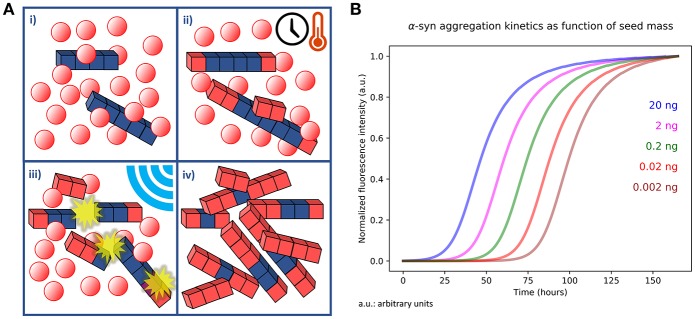
The accumulation and deposition of α-synuclein aggregates in brain tissue is the main event in the pathogenesis of different neurodegenerative disorders grouped under the term of synucleinopathies. They include Parkinson's disease, dementia with Lewy bodies and multiple system atrophy. To date, the diagnosis of any of these disorders mainly relies on the recognition of clinical symptoms, when the neurodegeneration is already in an advanced phase. In the last years, several efforts have been carried out to develop new diagnostic tools for early diagnosis of synucleinopathies, with special interest to Parkinson's disease. The Protein-Misfolding Cyclic Amplification (PMCA) and the Real-Time Quaking-Induced Conversion (RT-QuIC) are ultrasensitive protein amplification assays for the detection of misfolded protein aggregates. Starting from the successful application in the diagnosis of human prion diseases, these techniques were recently tested for the detection of misfolded α-synuclein in brain homogenates and cerebrospinal fluid samples of patients affected by synucleinopathies. So far, only a few studies on a limited number of samples have been performed to test PMCA and RT-QuIC diagnostic reliability. Neverthless, these assays have shown very high sensitivity and specificity in detecting synucleinopathies even at the pre-clinical stage. Despite the application of PMCA and RT-QuIC for α-synuclein detection in biological fluids is very recent, these techniques seem to have the potential for identifying subjects that will be likely to develop synucleinopathies.
α-突触核蛋白聚集体在脑组织中的积累和沉积是归类为突触核蛋白病的不同神经退行性疾病发病机制中的主要事件。这些疾病包括帕金森病、路易体痴呆和多系统萎缩。迄今为止,这些疾病中任何一种的诊断主要依赖于临床症状的识别,而此时神经退行性变已处于晚期。在过去几年中,人们进行了多项努力来开发用于突触核蛋白病早期诊断的新诊断工具,其中对帕金森病尤为关注。蛋白质错误折叠循环扩增(PMCA)和实时震颤诱导转化(RT-QuIC)是用于检测错误折叠蛋白聚集体的超灵敏蛋白扩增检测方法。从成功应用于人类朊病毒病的诊断开始,这些技术最近被用于检测突触核蛋白病患者脑匀浆和脑脊液样本中错误折叠的α-突触核蛋白。到目前为止,仅对有限数量的样本进行了少数研究来测试PMCA和RT-QuIC的诊断可靠性。尽管如此,这些检测方法在检测突触核蛋白病时,即使在临床前期也显示出非常高的灵敏度和特异性。尽管PMCA和RT-QuIC在生物体液中检测α-突触核蛋白的应用非常新,但这些技术似乎有潜力识别可能会患突触核蛋白病的个体。