Kang Hae-Eun, Mo Youngwon, Abd Rahim Raihah, Lee Hye-Mi, Ryou Chongsuk
Division of Foreign Animal Disease, Animal and Plant Quarantine Agency, Gimcheon, Gyeongsangbuk-do 39660, Republic of Korea.
Department of Pharmacy and Institute of Pharmaceutical Science and Technology, Hanyang University, Ansan, Gyeonggi-do 15588, Republic of Korea.
Biomed Res Int. 2017;2017:5413936. doi: 10.1155/2017/5413936. Epub 2017 May 17.
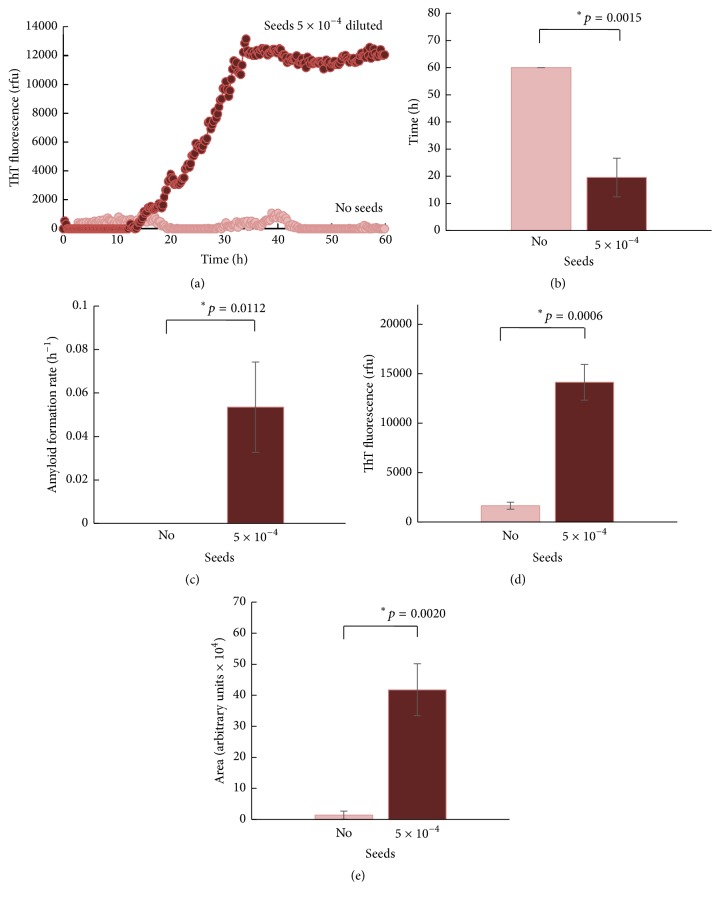
Prions composed of pathogenic scrapie prion protein (PrP) are infectious pathogens that cause progressive neurological conditions known as prion diseases or transmissible spongiform encephalopathies. Although these diseases pose considerable risk to public health, procedures for early diagnosis have not been established. One of the most recent attempts at sensitive and specific detection of prions is the real-time quaking-induced conversion (RT-QuIC) method, which measures the activity of PrP aggregates or amyloid formation triggered by PrP seeds in the presence of recombinant PrP. In this review, we summarize prions, prion diseases, and current approaches to diagnosis, including the principle, conditions for assay performance, and current diagnostic applications of RT-QuIC.
由致病性瘙痒病朊病毒蛋白(PrP)组成的朊病毒是一种传染性病原体,可导致称为朊病毒病或传染性海绵状脑病的进行性神经疾病。尽管这些疾病对公众健康构成了相当大的风险,但早期诊断程序尚未建立。最近在敏感且特异检测朊病毒方面的尝试之一是实时震颤诱导转化(RT-QuIC)方法,该方法在重组PrP存在的情况下,测量由PrP种子引发的PrP聚集体活性或淀粉样蛋白形成。在本综述中,我们总结了朊病毒、朊病毒病以及当前的诊断方法,包括RT-QuIC的原理、检测性能条件和当前的诊断应用。