Jeffery Nicholas W, Bradbury Ian R, Stanley Ryan R E, Wringe Brendan F, Van Wyngaarden Mallory, Lowen J Ben, McKenzie Cynthia H, Matheson Kyle, Sargent Philip S, DiBacco Claudio
Fisheries and Oceans Canada Northwest Atlantic Fisheries Centre St. John's NL Canada.
Faculty of Computer Science Dalhousie University Halifax NS Canada.
Evol Appl. 2018 Feb 23;11(6):869-882. doi: 10.1111/eva.12601. eCollection 2018 Jul.
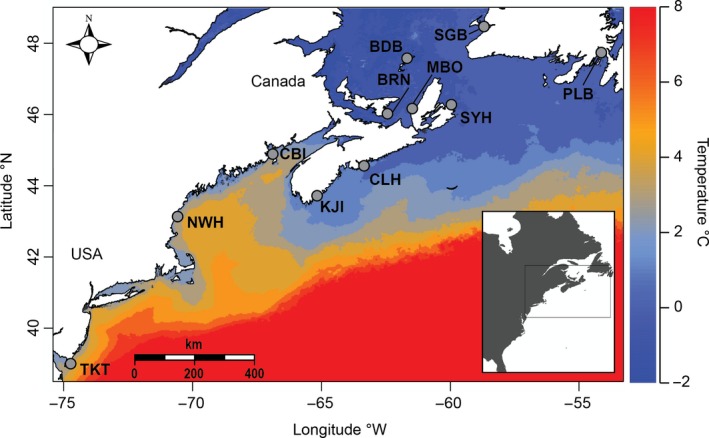
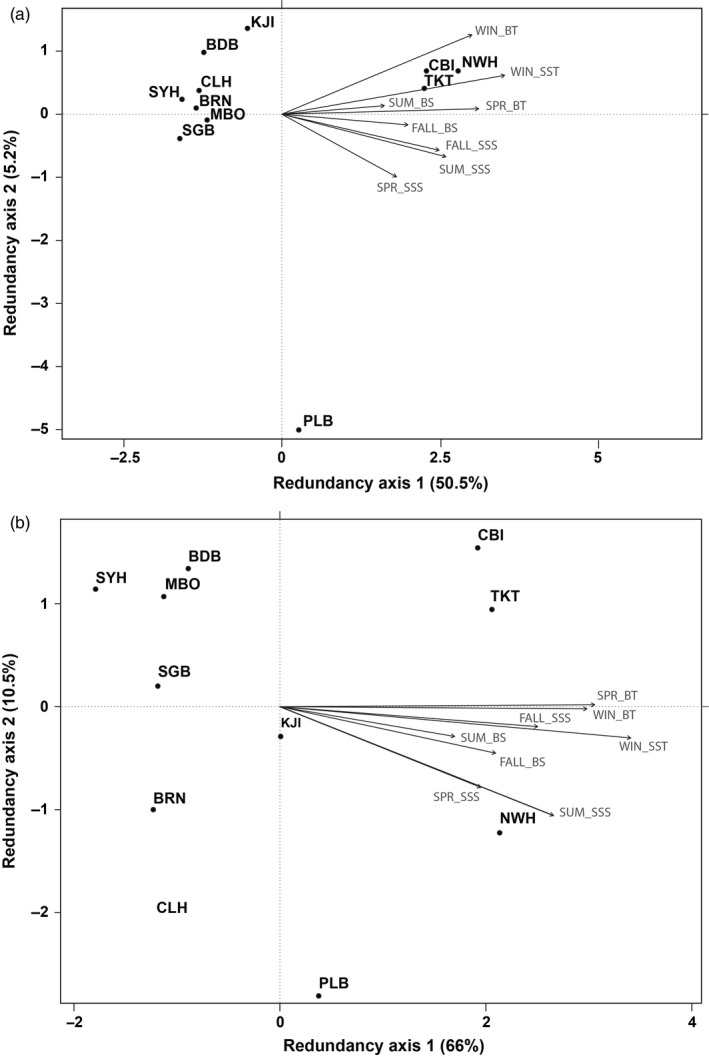
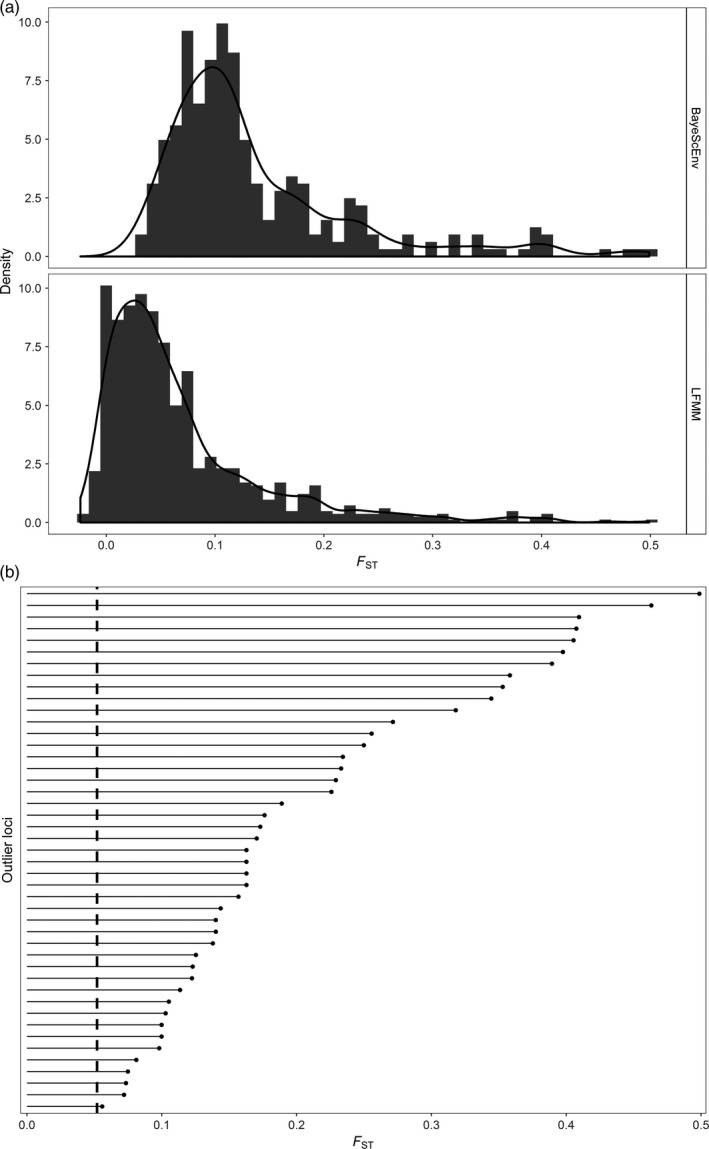
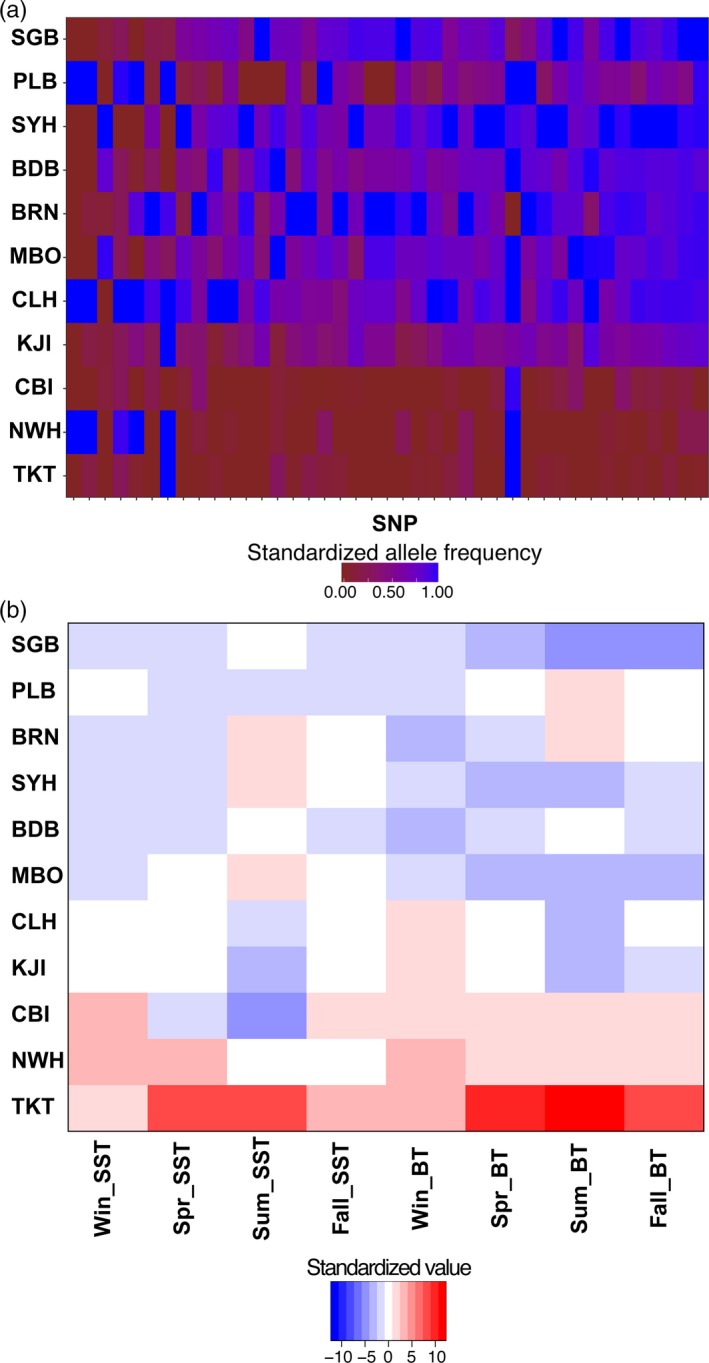
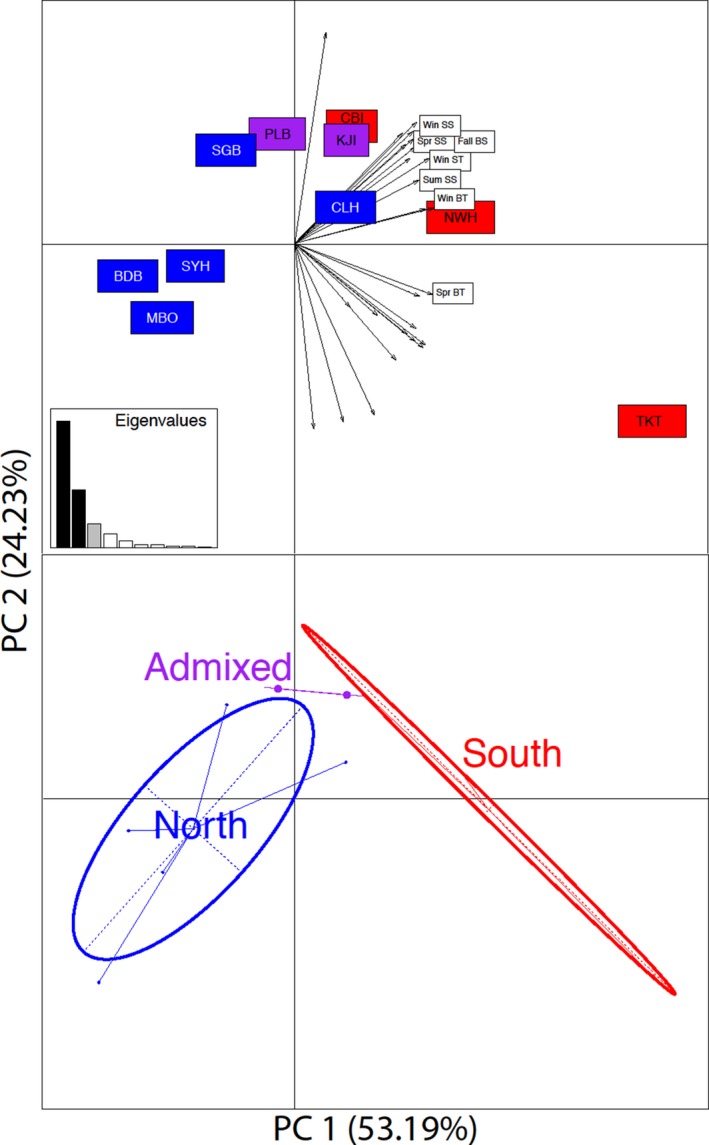
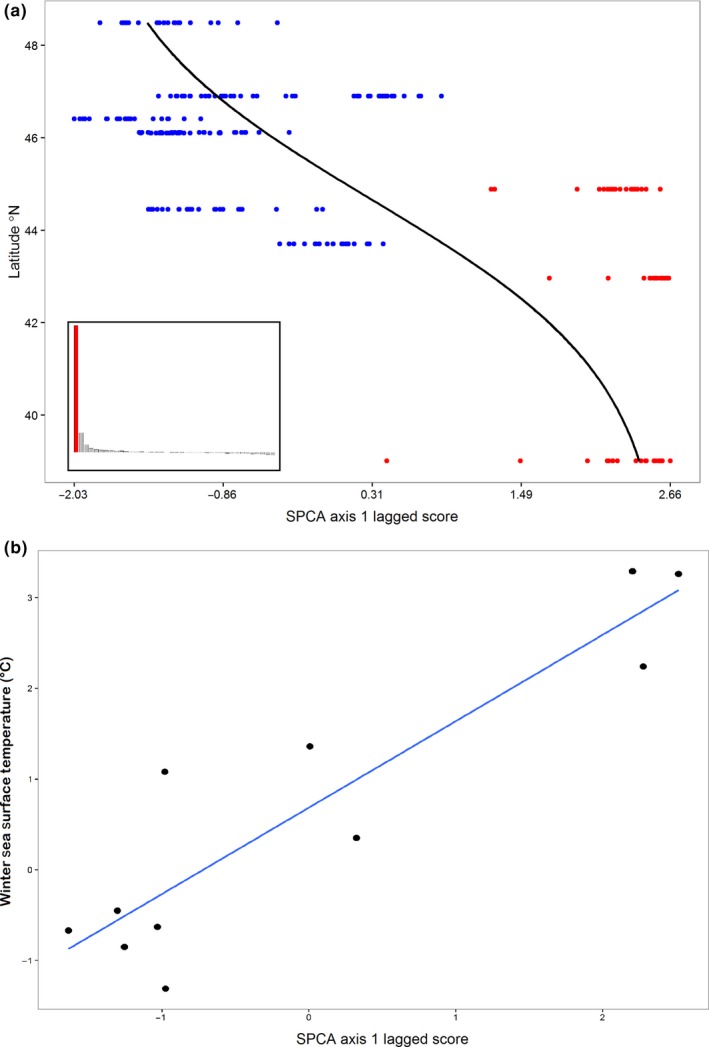
Genetic-environment associations are increasingly revealed through population genomic data and can occur through a number of processes, including secondary contact, divergent natural selection, or isolation by distance. Here, we investigate the influence of the environment, including seasonal temperature and salinity, on the population structure of the invasive European green crab () in eastern North America. Green crab populations in eastern North America are associated with two independent invasions, previously shown to consist of distinct northern and southern ecotypes, with a contact zone in southern Nova Scotia, Canada. Using a RAD-seq panel of 9,137 genomewide SNPs, we detected 41 SNPs (0.49%) whose allele frequencies were highly correlated with environmental data. A principal components analysis of 25 environmental variables differentiated populations into northern, southern, and admixed sites in concordance with the observed genomic spatial structure. Furthermore, a spatial principal components analysis conducted on genomic and geographic data revealed a high degree of global structure ( < .0001) partitioning a northern and southern ecotype. Redundancy and partial redundancy analyses revealed that among the environmental variables tested, winter sea surface temperature had the strongest association with spatial structuring, suggesting that it is an important factor defining range and expansion limits of each ecotype. Understanding environmental thresholds associated with intraspecific diversity will facilitate the ability to manage current and predict future distributions of this aquatic invasive species.
遗传与环境的关联正通过群体基因组数据越来越多地揭示出来,并且可以通过多种过程发生,包括二次接触、趋异自然选择或距离隔离。在此,我们研究环境因素,包括季节性温度和盐度,对北美洲东部入侵性欧洲绿蟹()种群结构的影响。北美洲东部的绿蟹种群与两次独立入侵事件有关,此前研究表明其由不同的北部和南部生态型组成,在加拿大新斯科舍省南部存在一个接触带。利用包含9137个全基因组单核苷酸多态性(SNP)的RAD测序面板,我们检测到41个SNP(0.49%),其等位基因频率与环境数据高度相关。对25个环境变量进行的主成分分析将种群分为北部、南部和混合位点,与观察到的基因组空间结构一致。此外,对基因组和地理数据进行的空间主成分分析揭示了高度的全局结构(<0.0001),将北部和南部生态型区分开来。冗余分析和偏冗余分析表明,在所测试的环境变量中,冬季海面温度与空间结构的关联最强,这表明它是定义每个生态型范围和扩张极限的重要因素。了解与种内多样性相关的环境阈值将有助于管理当前并预测这种水生入侵物种未来的分布。