Schwaha Thomas F, Wanninger Andreas
University of Vienna, Department of Integrative Zoology, Althanstraße 14, 1090 Vienna, Austria.
Front Zool. 2018 Jun 7;15:24. doi: 10.1186/s12983-018-0269-6. eCollection 2018.
Myoanatomical studies of adult bryozoans employing fluorescent staining and confocal laser scanning microscopy (CLSM) have been chiefly conducted on freshwater bryozoans. The diversity of muscular systems in the marine bryozoans is currently not well known with only two species being studied in more detail. The aim of this study is to unravel the diversity of muscle systems of 15 ctenostome bryozoans by phalloidin-coupled fluorescence stainings combined with CLSM.
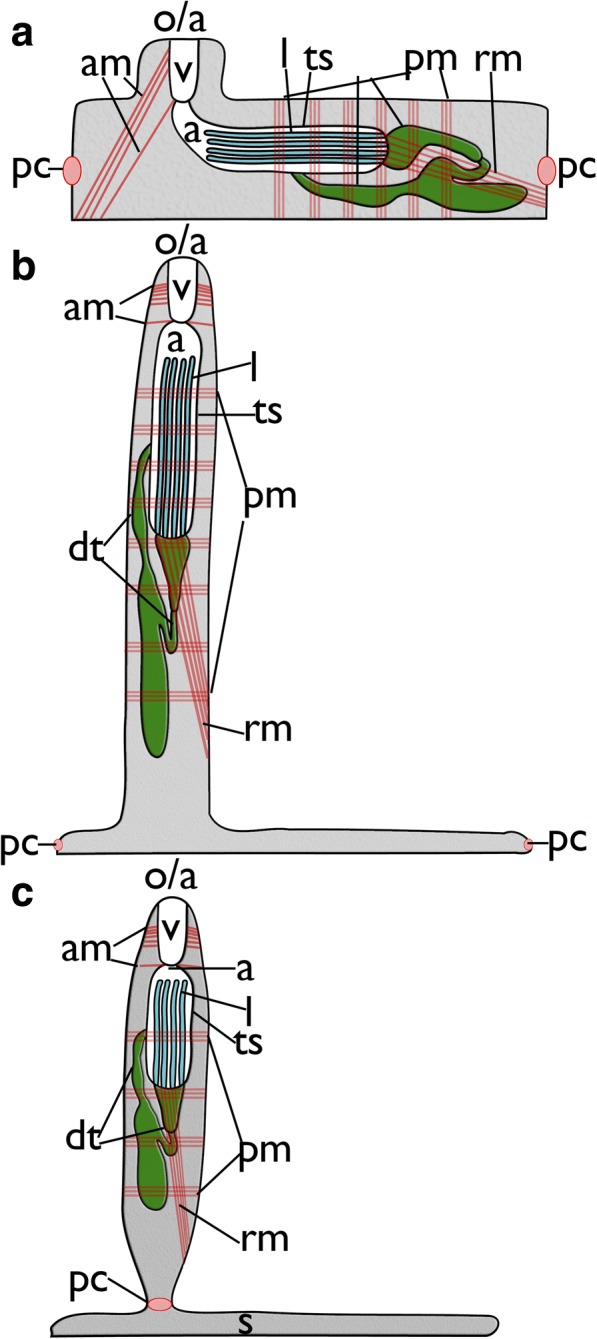
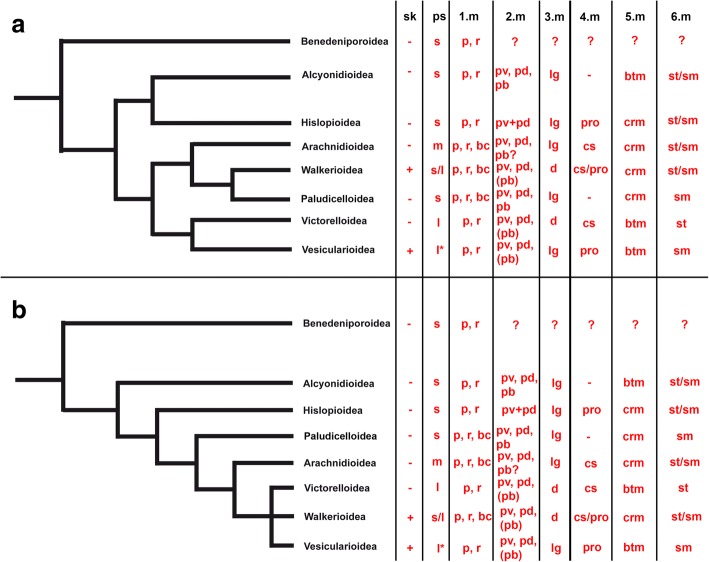
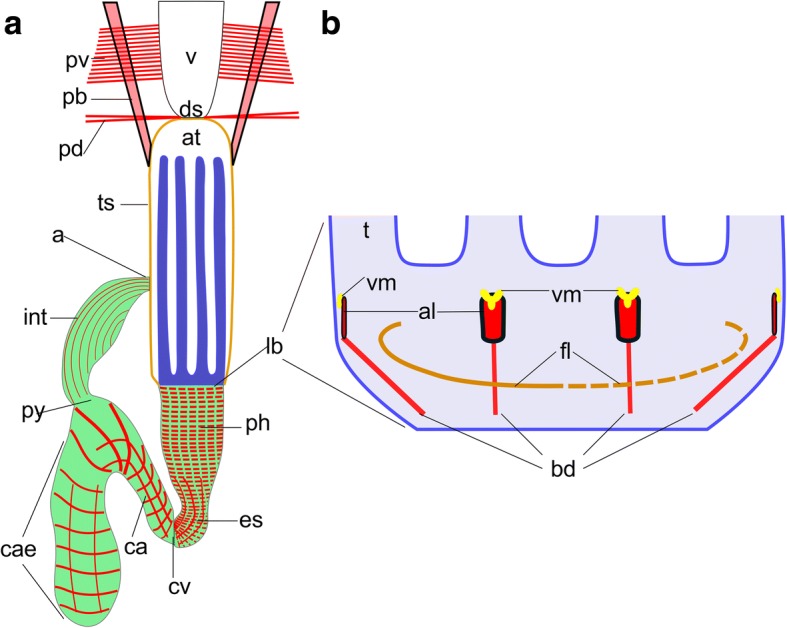
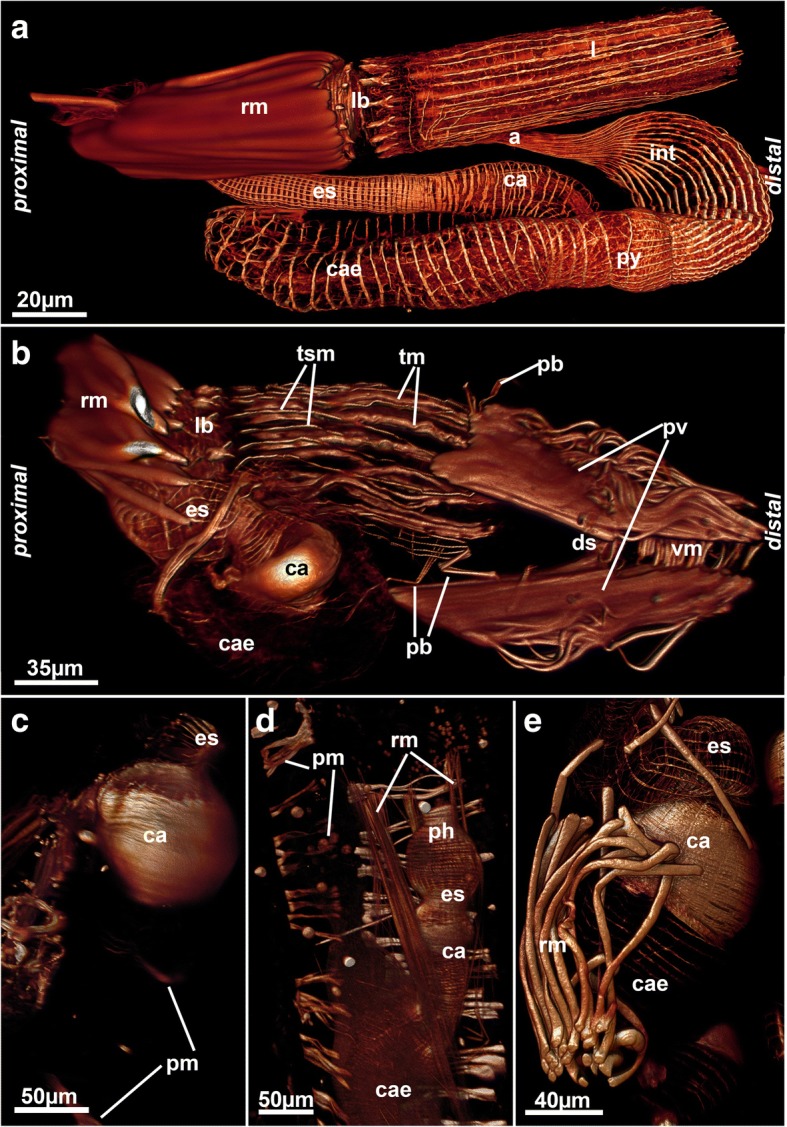
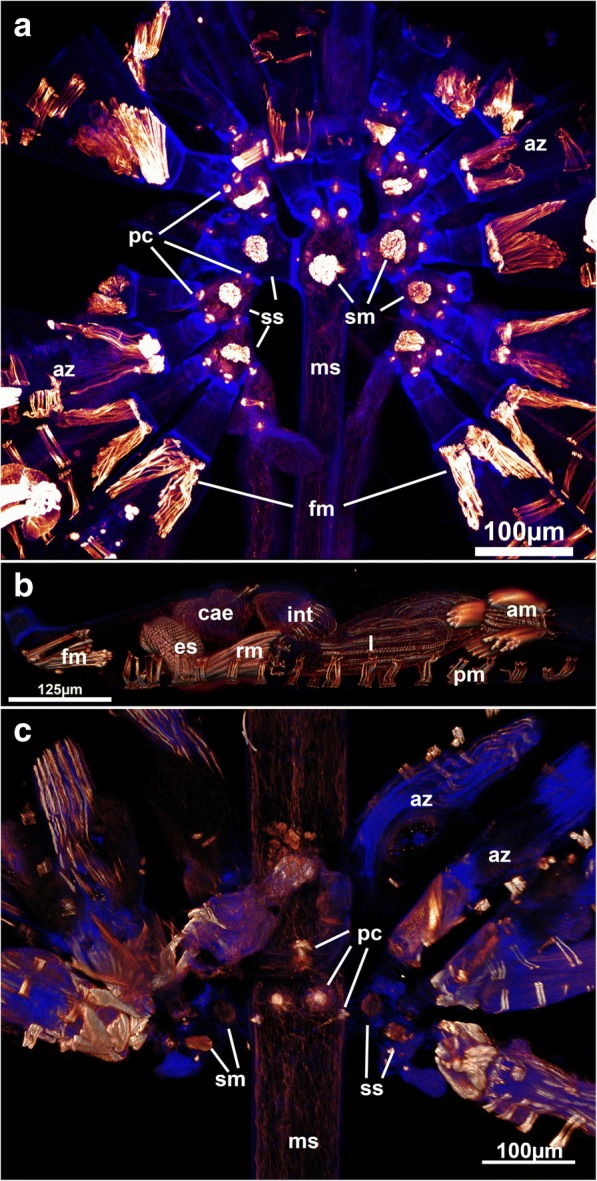
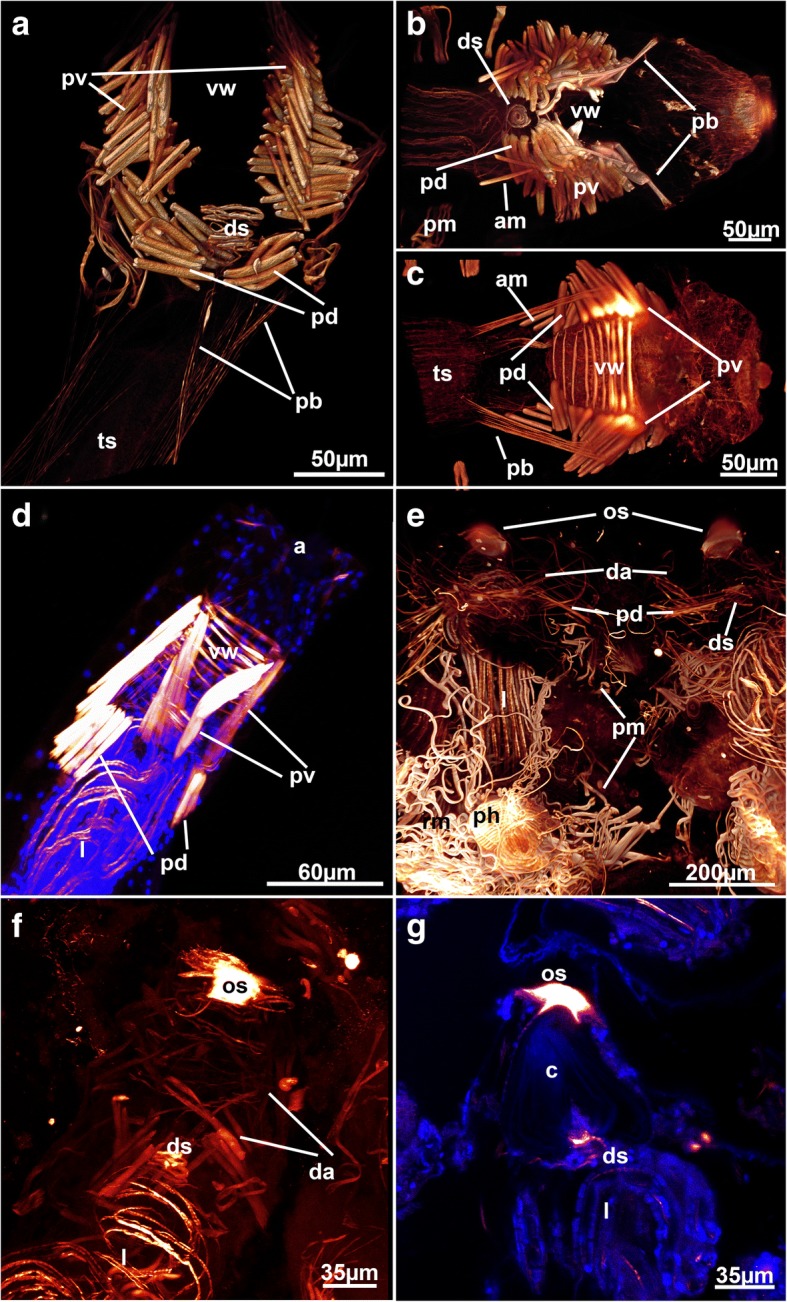
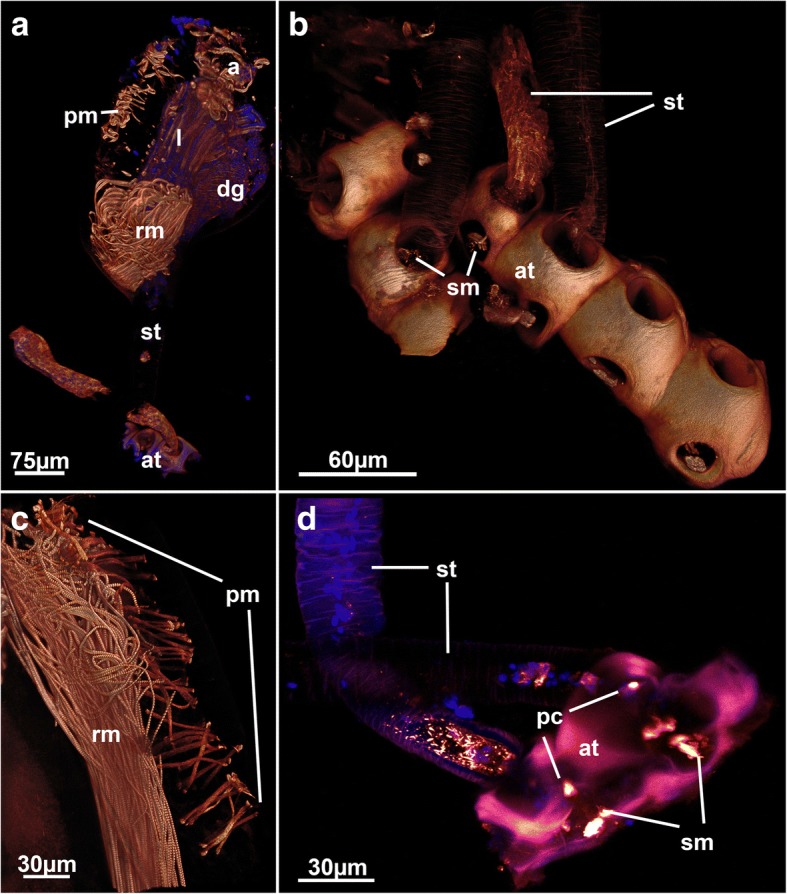
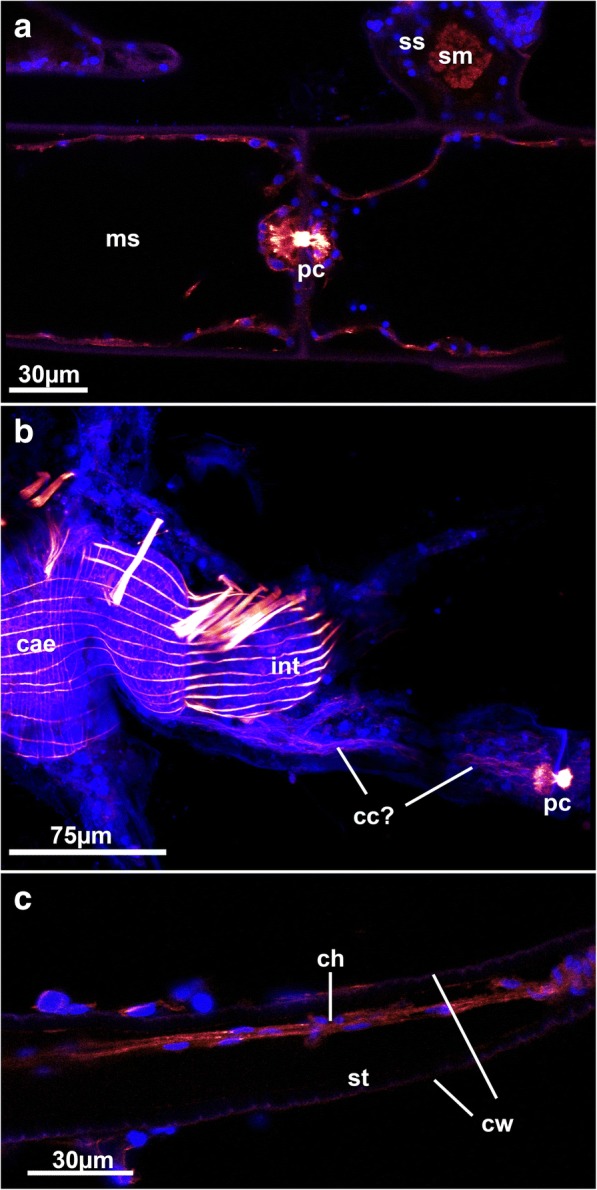
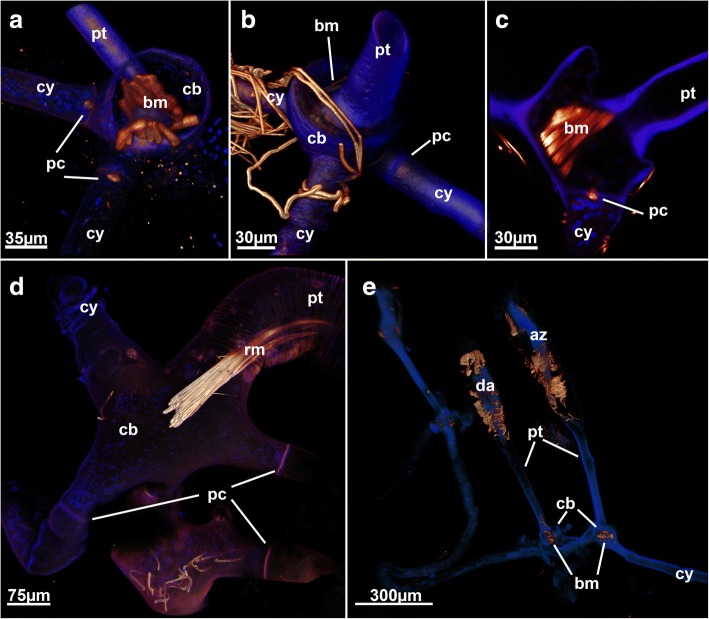
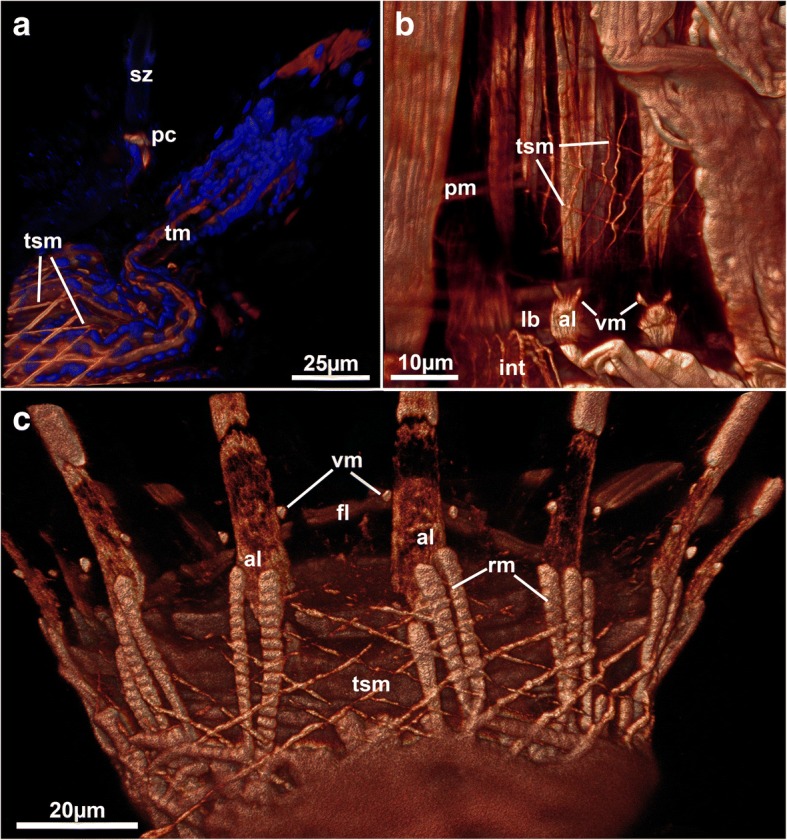
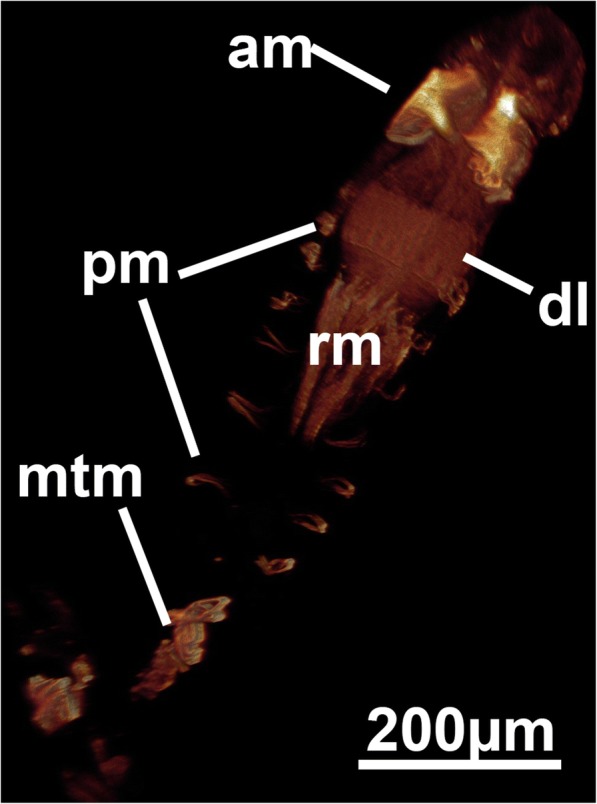
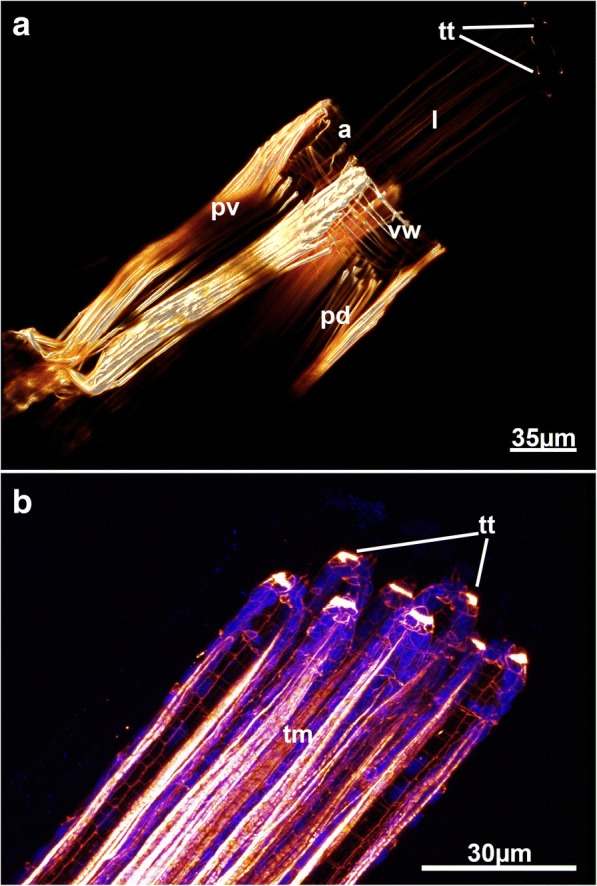
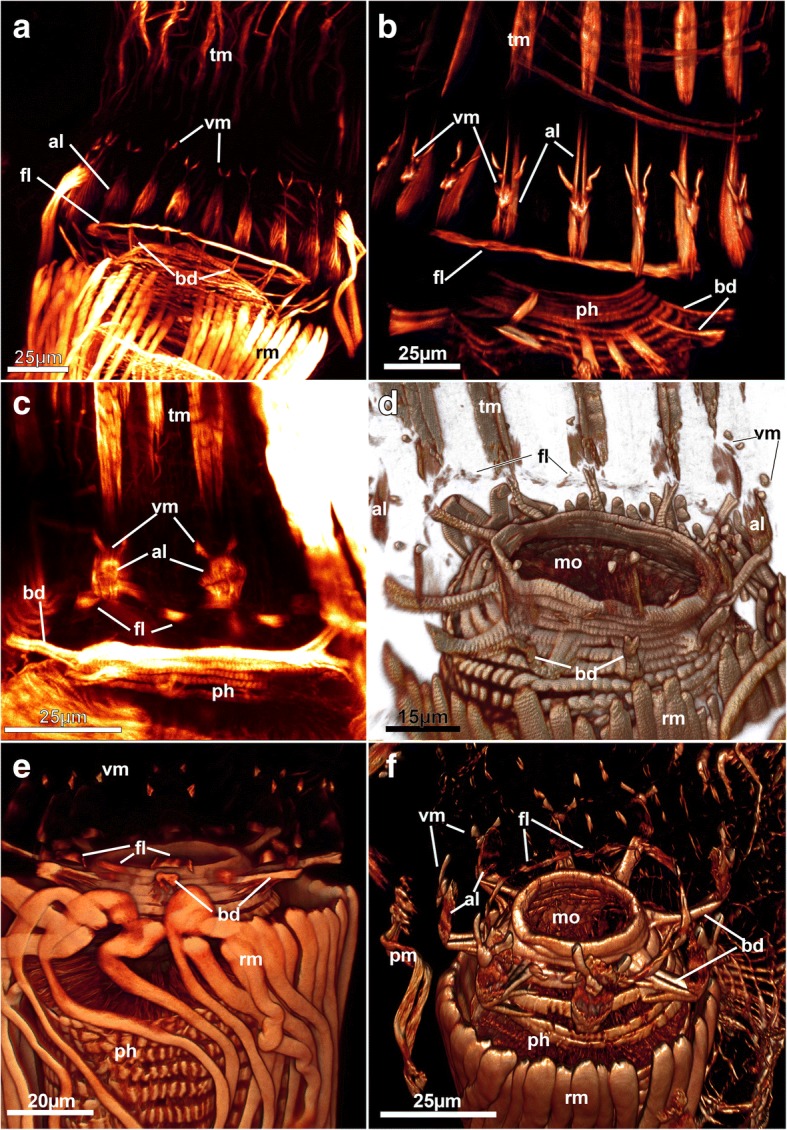
In general, the myoanatomy of the selected ctenostomes shows significant similarities and consists of 1) muscles associated with the body wall, 2) apertural muscles, 3) lophophoral muscles, 4) tentacle sheath muscles, 5) digestive tract muscles and 6) the prominent retractor muscles. Differences are present in the arrangement of the apertural muscles from generally three muscles sets of four bundles, which in some species can be partially reduced or modified into a bilateral arrangement. The cardiac region of the digestive tract shows a distinct sphincter in four of the six studied clades. In some cases the cardiac region forms a prominent proventriculus or gizzard. Tentacle sheath muscles in victorelloideans and walkerioideans are arranged diagonally and differ from the simple longitudinal muscle arrangements common to all other taxa. Lophophoral base muscles consist of four sets that vary in the size of the sets and in the shape of the inner lophophoral ring, which either forms a complete ring or separate, intertentacular muscle bundles. The stolon-forming walkeridiodean ctenostomes show prominent transverse muscles in their stolons. These are always present in the shorter side stolons, but their occurrence in the main stolon seems to depend on the colony form, being present in creeping but absent in erect colony forms.
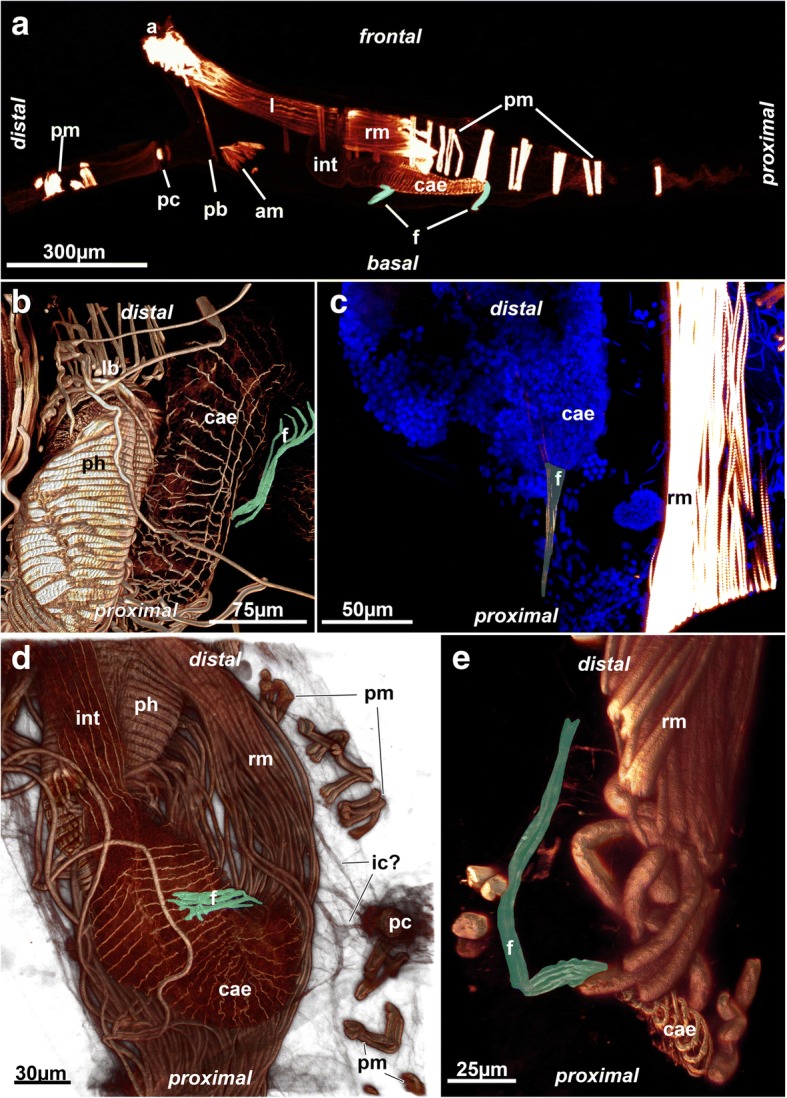
This study represents the first broad survey of muscular systems in adult ctenostome bryozoans and shows a certain degree of conservation in a series of diverse colony forms belonging to five major clades. However, several myoanatomical features such as the cardiac sphincter, basal (possibly transitory) cystid muscles, tentacle sheath muscles or apertural muscle arrangement vary across taxa and thus show a high potential for the assessment of character evolution within ctenostomes. As such, this study represents an essential contribution towards determining and reconstructing the character states of the bryozoan ground pattern once a reliable phylogenetic tree of the whole phylum becomes available.
利用荧光染色和共聚焦激光扫描显微镜(CLSM)对成年苔藓虫进行的肌解剖学研究主要集中在淡水苔藓虫上。目前,海洋苔藓虫肌肉系统的多样性尚不清楚,仅有两个物种得到了更详细的研究。本研究的目的是通过鬼笔环肽偶联荧光染色结合CLSM来揭示15种栉口目苔藓虫肌肉系统的多样性。
总体而言,所选栉口目的肌解剖结构显示出显著的相似性,包括1)与体壁相关的肌肉,2)开孔肌肉,3)触手冠肌肉,4)触手鞘肌肉,5)消化道肌肉和6)突出的牵缩肌。开孔肌肉的排列存在差异,通常为三组共四束肌肉,在某些物种中可能会部分减少或转变为双侧排列。在所研究的六个类群中的四个类群中,消化道的贲门区域显示出明显的括约肌。在某些情况下,贲门区域形成一个突出的前胃或砂囊。维克托苔藓虫类和沃克苔藓虫类的触手鞘肌肉呈对角线排列,与所有其他类群常见的简单纵向肌肉排列不同。触手冠基部肌肉由四组组成,每组的大小和内部触手冠环的形状各不相同,内部触手冠环要么形成一个完整的环,要么形成单独的触手间肌束。形成匍匐茎的沃克里苔藓虫类栉口目在其匍匐茎中显示出明显的横向肌肉。这些横向肌肉总是出现在较短的侧匍匐茎中,但在主匍匐茎中的出现似乎取决于群体形态,在匍匐型群体中存在,而在直立型群体中不存在。
本研究是对成年栉口目苔藓虫肌肉系统的首次广泛调查,显示出在属于五个主要类群的一系列不同群体形态中存在一定程度的保守性。然而,一些肌解剖学特征,如贲门括约肌、基部(可能是暂时的)囊壁肌肉、触手鞘肌肉或开孔肌肉排列,在不同类群中有所不同,因此在评估栉口目内部的性状进化方面具有很大潜力。因此,一旦获得整个苔藓虫门可靠的系统发育树,本研究对确定和重建苔藓虫基础模式的性状状态做出了重要贡献。