School of Life Science, Beijing Institute of Technology, Beijing, China.
Key Laboratory of Convergence Medical Engineering System and Healthcare Technology, The Ministry of Industry and Information Technology, Beijing Institute of Technology, Beijing, China.
Theranostics. 2018 May 11;8(12):3237-3255. doi: 10.7150/thno.23772. eCollection 2018.
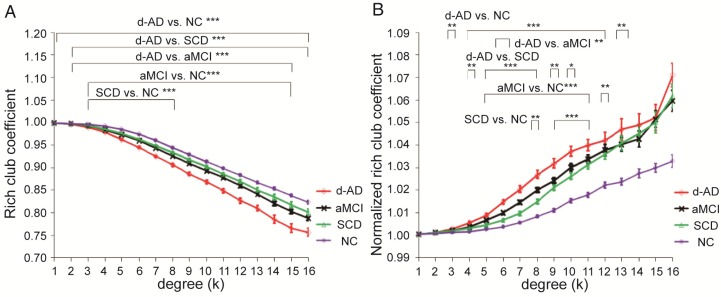
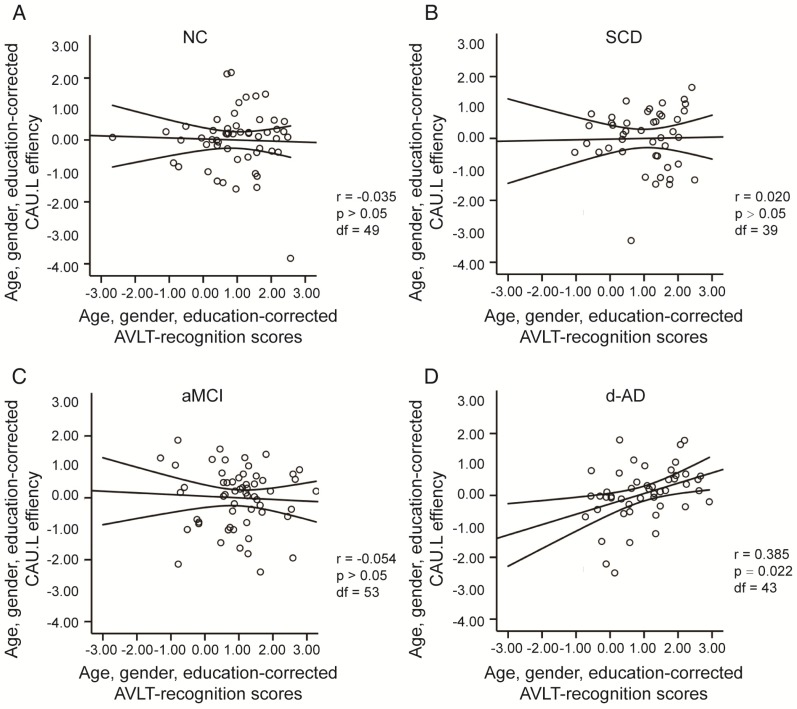
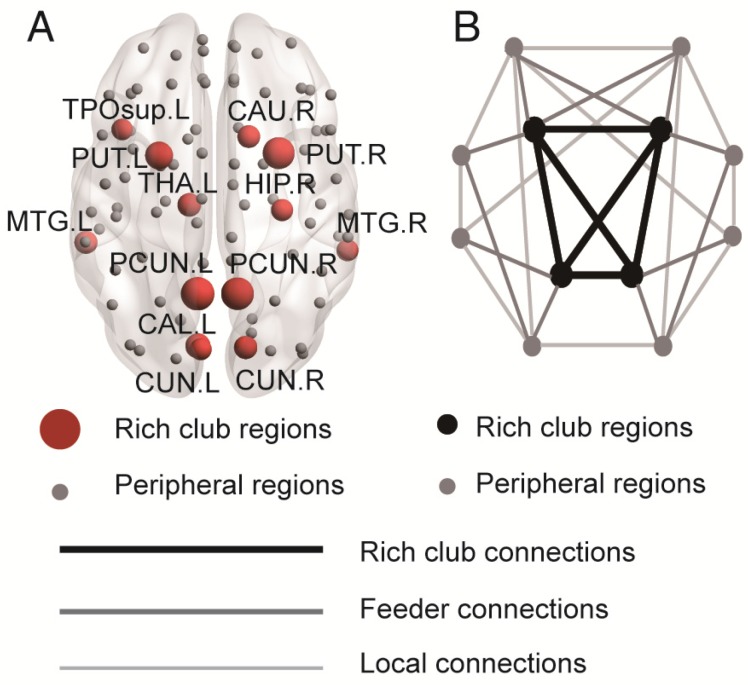
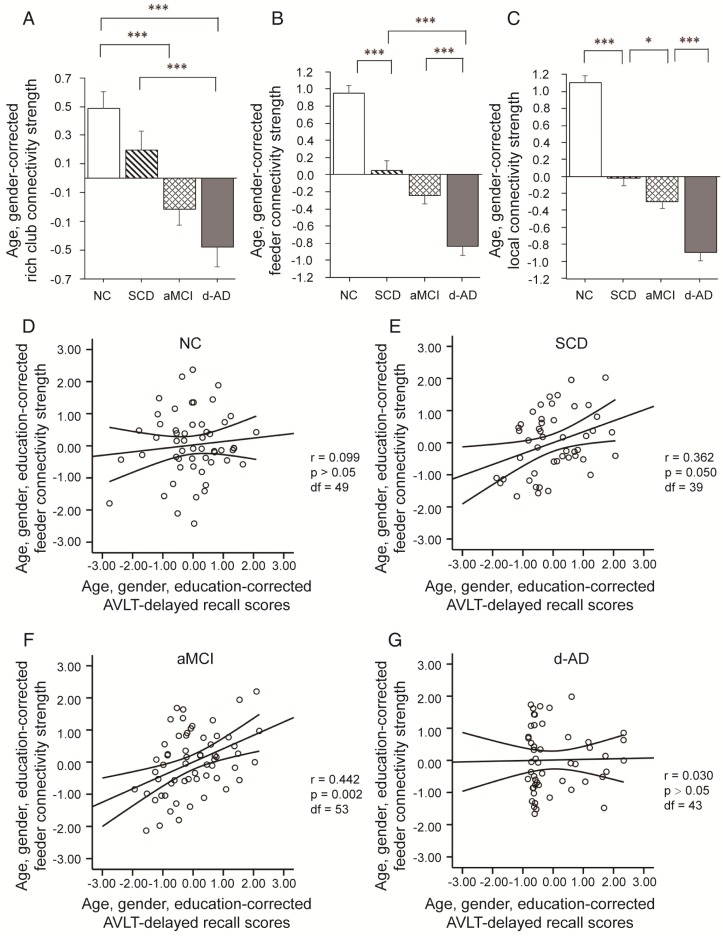
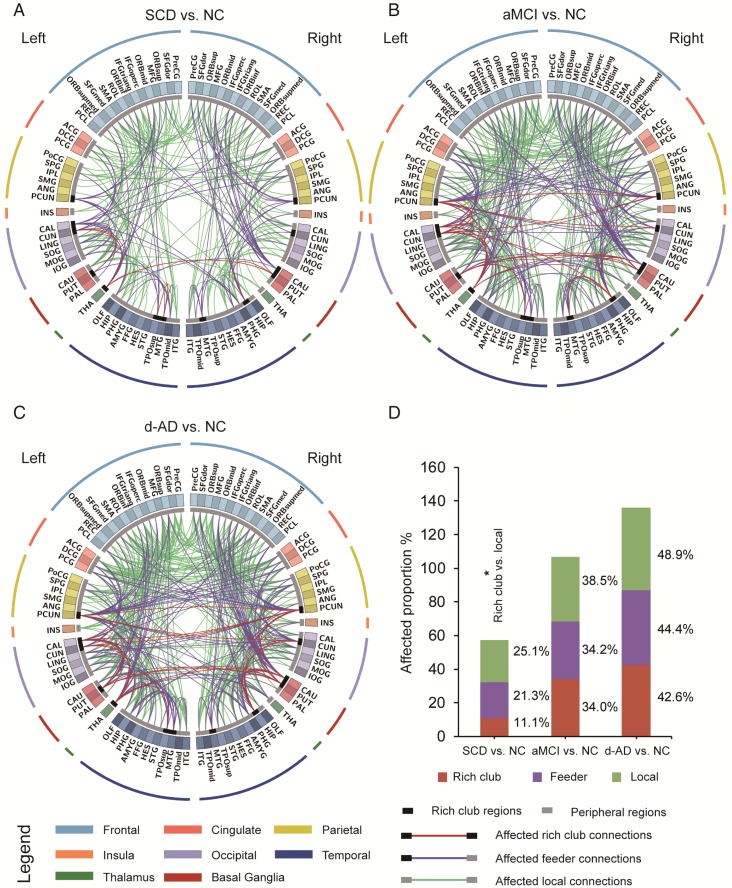
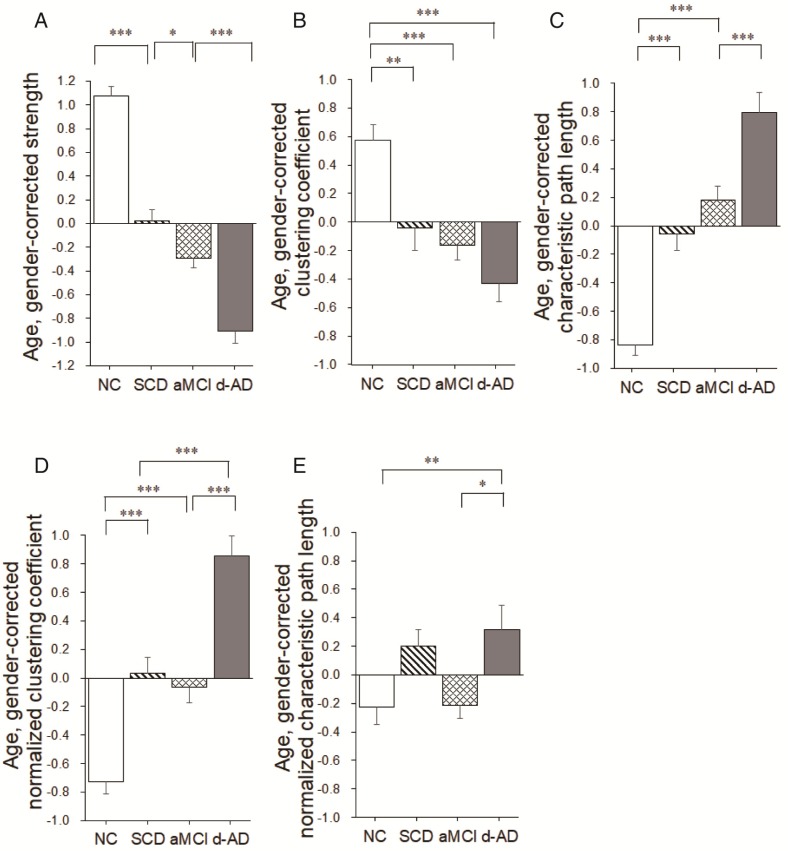
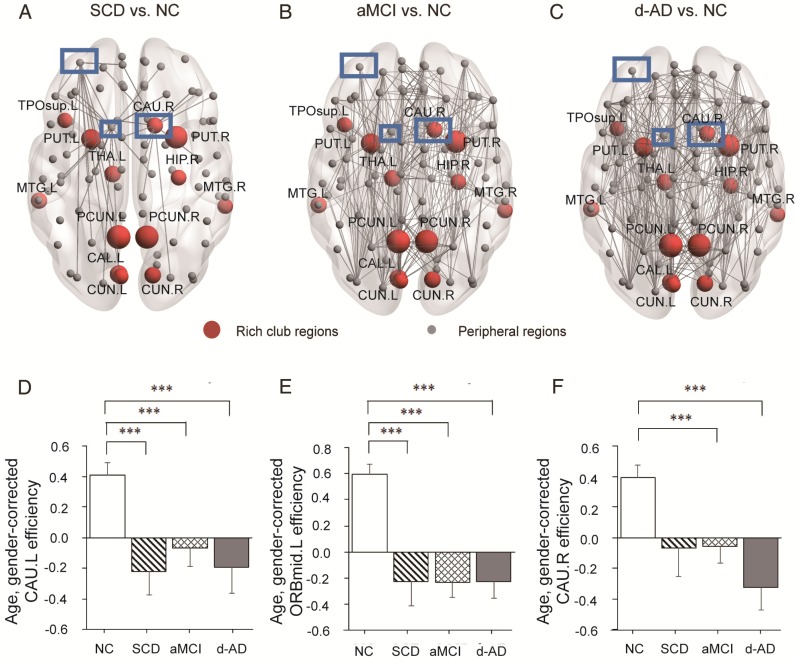
Alzheimer's disease (AD) has a preclinical phase that can last for decades prior to clinical dementia onset. Subjective cognitive decline (SCD) is regarded as the last preclinical AD stage prior to the development of amnestic mild cognitive decline (aMCI) and AD dementia (d-AD). The analysis of brain structural networks based on diffusion tensor imaging (DTI) has identified the so-called 'rich club', a set of cortical regions highly connected to each other, with other regions referred to as peripheral. It has been reported that rich club architecture is affected by regional atrophy and connectivity, which are reduced in patients with aMCI and d-AD. We recruited 62 normal controls, 47 SCD patients, 60 aMCI patients and 55 d-AD patients and collected DTI data to analyze rich-club organization. We demonstrated that rich club organization was disrupted, with reduced structural connectivity among rich club nodes, in aMCI and d-AD patients but remained stable in SCD patients. In addition, SCD, aMCI and d-AD patients showed similar patterns of disrupted peripheral regions and reduced connectivity involving these regions, suggesting that peripheral regions might contribute to cognitive decline and that disruptions here could be regarded as an early marker of SCD. This organization could provide the fundamental structural architecture for complex cognitive functions and explain the low prevalence of cognitive problems in SCD patients. These findings reveal a disrupted pattern of the AD connectome that starts in peripheral regions and then hierarchically propagates to rich club regions, when patients show clinical symptoms. This pattern provides evidence that disruptions in rich club organization are a key factor in the progression of AD that can dynamically reflect the progression of AD, thus representing a potential biomarker for early diagnosis.
阿尔茨海默病(AD)有一个临床前阶段,可在出现临床痴呆前持续数十年。主观认知下降(SCD)被认为是 AD 痴呆(d-AD)发生前最后一个临床前 AD 阶段。基于弥散张量成像(DTI)的脑结构网络分析已经确定了所谓的“丰富俱乐部”,这是一组彼此高度连接的皮质区域,其他区域则被称为周边区域。据报道,丰富俱乐部的结构受到区域萎缩和连接的影响,而这些在 aMCI 和 d-AD 患者中会减少。我们招募了 62 名正常对照者、47 名 SCD 患者、60 名 aMCI 患者和 55 名 d-AD 患者,并收集了 DTI 数据来分析丰富俱乐部的组织情况。我们发现,在 aMCI 和 d-AD 患者中,丰富俱乐部组织被破坏,丰富俱乐部节点之间的结构连接减少,但在 SCD 患者中保持稳定。此外,SCD、aMCI 和 d-AD 患者表现出相似的破坏周边区域模式,以及涉及这些区域的连接减少,这表明周边区域可能导致认知下降,而这些区域的破坏可以被视为 SCD 的早期标志物。这种组织可能为复杂认知功能提供基本的结构架构,并解释 SCD 患者认知问题发生率低的原因。这些发现揭示了 AD 连接组的一种破坏模式,该模式从周边区域开始,然后分层传播到丰富俱乐部区域,当患者出现临床症状时。这种模式提供了证据,表明丰富俱乐部组织的破坏是 AD 进展的关键因素,它可以动态反映 AD 的进展,因此代表了早期诊断的潜在生物标志物。