Tissue Engineering Research Center, Academy of Military Medical Sciences and Department of Neural Engineering and Biological Interdisciplinary Studies, Institute of Military Cognition and Brain Sciences, Academy of Military Medical Sciences, Beijing, China.
Collage of Life Science and Technology, Huazhong Agricultural University, Wuhan, Hubei, China.
Theranostics. 2018 May 12;8(12):3317-3330. doi: 10.7150/thno.25504. eCollection 2018.
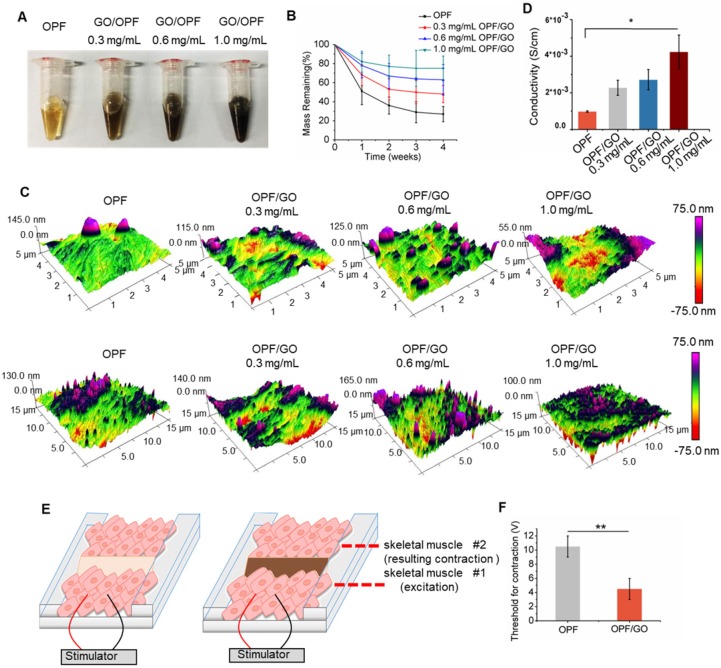
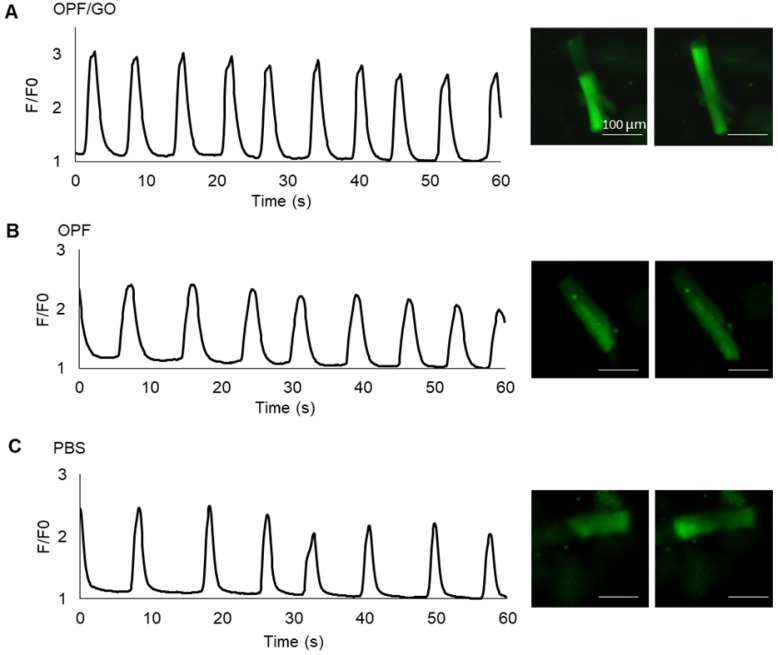
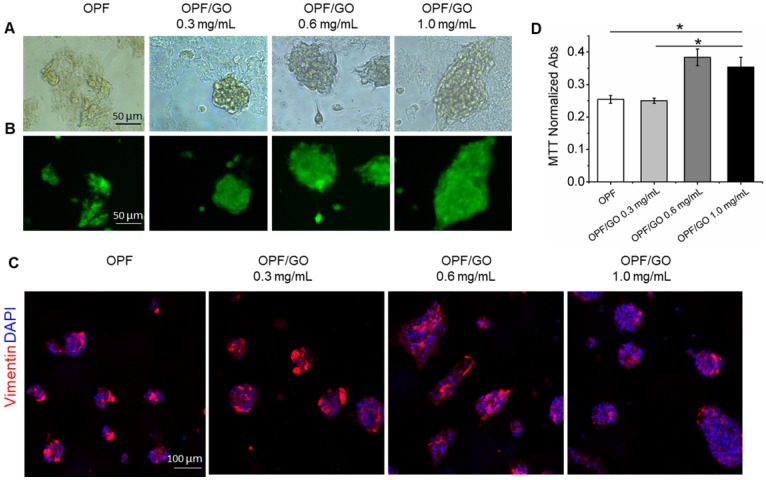
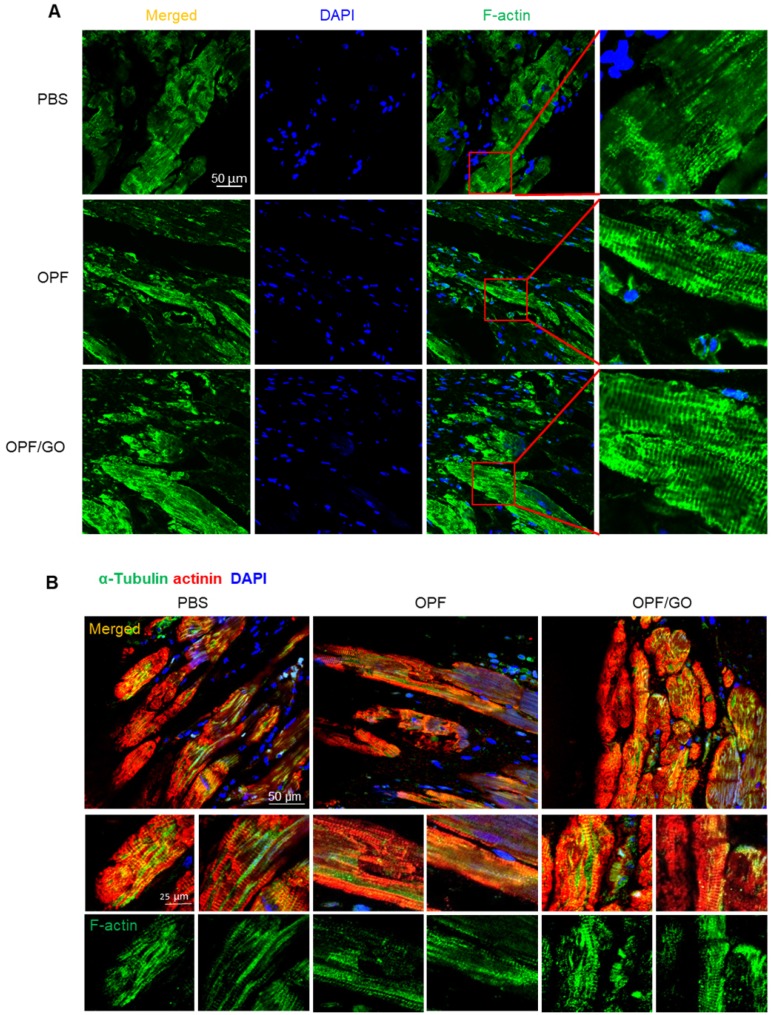
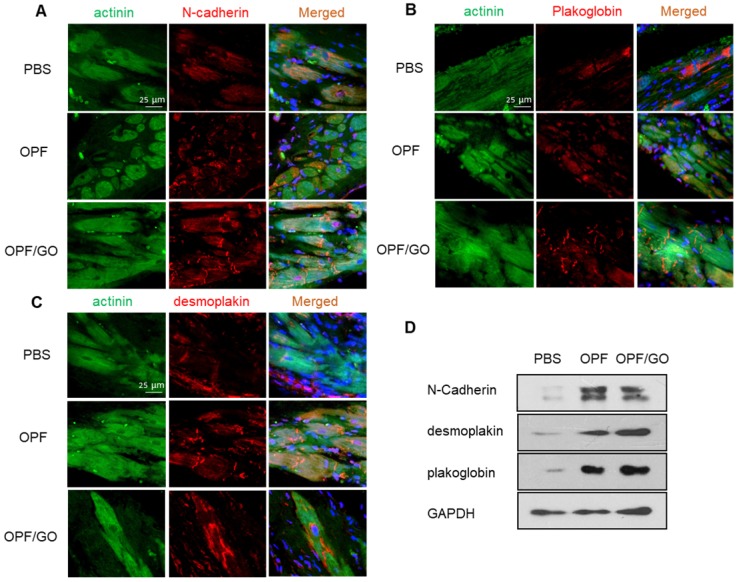
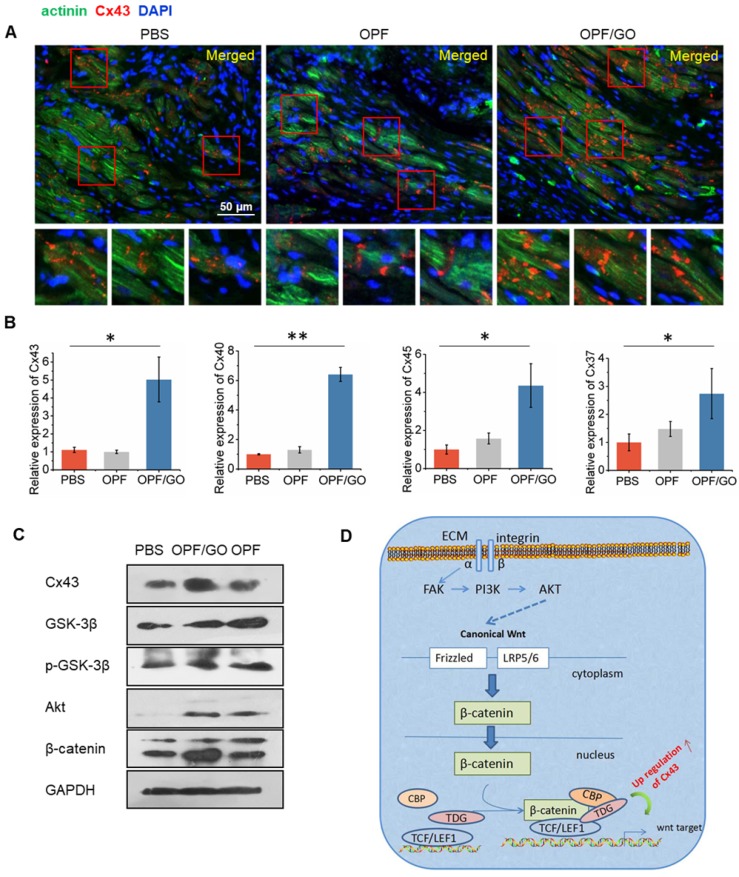
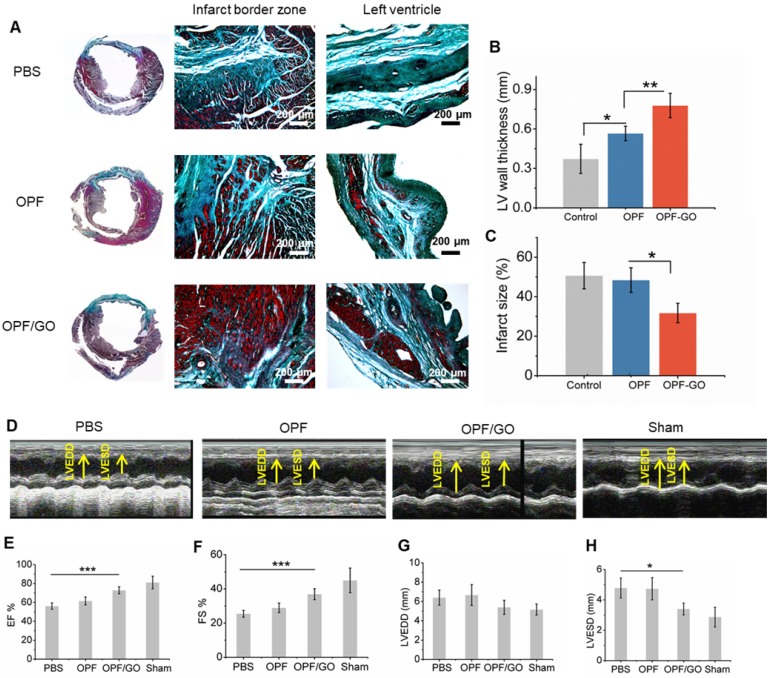
After myocardial infarction (MI), the scar tissue contributes to ventricular dysfunction by electrically uncoupling viable cardiomyocytes in the infarct region. Injection of a conductive hydrogel could not only provide mechanical support to the infarcted region, but also synchronize contraction and restore ventricular function by electrically connecting isolated cardiomyocytes to intact tissue. We created a conductive hydrogel by introducing graphene oxide (GO) nanoparticles into oligo(poly(ethylene glycol) fumarate) (OPF) hydrogels. The hydrogels were characterized by AFM and electrochemistry workstation. A rat model of myocardial infarction was used to investigate the ability of OPF/GO to improve cardiac electrical propagation in the injured heart . Echocardiography (ECHO) was used to evaluate heart function 4 weeks after MI. Ca imaging was used to visualize beating cardiomyocytes (CMs). Immunofluorescence staining was used to visualize the expression of cardiac-specific markers. OPF/GO hydrogels had semiconductive properties that were lacking in pure OPF. In addition, the incorporation of GO into OPF hydrogels could improve cell attachment . Injection of OPF/GO 4 weeks after myocardial infarction in rats enhanced the Ca signal conduction of cardiomyocytes in the infarcted region in comparison with PBS or OPF alone. Moreover, the injection of OPF/GO hydrogel into the infarct region enhanced the generation of cytoskeletal structure and intercalated disc assembly. Echocardiography analysis showed improvement in load-dependent ejection fraction/fractional shortening of heart function 4 weeks after injection. We prepared a conductive hydrogel (OPF/GO) that provide mechanical support and biological conduction and . We found that injected OPF/GO hydrogels can provide mechanical support and electric connection between healthy myocardium and the cardiomyocytes in the scar activating the canonical Wnt signal pathway, thus upregulating the generation of Cx43 and gap junction associated proteins. Injection of OPF/GO hydrogel maintained better heart function after myocardial infarction than the injection of a nonconductive polymer.
心肌梗死后(MI),梗死区域的瘢痕组织通过使存活的心肌细胞电分离而导致心室功能障碍。注射导电水凝胶不仅可以为梗死区域提供机械支撑,还可以通过将分离的心肌细胞与完整的组织电连接来同步收缩并恢复心室功能。我们通过将氧化石墨烯(GO)纳米粒子引入聚(聚乙二醇琥珀酸酯)(OPF)水凝胶中来创建导电水凝胶。通过原子力显微镜(AFM)和电化学工作站对水凝胶进行了表征。使用大鼠心肌梗死模型来研究 OPF/GO 改善受损心脏中心电传播的能力。使用超声心动图(ECHO)评估 MI 后 4 周的心脏功能。使用钙成像来可视化跳动的心肌细胞(CM)。免疫荧光染色用于可视化心脏特异性标志物的表达。OPF/GO 水凝胶具有纯 OPF 所缺乏的半导电性。此外,将 GO 掺入 OPF 水凝胶中可以改善细胞附着。与 PBS 或 OPF 单独相比,在大鼠心肌梗死后 4 周时向梗死区注射 OPF/GO 可以增强梗死区心肌细胞的 Ca 信号传导。此外,将 OPF/GO 水凝胶注入梗死区可以增强细胞骨架结构和闰盘组装的产生。超声心动图分析显示,在注射后 4 周时,射血分数/心功能的负荷依赖性缩短率得到改善。我们制备了一种导电水凝胶(OPF/GO),该水凝胶可提供机械支撑和生物传导。我们发现,注射的 OPF/GO 水凝胶可以为健康心肌和瘢痕中的心肌细胞提供机械支撑和电连接,激活经典的 Wnt 信号通路,从而上调 Cx43 和缝隙连接相关蛋白的生成。与注射非导电聚合物相比,注射 OPF/GO 水凝胶可在心肌梗死后保持更好的心脏功能。