CEDOC, Chronic Diseases Research Centre, NOVA Medical School|Faculdade de Ciências Médicas, Universidade NOVA de Lisboa, Campo dos Mártires da Pátria, 130, 1169-056, Lisboa, Portugal.
Unidade de Investigação em Patobiologia Molecular do Instituto Português de Oncologia de Lisboa Francisco Gentil (IPOLFG), Rua Prof Lima Basto, 1099-023, Lisboa, Portugal.
Sci Rep. 2018 Jun 22;8(1):9513. doi: 10.1038/s41598-018-27753-y.
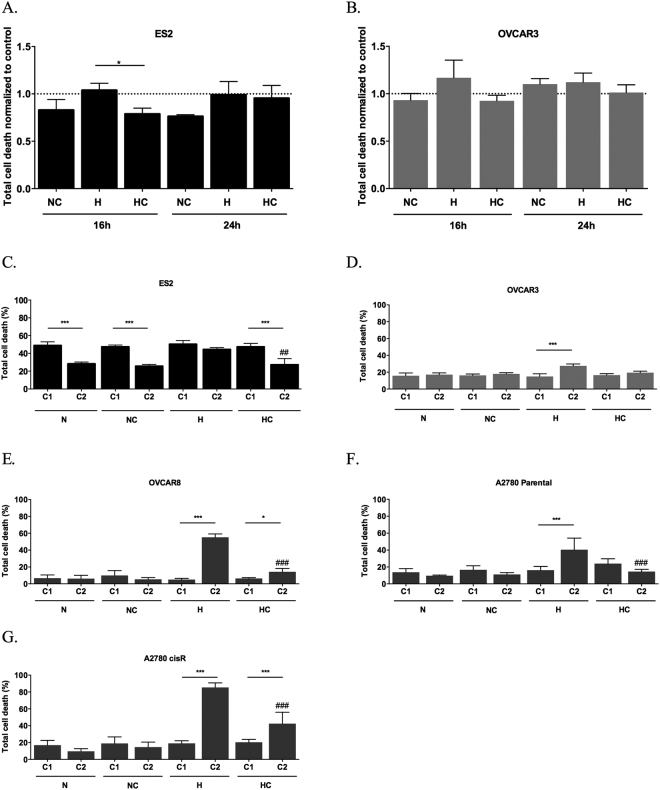
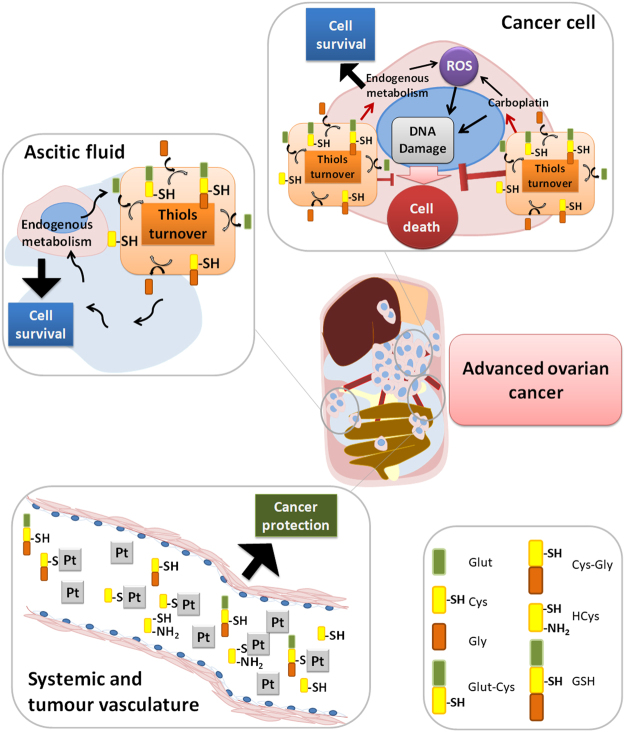
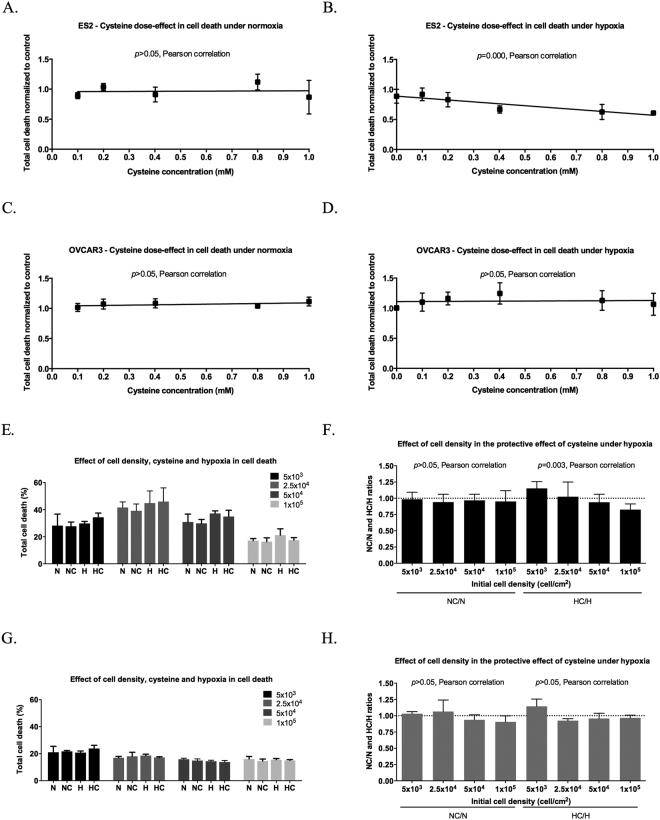
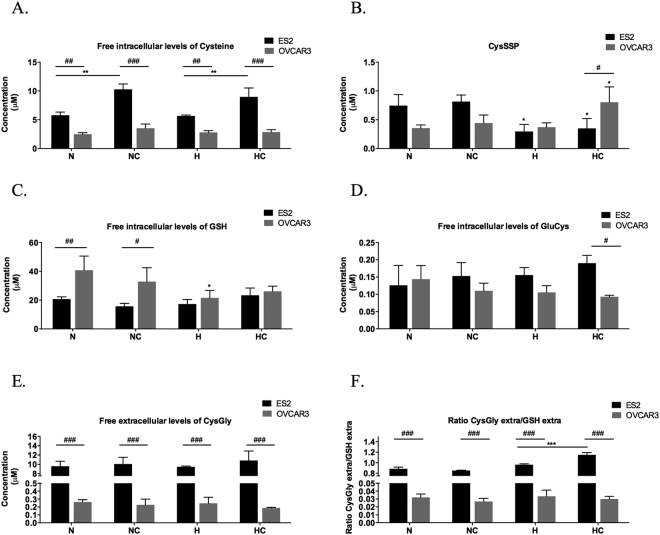
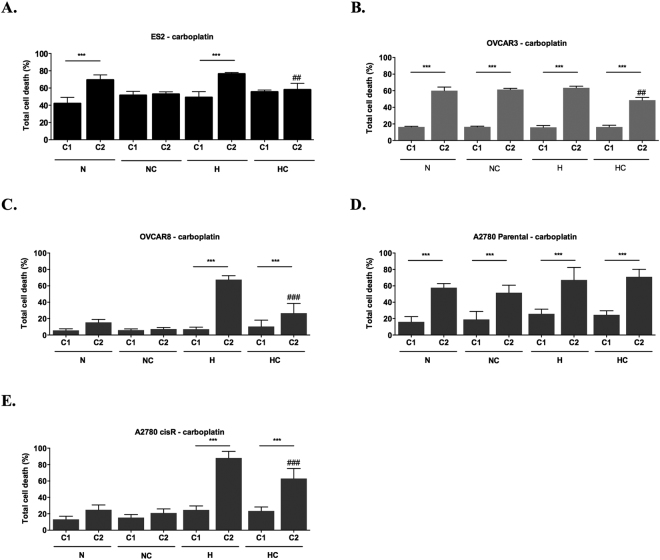
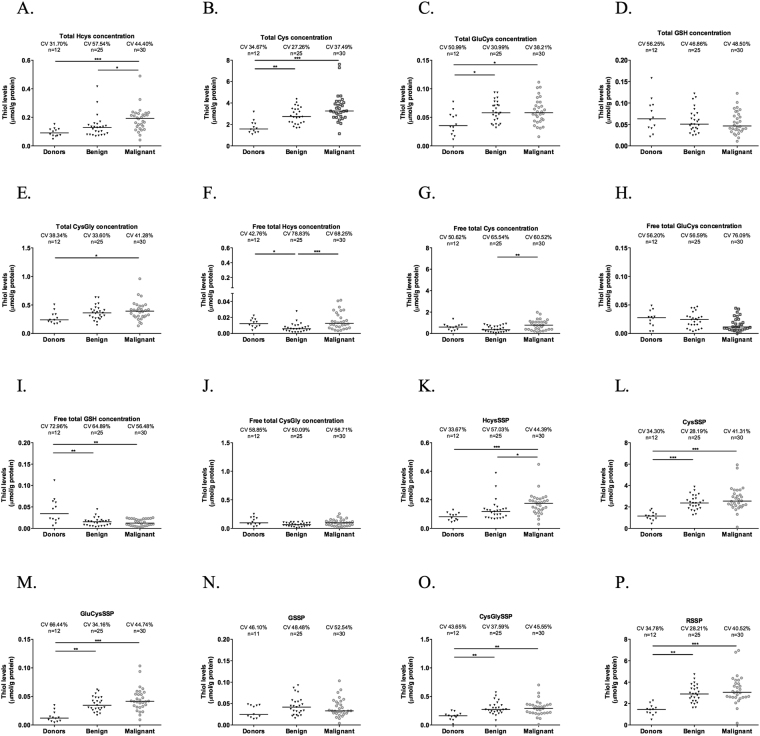
Ovarian cancer is the second most common gynaecologic malignancy and the main cause of death from gynaecologic cancer, due to late diagnosis and chemoresistance. Studies have reported the role of cysteine in cancer, by contributing for hydrogen sulphide (HS) generation and as a precursor of glutathione (GSH). However, the role of cysteine in the adaptation to hypoxia and therapy response remains unclear. We used several ovarian cancer cell lines, ES2, OVCAR3, OVCAR8, A2780 and A2780cisR, to clarify cysteine relevance in ovarian cancer cells survival upon hypoxia and carboplatin. Results show that ES2 and OVCAR8 cells presented a stronger dependence on cysteine availability upon hypoxia and carboplatin exposure than OVCAR3 cells. Interestingly, the A2780 cisR, but not A2780 parental cells, benefits from cysteine upon carboplatin exposure, showing that cysteine is crucial for chemoresistance. Moreover, GSH degradation and subsequent cysteine recycling pathway is associated with ovarian cancer as seen in peripheral blood serum from patients. Higher levels of total free cysteine (Cys) and homocysteine (HCys) were found in ovarian cancer patients in comparison with benign tumours and lower levels of GSH were found in ovarian neoplasms patients in comparison with healthy individuals. Importantly, the total and S-Homocysteinylated levels distinguished blood donors from patients with neoplasms as well as patients with benign from patients with malignant tumours. The levels of S-cysteinylated proteins distinguish blood donors from patients with neoplasms and the free levels of Cys in serum distinguish blood from patients with benign tumours from patients with malignant tumours. Herein we disclosed that cysteine contributes for a worse disease prognosis, allowing faster adaptation to hypoxia and protecting cells from carboplatin. The measurement of serum cysteine levels can be an effective tool for early diagnosis, for outcome prediction and follow up of disease progression.
卵巢癌是第二常见的妇科恶性肿瘤,也是妇科癌症死亡的主要原因,这归因于晚期诊断和化疗耐药。研究报道了半胱氨酸在癌症中的作用,它可以促进硫化氢(HS)的产生并作为谷胱甘肽(GSH)的前体。然而,半胱氨酸在适应缺氧和治疗反应中的作用仍不清楚。我们使用了几种卵巢癌细胞系,包括 ES2、OVCAR3、OVCAR8、A2780 和 A2780cisR,以阐明半胱氨酸在缺氧和卡铂暴露下对卵巢癌细胞存活的相关性。结果表明,ES2 和 OVCAR8 细胞在缺氧和卡铂暴露下对半胱氨酸的依赖性比 OVCAR3 细胞更强。有趣的是,A2780cisR 而不是 A2780 亲本细胞,在卡铂暴露下受益于半胱氨酸,表明半胱氨酸对于化疗耐药至关重要。此外,谷胱甘肽的降解和随后的半胱氨酸再循环途径与卵巢癌有关,如患者外周血血清中所见。与良性肿瘤相比,卵巢癌患者的总游离半胱氨酸(Cys)和同型半胱氨酸(HCys)水平更高,与健康个体相比,卵巢肿瘤患者的 GSH 水平更低。重要的是,总同型半胱氨酸和 S-同型半胱氨酸化水平将献血者与肿瘤患者以及良性肿瘤患者与恶性肿瘤患者区分开来。S-半胱氨酸化蛋白的水平将献血者与肿瘤患者区分开来,血清中游离 Cys 的水平将良性肿瘤患者与恶性肿瘤患者区分开来。在此,我们揭示了半胱氨酸有助于疾病预后恶化,使细胞更快地适应缺氧并保护细胞免受卡铂的影响。血清半胱氨酸水平的测量可以成为早期诊断、预后预测和疾病进展随访的有效工具。