Autism Center of Excellence, Department of Neuroscience, University of California, San Diego, 8110 La Jolla Shores Drive, Suite 201, La Jolla, CA, 92037, USA.
Department of Pediatrics, University of California, San Diego, 9500 Gilman Drive, La Jolla, CA, 92093, USA.
Mol Psychiatry. 2019 Jan;24(1):88-107. doi: 10.1038/s41380-018-0056-y. Epub 2018 Jun 22.
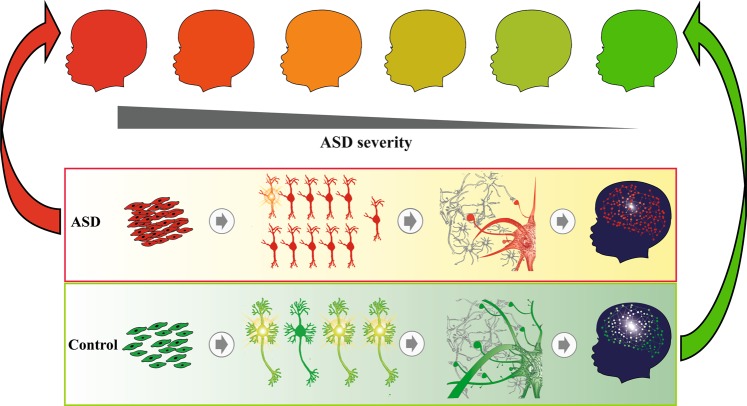
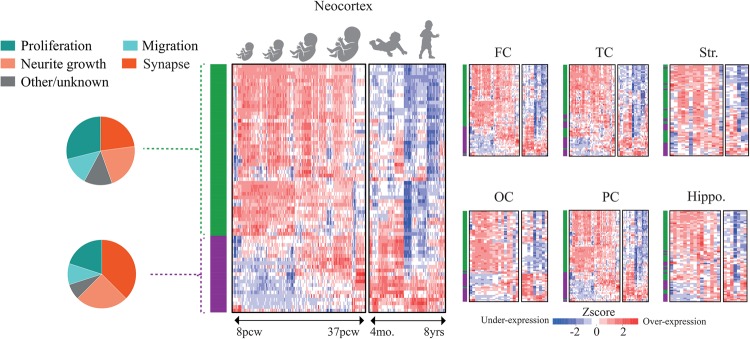
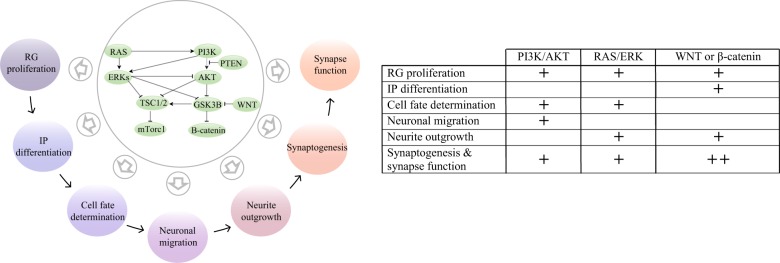
Autism spectrum disorder (ASD) has captured the attention of scientists, clinicians and the lay public because of its uncertain origins and striking and unexplained clinical heterogeneity. Here we review genetic, genomic, cellular, postmortem, animal model, and cell model evidence that shows ASD begins in the womb. This evidence leads to a new theory that ASD is a multistage, progressive disorder of brain development, spanning nearly all of prenatal life. ASD can begin as early as the 1st and 2nd trimester with disruption of cell proliferation and differentiation. It continues with disruption of neural migration, laminar disorganization, altered neuron maturation and neurite outgrowth, disruption of synaptogenesis and reduced neural network functioning. Among the most commonly reported high-confidence ASD (hcASD) genes, 94% express during prenatal life and affect these fetal processes in neocortex, amygdala, hippocampus, striatum and cerebellum. A majority of hcASD genes are pleiotropic, and affect proliferation/differentiation and/or synapse development. Proliferation and subsequent fetal stages can also be disrupted by maternal immune activation in the 1st trimester. Commonly implicated pathways, PI3K/AKT and RAS/ERK, are also pleiotropic and affect multiple fetal processes from proliferation through synapse and neural functional development. In different ASD individuals, variation in how and when these pleiotropic pathways are dysregulated, will lead to different, even opposing effects, producing prenatal as well as later neural and clinical heterogeneity. Thus, the pathogenesis of ASD is not set at one point in time and does not reside in one process, but rather is a cascade of prenatal pathogenic processes in the vast majority of ASD toddlers. Despite this new knowledge and theory that ASD biology begins in the womb, current research methods have not provided individualized information: What are the fetal processes and early-age molecular and cellular differences that underlie ASD in each individual child? Without such individualized knowledge, rapid advances in biological-based diagnostic, prognostic, and precision medicine treatments cannot occur. Missing, therefore, is what we call ASD Living Biology. This is a conceptual and paradigm shift towards a focus on the abnormal prenatal processes underlying ASD within each living individual. The concept emphasizes the specific need for foundational knowledge of a living child's development from abnormal prenatal beginnings to early clinical stages. The ASD Living Biology paradigm seeks this knowledge by linking genetic and in vitro prenatal molecular, cellular and neural measurements with in vivo post-natal molecular, neural and clinical presentation and progression in each ASD child. We review the first such study, which confirms the multistage fetal nature of ASD and provides the first in vitro fetal-stage explanation for in vivo early brain overgrowth. Within-child ASD Living Biology is a novel research concept we coin here that advocates the integration of in vitro prenatal and in vivo early post-natal information to generate individualized and group-level explanations, clinically useful prognoses, and precision medicine approaches that are truly beneficial for the individual infant and toddler with ASD.
自闭症谱系障碍 (ASD) 因其起源不确定和临床表现明显且无法解释的异质性而引起了科学家、临床医生和普通大众的关注。在这里,我们回顾了遗传、基因组、细胞、尸检、动物模型和细胞模型的证据,这些证据表明 ASD 始于子宫内。这一证据导致了一种新的理论,即 ASD 是一种多阶段、进行性的大脑发育障碍,几乎涵盖了整个产前阶段。ASD 最早可在第 1 至第 2 个孕期出现,表现为细胞增殖和分化紊乱。它接着导致神经迁移、层状组织紊乱、神经元成熟和神经突生长改变、突触发生中断以及神经网络功能下降。在最常见的高可信度 ASD(hcASD)基因中,有 94%在胎儿期表达,并影响新皮层、杏仁核、海马体、纹状体和小脑的这些胎儿过程。大多数 hcASD 基因是多效性的,会影响增殖/分化和/或突触发育。母体在第 1 孕期的免疫激活也会干扰增殖和随后的胎儿阶段。通常涉及的途径,PI3K/AKT 和 RAS/ERK,也是多效性的,会影响从增殖到突触和神经功能发育的多个胎儿过程。在不同的 ASD 个体中,这些多效性途径何时以及如何失调的差异,将导致不同的、甚至相反的影响,从而产生产前和后期的神经和临床异质性。因此,ASD 的发病机制不是在一个时间点确定的,也不是存在于一个过程中,而是在绝大多数 ASD 幼儿中存在一系列产前致病过程。尽管有了这一新的知识和理论,即 ASD 生物学始于子宫内,但目前的研究方法并未提供个体化信息:每个个体儿童的 ASD 背后存在哪些胎儿过程和早期的分子和细胞差异?如果没有这种个体化的知识,基于生物学的诊断、预后和精准医疗治疗的快速进步就无法实现。因此,我们称之为 ASD 活体生物学的知识缺失了。这是一个概念和范式的转变,强调了在每个有生命的个体中,关注 ASD 背后异常的产前过程。该概念强调了从异常的产前开始到早期临床阶段,了解每个有生命的孩子的发育所需的特定基础知识。ASD 活体生物学范式通过将遗传和体外产前分子、细胞和神经测量与每个 ASD 儿童的体内产后分子、神经和临床表现和进展联系起来,寻求这种知识。我们回顾了第一项此类研究,该研究证实了 ASD 的多阶段胎儿性质,并为体内早期大脑过度生长提供了第一个体外胎儿阶段的解释。在个体内部的 ASD 活体生物学是我们在这里提出的一个新的研究概念,它主张整合体外产前和体内早期产后信息,以生成个体化和群体水平的解释、临床有用的预后以及真正有益于 ASD 婴儿和幼儿的精准医疗方法。