Graduate School of Life Science, Hokkaido University, Sapporo, Hokkaido, Japan.
Department of Biological Sciences, Hokkaido University, Sapporo, Hokkaido, Japan.
Eur J Neurosci. 2018 Jul;48(2):1728-1742. doi: 10.1111/ejn.14057. Epub 2018 Jul 6.
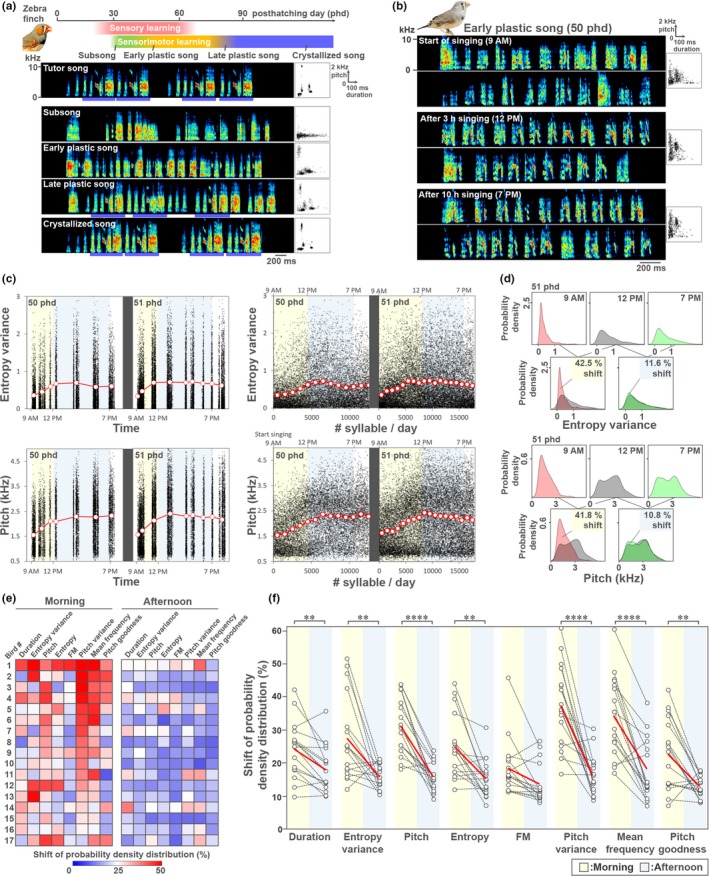
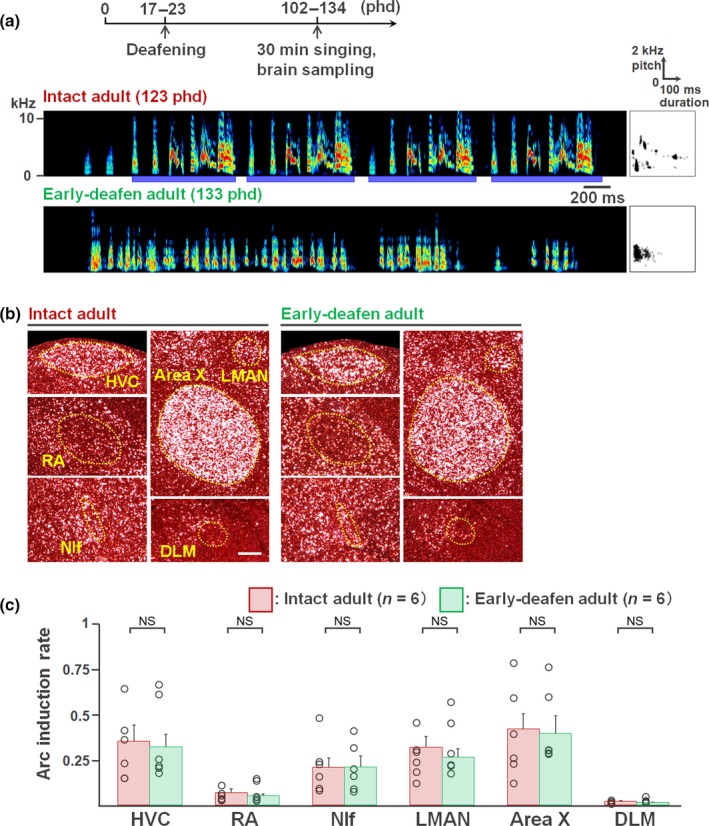
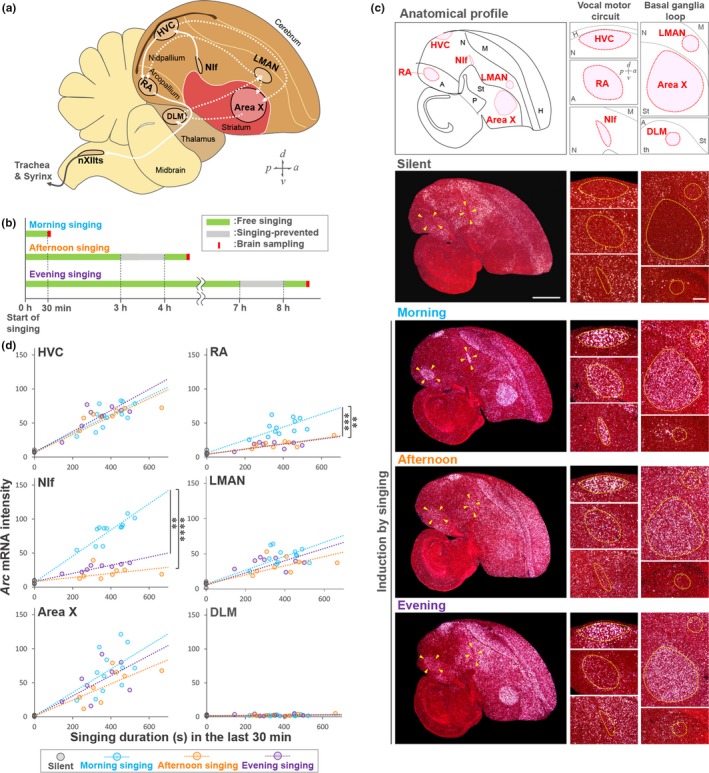
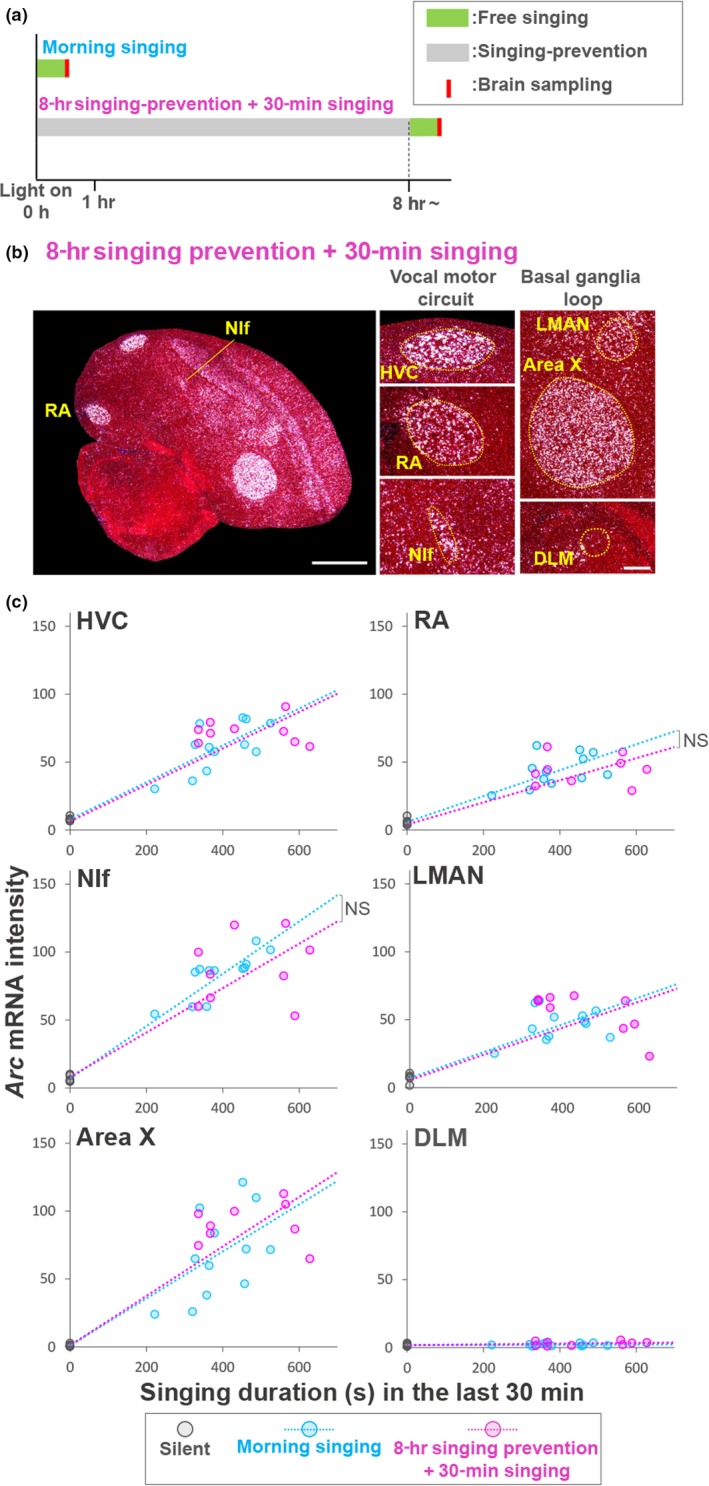
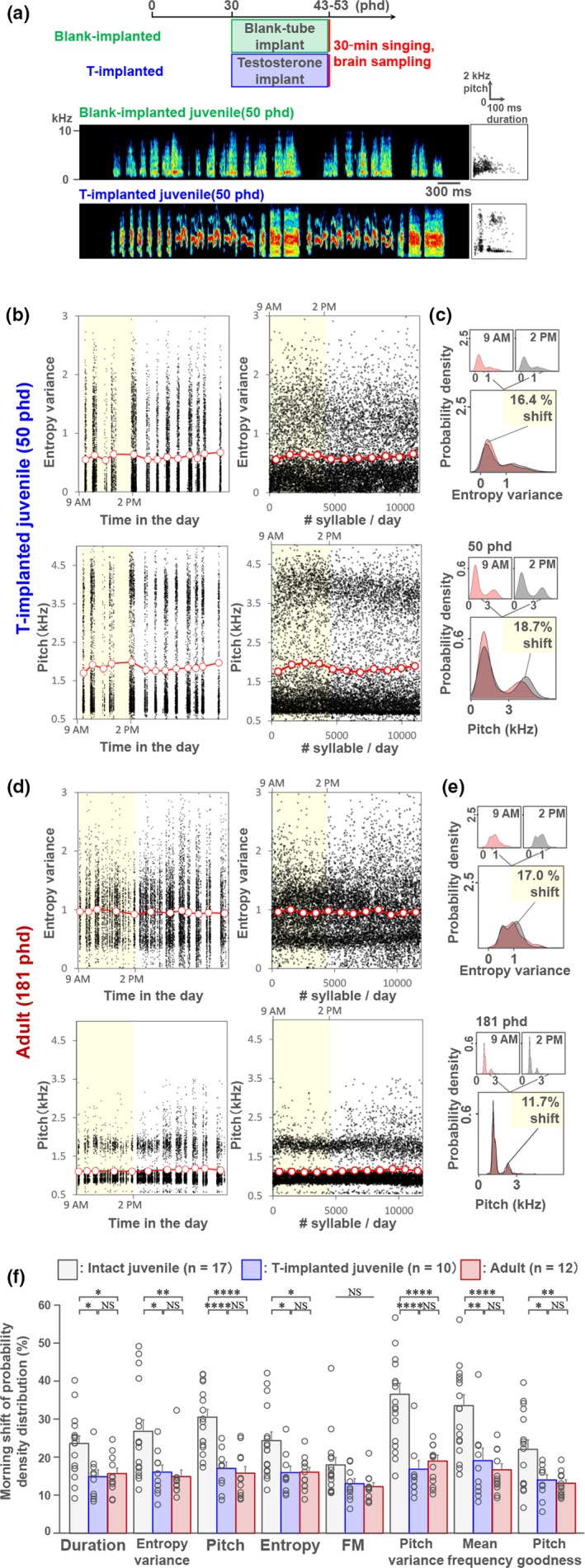
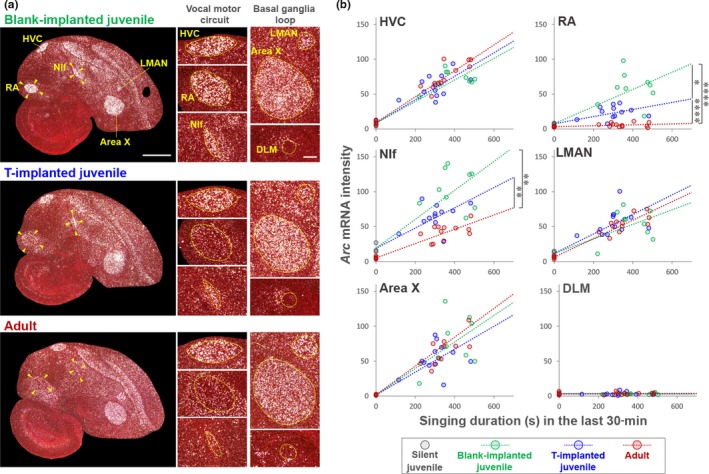
Learned vocalization, including birdsong and human speech, is acquired through self-motivated vocal practice during the sensitive period of vocal learning. The zebra finch (Taeniopygia guttata) develops a song characterized by vocal variability and crystallizes a defined song pattern as adulthood. However, it remains unknown how vocal variability is regulated with diurnal singing during the sensorimotor learning period. Here, we investigated the expression of activity-dependent neuroplasticity-related gene Arc during the early plastic song phase to examine its potential association with vocal plasticity. We first confirmed that multiple acoustic features of syllables in the plastic song were dramatically and simultaneously modulated during the first 3 hr of singing in a day and the altered features were maintained until sleep. In a concurrent manner, Arc was intensely induced during morning singing and a subsequent attenuation during afternoon singing in the robust nucleus of the arcopallium (RA) and the interfacial nucleus of the nidopallium (NIf). The singing-driven Arc expression was not altered by circadian rhythm, but rather reduced during the day as juveniles produced more songs. Song stabilization accelerated by testosterone administration in juveniles was accompanied with attenuation of Arc induction in RA and NIf. In contrast, although early-deafened birds produced highly unstable song even at adulthood, singing-driven Arc expression was not different between intact and early-deafened adults. These results suggest a potential functional link between Arc expression in RA and NIf and vocal plasticity during the sensorimotor phase of song learning. Nonetheless, Arc expression did not reflect the quality of bird's own song or auditory feedback.
习得性发声,包括鸟鸣和人类言语,是通过在发声学习的敏感时期自我激励的发声练习获得的。斑胸草雀(Taeniopygia guttata)会发展出一种具有发声可变性的歌声,并在成年期形成明确的歌声模式。然而,在感觉运动学习期间,白天歌唱时,发声可变性如何受到调节仍然未知。在这里,我们研究了活性依赖性神经可塑性相关基因 Arc 在早期可塑性歌唱阶段的表达,以检查其与发声可塑性的潜在关联。我们首先证实,在一天中的前 3 小时的歌唱期间,可塑性歌唱中音节的多个声学特征会同时显著且同时调节,并且这些改变的特征会持续到睡眠中。在同时,Arc 在早晨歌唱时强烈诱导,并在下午歌唱时在大脑边缘核的强大核(RA)和中脑核的界面核(NIf)中随后衰减。Arc 的表达不受昼夜节律的影响,而是随着幼鸟产生更多的歌曲而在白天减少。在幼鸟中通过睾丸激素给药加速的歌声稳定伴随着 RA 和 NIf 中 Arc 诱导的衰减。相比之下,尽管早期失聪的鸟类即使在成年后也会产生高度不稳定的歌声,但完整和早期失聪的成年鸟类之间的歌唱驱动的 Arc 表达没有差异。这些结果表明,Arc 在 RA 和 NIf 中的表达与感觉运动学习阶段的发声可塑性之间存在潜在的功能联系。尽管如此,Arc 表达并不反映鸟类自身歌声的质量或听觉反馈。