Amiri Dash Atan Nasrin, Koushki Mehdi, Rezaei Tavirani Mostafa, Ahmadi Nayeb Ali
Proteomics Research Center, Shahid Beheshti University of Medical Sciences, Tehran, Iran. Email:
Asian Pac J Cancer Prev. 2018 Jun 25;19(6):1639-1645. doi: 10.22034/APJCP.2018.19.6.1639.
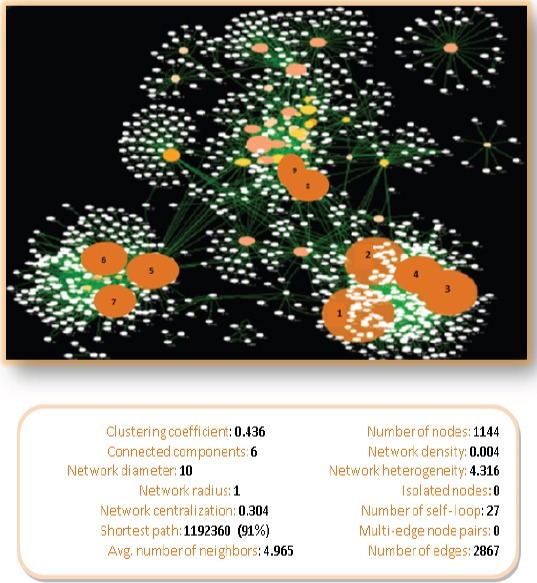
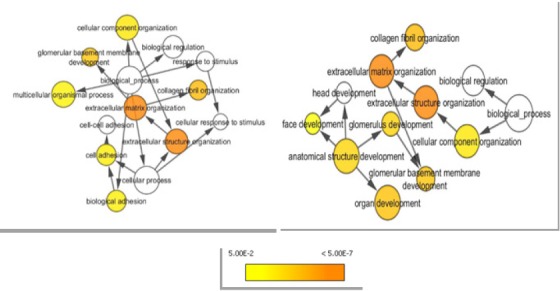
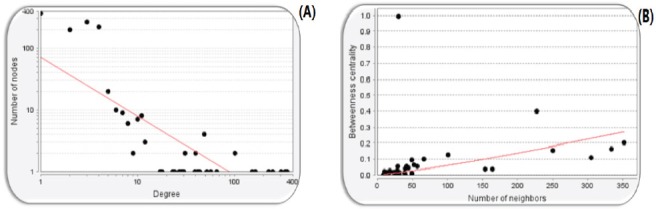
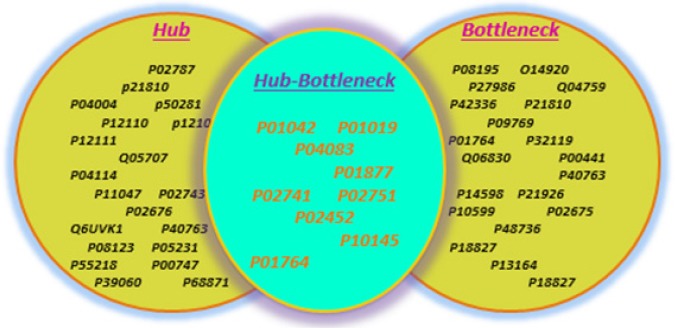
Background: Oral cancer is a frequently encountered neoplasm of the head and neck region, being the eight most common type of human malignancy worldwide. Despite improvement in its control, morbidity and mortality rates have improved little in the past decades. Therefore, prevention and/or early detection are a high priority. Proteomics with network analysis have emerged as a powerful tool to identify important proteins associated with cancer development and progression that can be potential targets for early diagnosis. In the present study, network- based protein- protein interactions (PPI) for oral cancer were identified and then analyzed for use as key proteins/potential biomarkers. Material and Methods: Gene expression data in articles which focused on saliva proteomics of oral cancer were collected and 74 candidate genes or proteins were extracted. Related protein networks of differentially expressed proteins were explored and visualized using cytoscape software. Further PPI analysis was performed by Molecular Complex Detection (MCODE) and BiNGO methods. Results: Network analysis of genes/proteins related to oral cancer identified kininogen-1, angiotensinogen, annexin A1, IL-8, IgG heavy variable and constant chains, CRP, collagen alpha-1 and fibronectin as 9 hub-bottleneck proteins. In addition, based on clustering with the MCODE tool, vitronectin, collagen alpha-2, IL-8 and integrin alpha-v were established as 5 distinct seed proteins. Conclusion: A hub-bottleneck protein panel may offer a potential /candidate biomarker pattern for diagnosis and treatment of oral cancer disease. Further investigation and validation of these proteins are warranted.
口腔癌是头颈部常见的肿瘤,是全球第八大常见的人类恶性肿瘤。尽管在其控制方面有所改善,但在过去几十年中发病率和死亡率几乎没有改善。因此,预防和/或早期检测是当务之急。蛋白质组学与网络分析已成为一种强大的工具,可用于识别与癌症发生和发展相关的重要蛋白质,这些蛋白质可能是早期诊断的潜在靶点。在本研究中,确定了基于网络的口腔癌蛋白质-蛋白质相互作用(PPI),然后对其进行分析以用作关键蛋白质/潜在生物标志物。
收集关注口腔癌唾液蛋白质组学的文章中的基因表达数据,提取74个候选基因或蛋白质。使用Cytoscape软件探索和可视化差异表达蛋白质的相关蛋白质网络。通过分子复合物检测(MCODE)和BiNGO方法进行进一步的PPI分析。
与口腔癌相关的基因/蛋白质网络分析确定激肽原-1、血管紧张素原、膜联蛋白A1、白细胞介素-8、IgG重链可变区和恒定区、CRP、胶原蛋白α-1和纤连蛋白为9种枢纽瓶颈蛋白。此外,基于使用MCODE工具进行的聚类,确定玻连蛋白、胶原蛋白α-2、白细胞介素-8和整合素α-v为5种不同的种子蛋白。
一个枢纽瓶颈蛋白组可能为口腔癌疾病的诊断和治疗提供一种潜在的/候选生物标志物模式。有必要对这些蛋白质进行进一步的研究和验证。