Marian Viorica, Lam Tuan Q, Hayakawa Sayuri, Dhar Sumitrajit
Department of Communication Sciences and Disorders, Northwestern University, Evanston, IL, United States.
Department of Psychological Sciences, Loyola University, New Orleans, LA, United States.
Front Neurosci. 2018 Jun 8;12:378. doi: 10.3389/fnins.2018.00378. eCollection 2018.
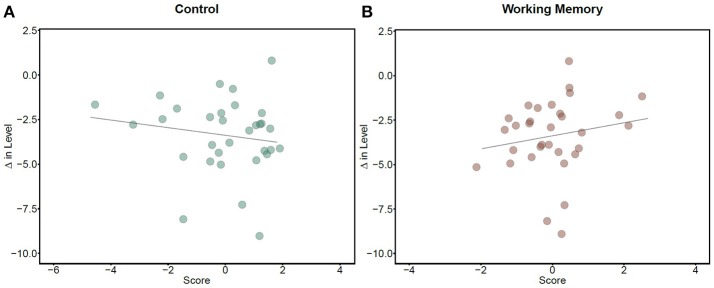
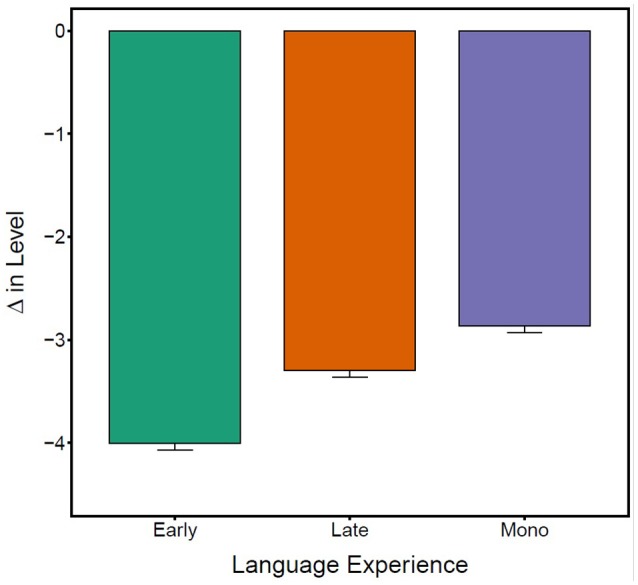
Auditory sensation is often thought of as a bottom-up process, yet the brain exerts top-down control to affect how and what we hear. We report the discovery that the magnitude of top-down influence varies across individuals as a result of differences in linguistic background and executive function. Participants were 32 normal-hearing individuals (23 female) varying in language background (11 English monolinguals, 10 Korean-English late bilinguals, and 11 Korean-English early bilinguals), as well as cognitive abilities (working memory, cognitive control). To assess efferent control over inner ear function, participants were presented with speech-sounds (e.g., /ba/, /pa/) in one ear while spontaneous otoacoustic emissions (SOAEs) were measured in the contralateral ear. SOAEs are associated with the amplification of sound in the cochlea, and can be used as an index of top-down efferent activity. Individuals with bilingual experience and those with better cognitive control experienced larger reductions in the amplitude of SOAEs in response to speech stimuli, likely as a result of greater efferent suppression of amplification in the cochlea. This suppression may aid in the critical task of speech perception by minimizing the disruptive effects of noise. In contrast, individuals with better working memory exert less control over the cochlea, possibly due to a greater capacity to process complex stimuli at later stages. These findings demonstrate that even peripheral mechanics of auditory perception are shaped by top-down cognitive and linguistic influences.
听觉通常被认为是一个自下而上的过程,然而大脑会施加自上而下的控制来影响我们如何听以及听到什么。我们报告了一项发现,即由于语言背景和执行功能的差异,自上而下影响的程度在个体之间有所不同。参与者为32名听力正常的个体(23名女性),他们的语言背景(11名英语单语者、10名韩英双语后期学习者和11名韩英双语早期学习者)以及认知能力(工作记忆、认知控制)各不相同。为了评估对内耳功能的传出控制,在一只耳朵向参与者呈现语音(例如,/ba/、/pa/)的同时,在对侧耳朵测量自发性耳声发射(SOAE)。SOAE与耳蜗中的声音放大有关,可作为自上而下传出活动的指标。有双语经验的个体以及具有更好认知控制能力的个体,在对语音刺激做出反应时,SOAE的幅度下降更大,这可能是由于对耳蜗放大的传出抑制更强。这种抑制可能通过最小化噪声的干扰效应来辅助语音感知这一关键任务。相比之下,工作记忆较好的个体对耳蜗的控制较少,这可能是由于在后期阶段处理复杂刺激的能力更强。这些发现表明,即使是听觉感知的外周机制也受到自上而下的认知和语言影响。