Cerrito Maria Grazia, De Giorgi Marco, Pelizzoni Davide, Bonomo Sara Maria, Digiacomo Nunzio, Scagliotti Arianna, Bugarin Cristina, Gaipa Giuseppe, Grassilli Emanuela, Lavitrano Marialuisa, Giovannoni Roberto, Bidoli Paolo, Cazzaniga Marina Elena
Department of Medicine and Surgery, University of Milano-Bicocca, Monza 20900, Italy.
Oncology Unit, ASST Monza, Monza 20900, Italy.
Oncotarget. 2018 Jun 8;9(44):27448-27459. doi: 10.18632/oncotarget.25422.
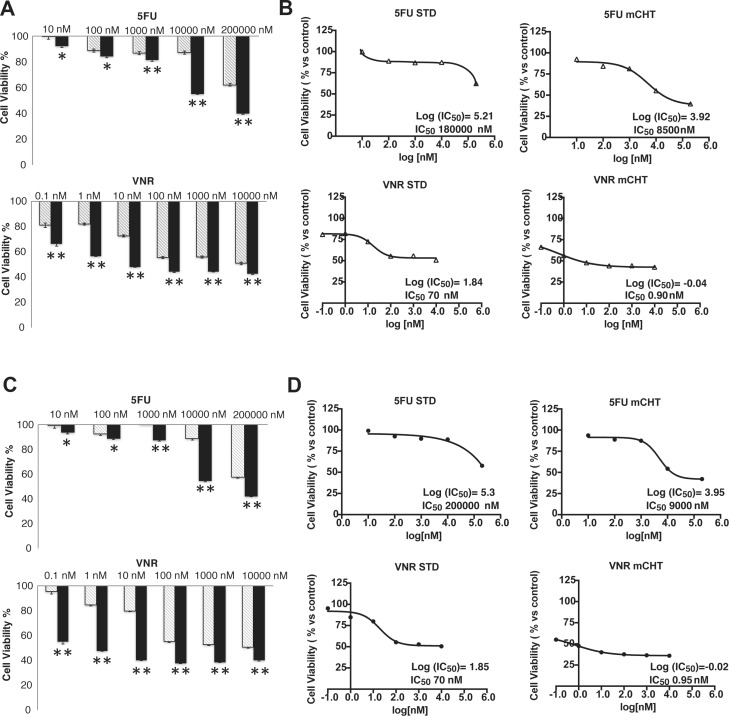
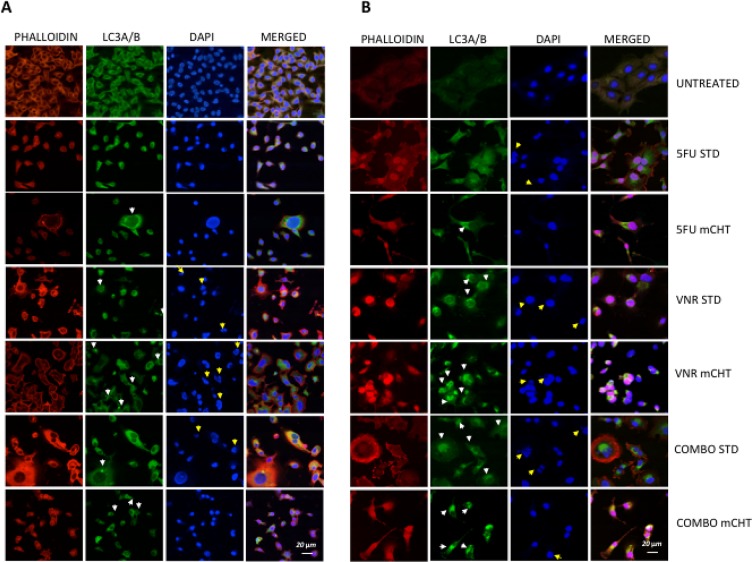
Triple Negative Breast Cancer (TNBC) is an aggressive neoplasia with median Overall Survival (OS) less than two years. Despite the availability of new drugs, the chance of survival of these patients did not increase. The combination of low doses of drugs in a metronomic schedule showed efficacy in clinical trials, exhibiting an anti-proliferative and anti-tumour activity. In Victor-2 study we recently evaluated a new metronomic combination (mCHT) of Capecitabine (CAPE) and Vinorelbine (VNR) in breast cancer patients showing a disease control rate with a median Progression-Free Survival (PFS) of 4.7 months in 28 TNBC patients. Here in Victor-0 study, we examined the effect of mCHT vs standard (STD) schedule of administration of different combinations of 5-Fluorouracil (5FU), the active metabolite of CAPE, and VNR in TNBC cell lines MDA-MB-231 and BT-549. A significant anti-proliferative activity was observed in cells treated with metronomic vs STD administration of 5FU or VNR alone. Combination of the two drugs showed an additive inhibitor effect on cell growth in both cell lines. Moreover, after exposure of cells to 5FU and VNR under mCHT or conventional schedule of administration we also observed a downregulation of chemoresistance factor Bcl-2, changes in pro-apoptotic protein Bax and in cleaved effector caspase-3 and increased expression of LC3A/B autophagy protein. Our results therefore suggest that molecular mechanisms implicated in apoptosis and autophagy as well as the cross-talk between these two forms of cell death in MDA-MB-231 and BT-549 cells treated with 5FU and VNR is dose- and schedule-dependent and provide some insights about the roles of autophagy and senescence in 5FU/VNR-induced cell death.
三阴性乳腺癌(TNBC)是一种侵袭性肿瘤,总体生存期(OS)中位数不到两年。尽管有新药可用,但这些患者的生存机会并未增加。低剂量药物按节拍给药方案联合使用在临床试验中显示出疗效,具有抗增殖和抗肿瘤活性。在Victor-2研究中,我们最近评估了卡培他滨(CAPE)和长春瑞滨(VNR)的一种新的节拍联合方案(mCHT)在乳腺癌患者中的效果,在28例TNBC患者中显示出疾病控制率,无进展生存期(PFS)中位数为4.7个月。在Victor-0研究中,我们研究了mCHT与5-氟尿嘧啶(5FU,CAPE的活性代谢产物)和VNR不同组合的标准(STD)给药方案对TNBC细胞系MDA-MB-231和BT-549的影响。在单独使用5FU或VNR按节拍给药与STD给药处理的细胞中观察到显著的抗增殖活性。两种药物联合使用对两种细胞系的细胞生长均显示出相加抑制作用。此外,在细胞按照mCHT或传统给药方案暴露于5FU和VNR后,我们还观察到化疗耐药因子Bcl-2下调、促凋亡蛋白Bax以及裂解的效应半胱天冬酶-3发生变化,并且自噬蛋白LC3A/B表达增加。因此,我们的结果表明,在MDA-MB-231和BT-549细胞中,5FU和VNR处理后涉及凋亡和自噬的分子机制以及这两种细胞死亡形式之间的相互作用是剂量和给药方案依赖性的,并且为自噬和衰老在5FU/VNR诱导的细胞死亡中的作用提供了一些见解。