Zheng Chunyan, Yang Fan, Zeng Ling, Vargo Edward L, Xu Yijuan
Department of Entomology South China Agricultural University Guangzhou China.
Department of Entomology Texas A&M University College Station Texas.
Ecol Evol. 2018 May 2;8(11):5427-5440. doi: 10.1002/ece3.4065. eCollection 2018 Jun.
is listed as one of the most important invasive pest species in China. Information regarding the patterns of invasion and effects of geographic isolation on the population genetics of this species is largely lacking.
South China.
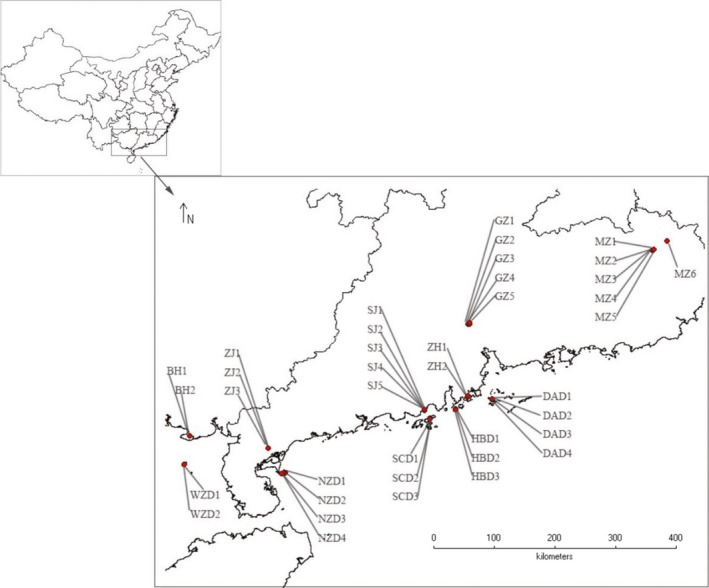
To address this problem, we genotyped 39 colonies (two colonies were collapsed due to genetic similarity) using microsatellite markers and mitochondrial DNA sequencing to compare colony genetic structure of on the mainland and islands of South China.
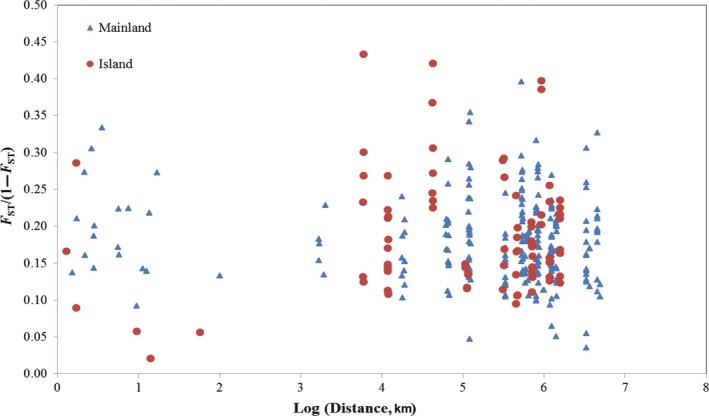
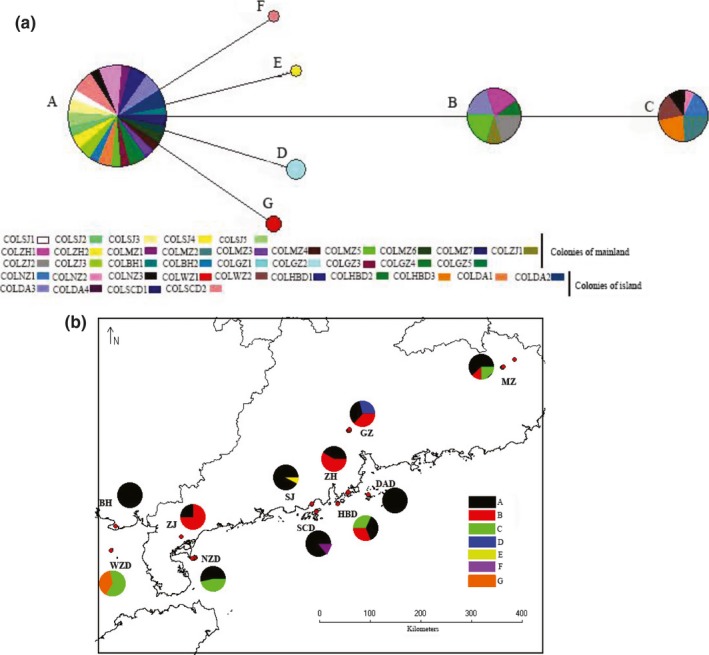
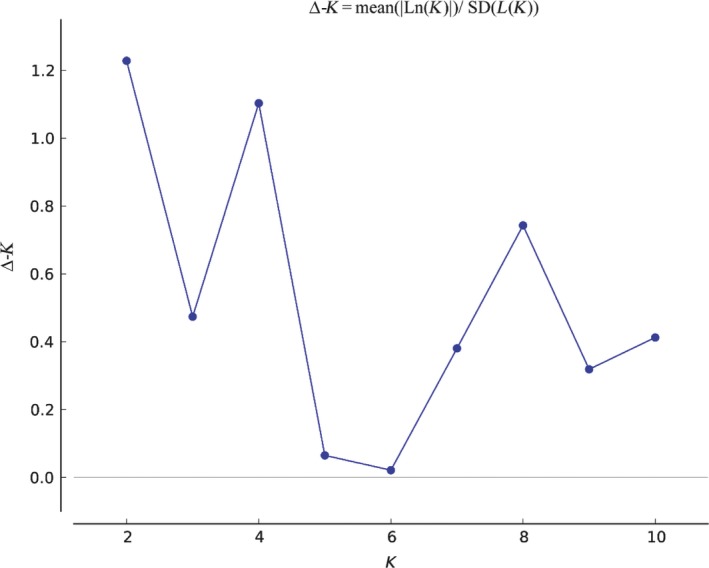
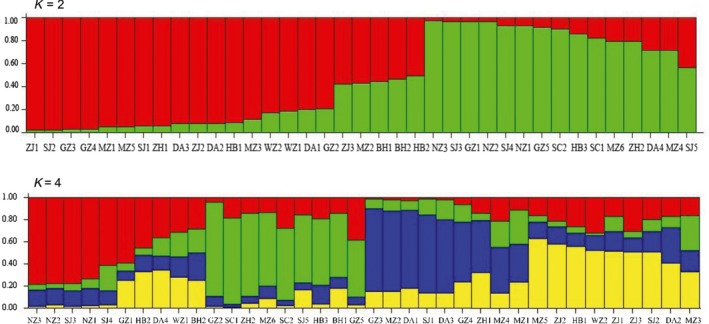
An analysis of the colony genotypes showed that the genetic diversity of the mainland population was slightly higher than that of the island populations but not significantly so. However, the observed heterozygosity on Shangchuan Island (SCD) was significantly lower than that of the other colonies. We also found six haplotypes in 111 mitochondrial DNA COI sequences. The relatedness () value between colonies of SCD was 0.410, higher than that of the other populations. The genetic clusters among colonies were not related to geographic locations and exhibited admixture likely due to frequent human-mediated dispersal associated with trade between the mainland population and the islands. Pairwise s between populations showed differentiation among mainland populations, while SCD displayed high levels of divergence ( > 0.15) from most mainland populations. There was no significant isolation by distance among colonies. Most populations showed signs of a bottleneck effect.
Our study suggests that there was no significant difference in the genetic diversity among the islands and the mainland; however, the lower genetic diversity, the higher degree of genetic divergence from other colonies, and the higher relatedness among nestmates made the SCD population stand out from all the others.
被列为中国最重要的入侵害虫物种之一。关于该物种入侵模式以及地理隔离对其种群遗传学影响的信息在很大程度上缺乏。
中国南方。
为解决这一问题,我们使用微卫星标记和线粒体DNA测序对39个群体(两个群体因基因相似性而崩溃)进行基因分型,以比较中国南方大陆和岛屿上的群体遗传结构。
对群体基因型的分析表明,大陆种群的遗传多样性略高于岛屿种群,但差异不显著。然而,上川岛(SCD)的观察杂合度显著低于其他群体。我们还在111个线粒体DNA COI序列中发现了6种单倍型。SCD群体之间的亲缘关系()值为0.410,高于其他种群。群体间的遗传聚类与地理位置无关,可能由于大陆种群和岛屿之间与贸易相关的频繁人为介导的扩散而呈现混合状态。种群间的成对显示大陆种群之间存在分化,而SCD与大多数大陆种群表现出高度的分化(>0.15)。群体之间没有显著的距离隔离。大多数种群显示出瓶颈效应的迹象。
我们的研究表明岛屿和大陆之间的遗传多样性没有显著差异;然而,较低的遗传多样性、与其他群体较高的遗传分化程度以及巢内同伴之间较高的亲缘关系使SCD种群在所有其他种群中脱颖而出。