Department of Medicine and Gastroenterology, Interfaith Medical Center, New York, NY, USA.
Department of Medicine, Detroit Medical Center, Wayne State University, Detroit, MI, USA.
Gut Liver. 2018 Nov 15;12(6):694-703. doi: 10.5009/gnl18004.
BACKGROUND/AIMS: Limited data exist comparing the safety and efficacy of direct-acting antivirals (DAAs) in hepatitis C virus (HCV) monoinfected and HCV/human immunodeficiency virus (HIV) coinfected patients in the real-world clinic practice setting.
All HCV monoinfected and HCV/HIV coinfected patients treated with DAAs between January 2014 and October 2017 in community clinic settings were retrospectively analyzed. Pretreatment baseline patient characteristics, treatment efficacy, factors affecting sustained virologic response at 12 weeks (SVR12) after treatment, and adverse reactions were compared between the groups.
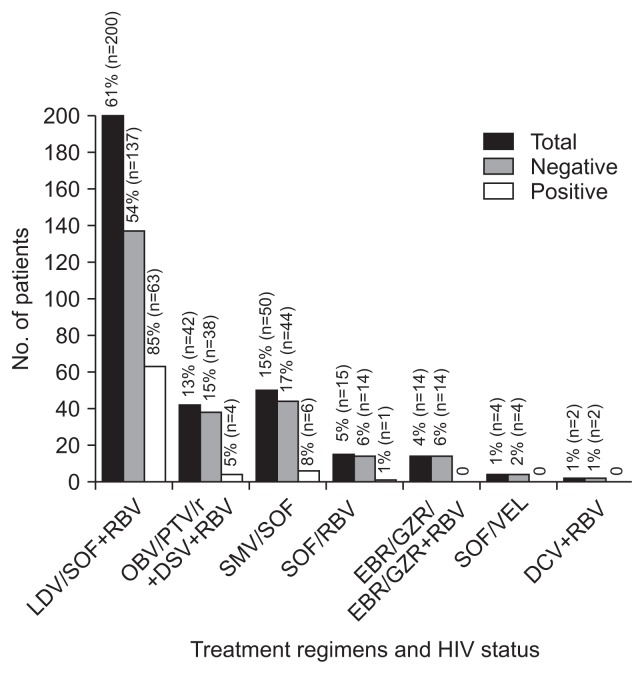
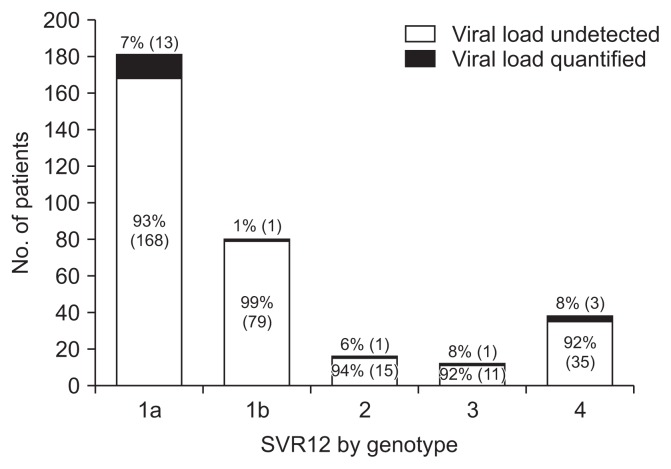
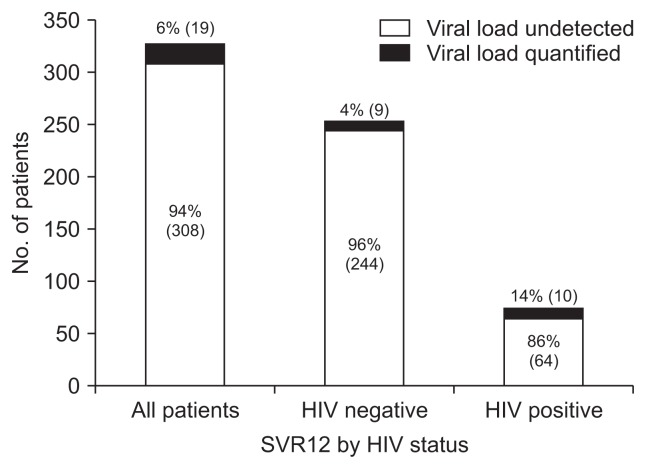
A total of 327 patients were included in the study, of which 253 were HCV monoinfected, and 74 were HCV/HIV coinfected. There was a statistically significant difference observed in SVR12 when comparing HCV monoinfection and HCV/HIV coinfection (94% and 84%, respectively, p=0.005). However, there were no significant factors identified as a predictor of a reduced response. The most common adverse effect was fatigue (27%). No significant drug interaction was observed between DAA and antiretroviral therapy. None of the patients discontinued the treatment due to adverse events.
In a real-world setting, DAA regimens have lower SVR12 in HCV/HIV coinfection than in HCV monoinfection. Further studies involving a higher number of HCV/HIV coinfected patients are needed to identify real predictors of a reduced response.
背景/目的:在真实临床实践环境中,比较直接作用抗病毒药物(DAA)治疗丙型肝炎病毒(HCV)单感染和 HCV/人类免疫缺陷病毒(HIV)合并感染患者的安全性和疗效的数据有限。
回顾性分析了 2014 年 1 月至 2017 年 10 月期间在社区诊所接受 DAA 治疗的所有 HCV 单感染和 HCV/HIV 合并感染患者。比较了两组患者的治疗前基线特征、治疗效果、影响治疗后 12 周持续病毒学应答(SVR12)的因素以及不良反应。
共纳入 327 例患者,其中 HCV 单感染 253 例,HCV/HIV 合并感染 74 例。HCV 单感染和 HCV/HIV 合并感染的 SVR12 有统计学显著差异(分别为 94%和 84%,p=0.005)。然而,没有发现显著的影响 SVR12 的预测因素。最常见的不良反应是疲劳(27%)。未观察到 DAA 与抗逆转录病毒治疗之间存在药物相互作用。由于不良反应,没有患者停止治疗。
在真实环境中,DAA 方案治疗 HCV/HIV 合并感染的 SVR12 低于 HCV 单感染。需要进一步研究更多的 HCV/HIV 合并感染患者,以确定 SVR12 降低的真正预测因素。