VanLeuven Ariel J, Park Sungdae, Menke Douglas B, Lauderdale James D
Department of Cellular Biology, University of Georgia, 724 Biological Sciences Building, Athens, GA 30602-2607, USA.
Department of Genetics, University of Georgia, Paul D Coverdell Center, 500 D.W. Brooks Drive, Room 250, Athens, GA 30602, USA.
Biotechniques. 2018 Jun;64(6):275-278. doi: 10.2144/btn-2018-0012.
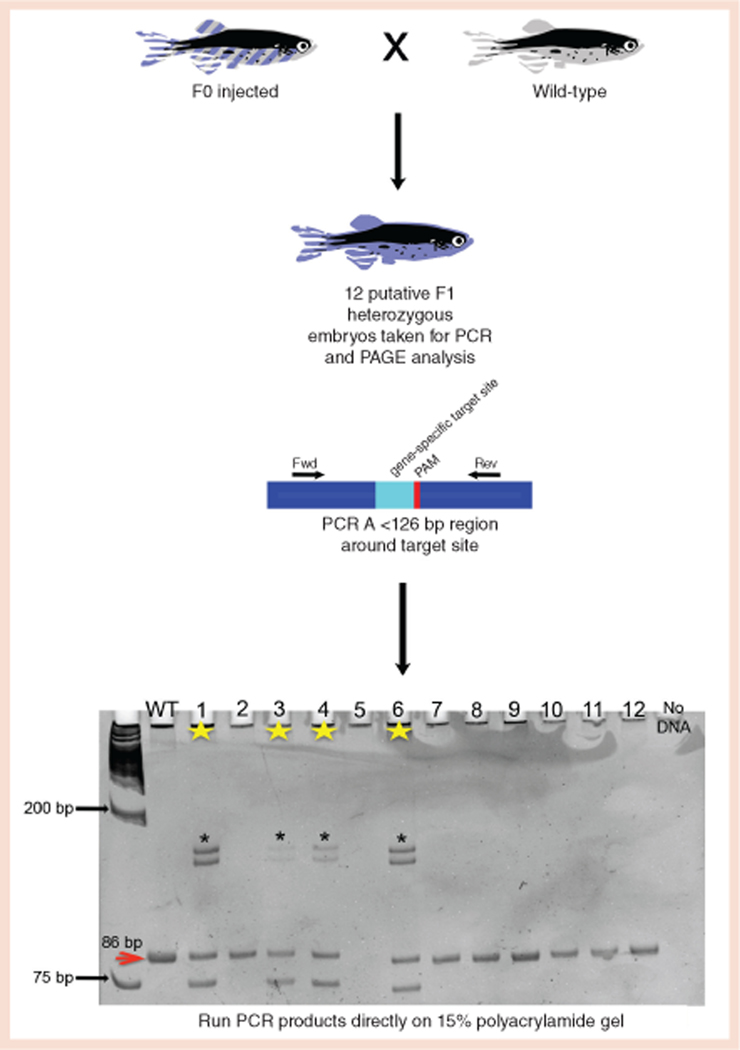
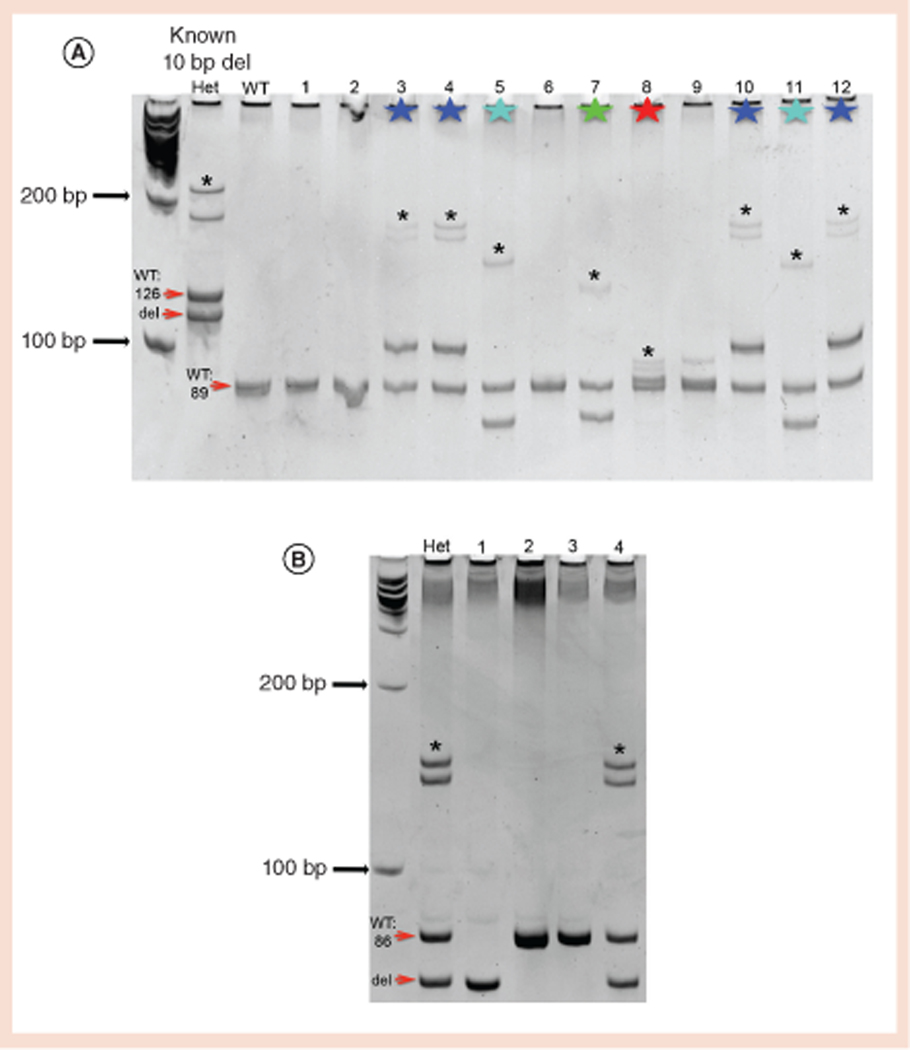
The introduction of CRISPR-Cas9 technology for targeted mutagenesis has revolutionized reverse genetics and made genome editing a realistic option in many model organisms. One of the difficulties with this technique is screening for mutations in large numbers of samples. Many screening approaches for identifying CRISPR-Cas9 mutants have been published; however, in practice these methods are time consuming, expensive, or often yield false positives. This report describes a PCR-based screening approach using non-denaturing PAGE. This approach does not depend on the formation of heteroduplexes and reliably detects changes as small as 1 base-pair (bp) in nucleic acid length at the target site. This approach can be used to identify novel mutations and is also useful as a routine genotyping method.
用于靶向诱变的CRISPR-Cas9技术的引入彻底改变了反向遗传学,并使基因组编辑成为许多模式生物中的一个现实选择。该技术的困难之一是在大量样本中筛选突变。已经发表了许多用于鉴定CRISPR-Cas9突变体的筛选方法;然而,在实践中,这些方法耗时、昂贵,或者经常产生假阳性结果。本报告描述了一种使用非变性聚丙烯酰胺凝胶电泳(PAGE)的基于聚合酶链反应(PCR)的筛选方法。这种方法不依赖于异源双链体的形成,并且能够可靠地检测目标位点核酸长度上小至1个碱基对(bp)的变化。这种方法可用于鉴定新的突变,也可用作常规基因分型方法。