State Key Laboratory of Freshwater Ecology and Biotechnology, Institute of Hydrobiology, Chinese Academy of Sciences, Wuhan 430072, China.
College of Advanced Agricultural Sciences, University of Chinese Academy of Sciences, Beijing 100049, China.
Cells. 2021 Aug 4;10(8):1984. doi: 10.3390/cells10081984.
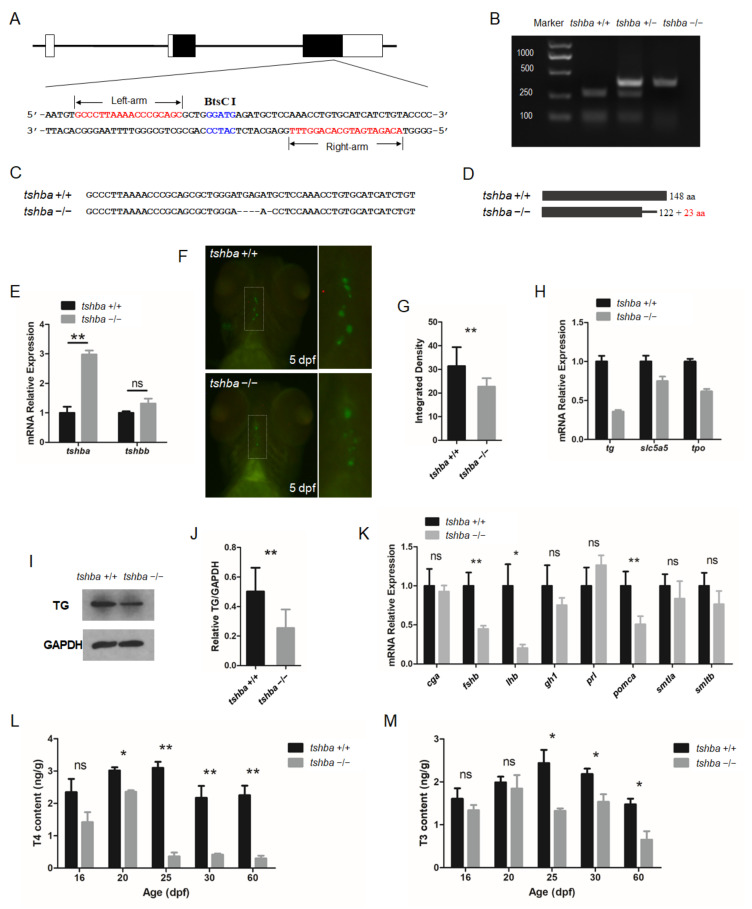
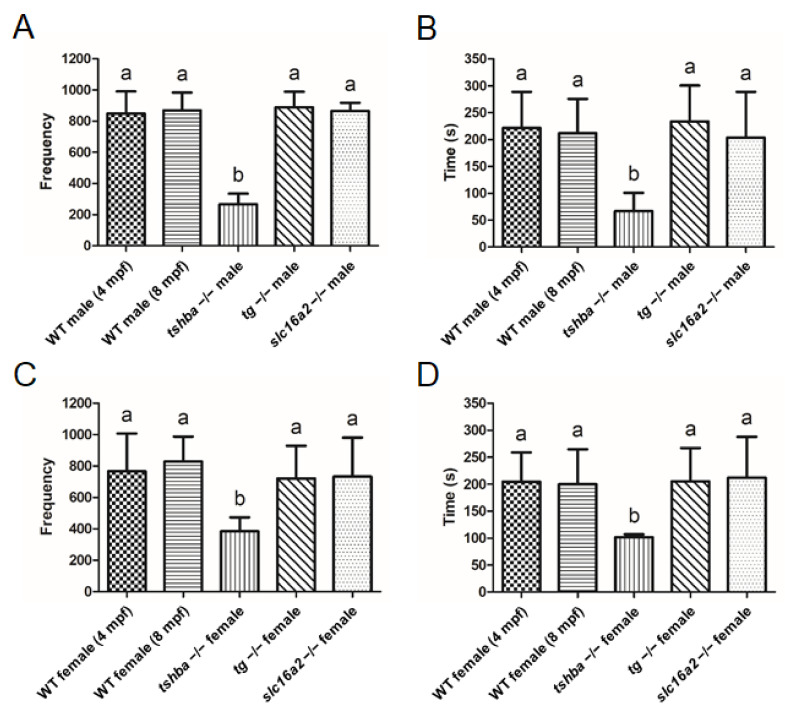
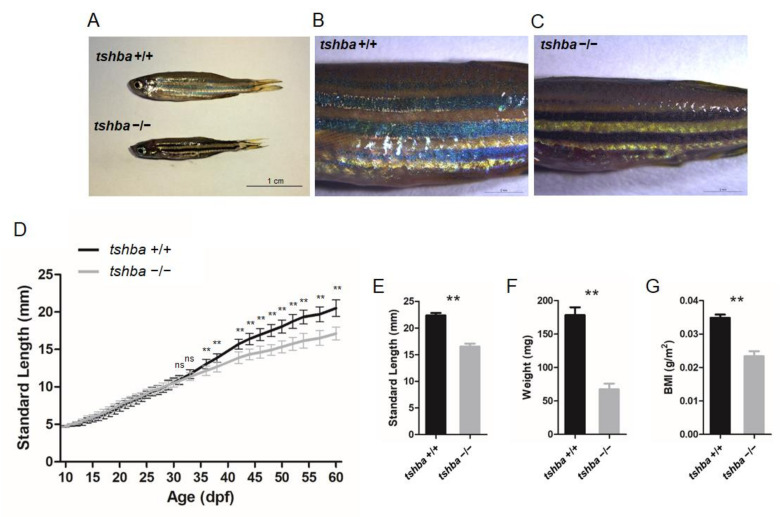
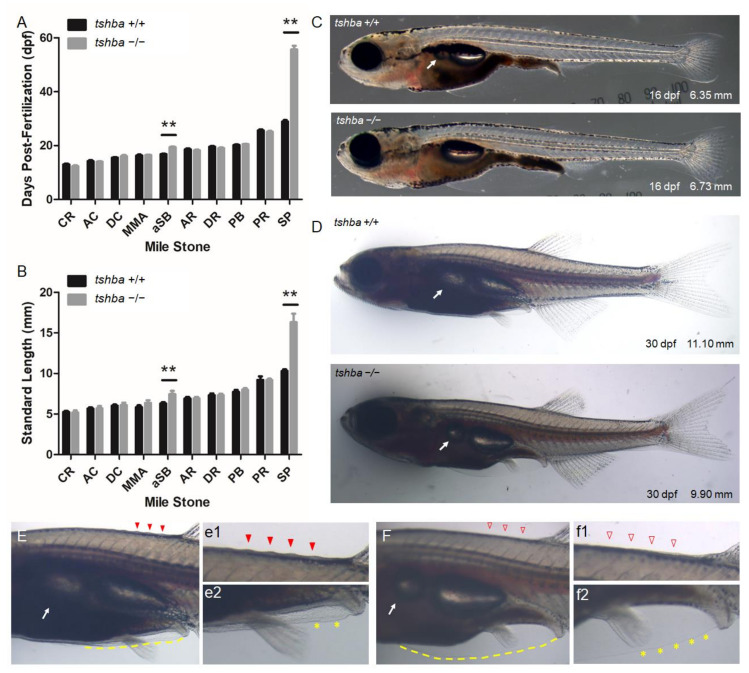
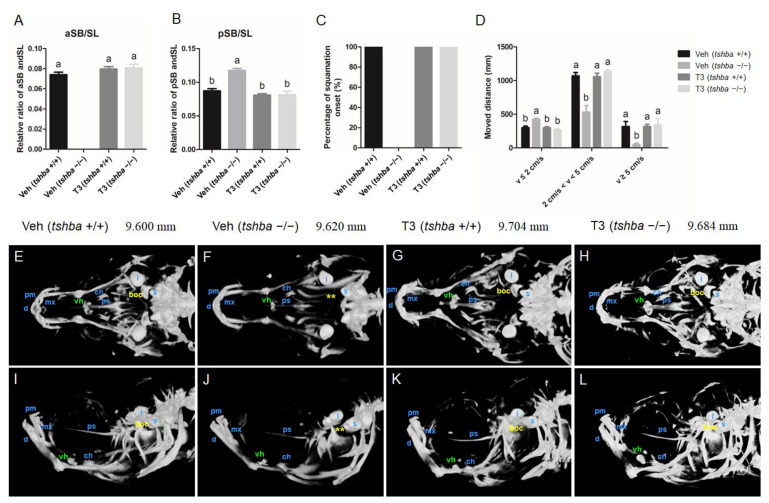
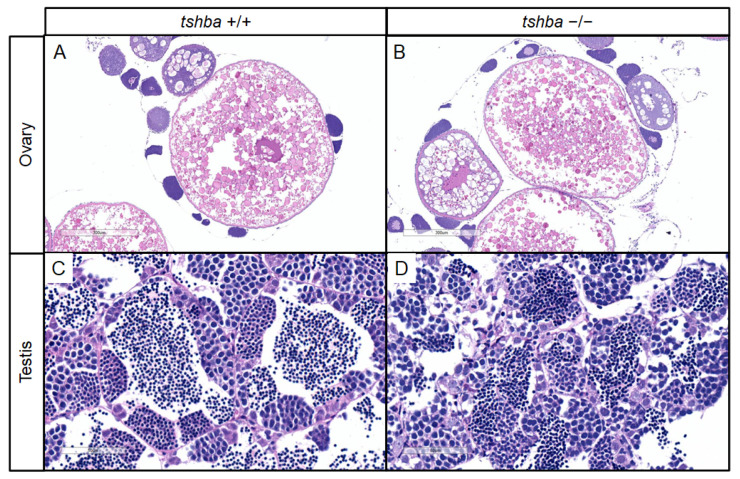
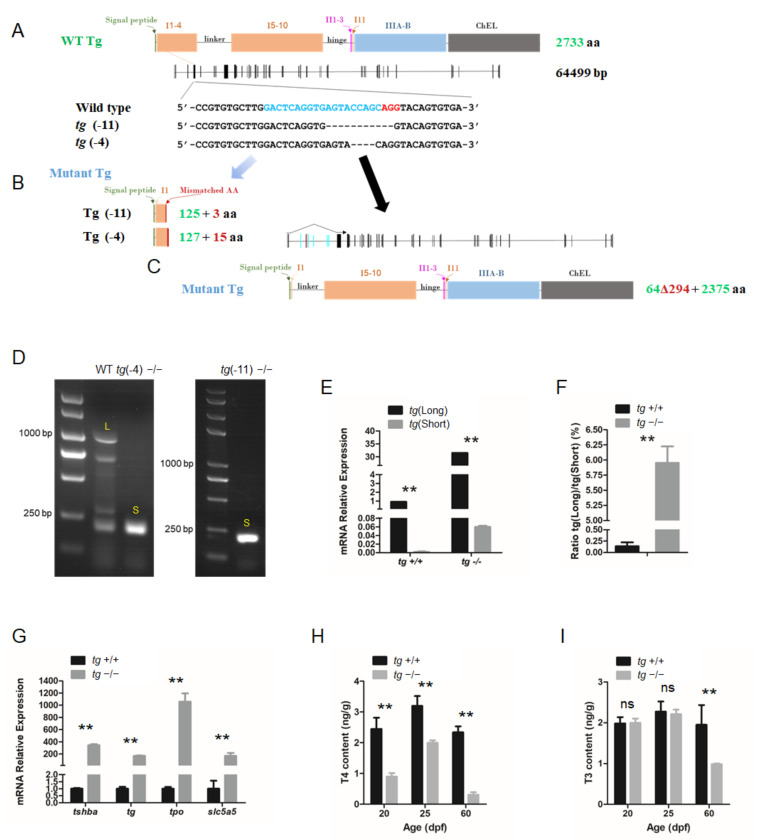
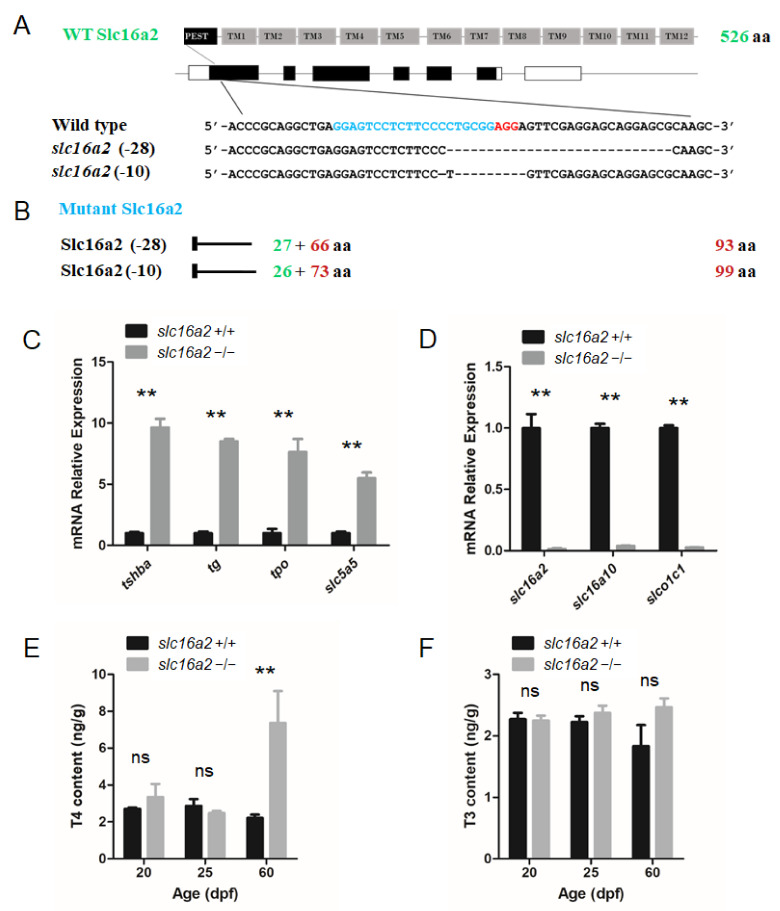
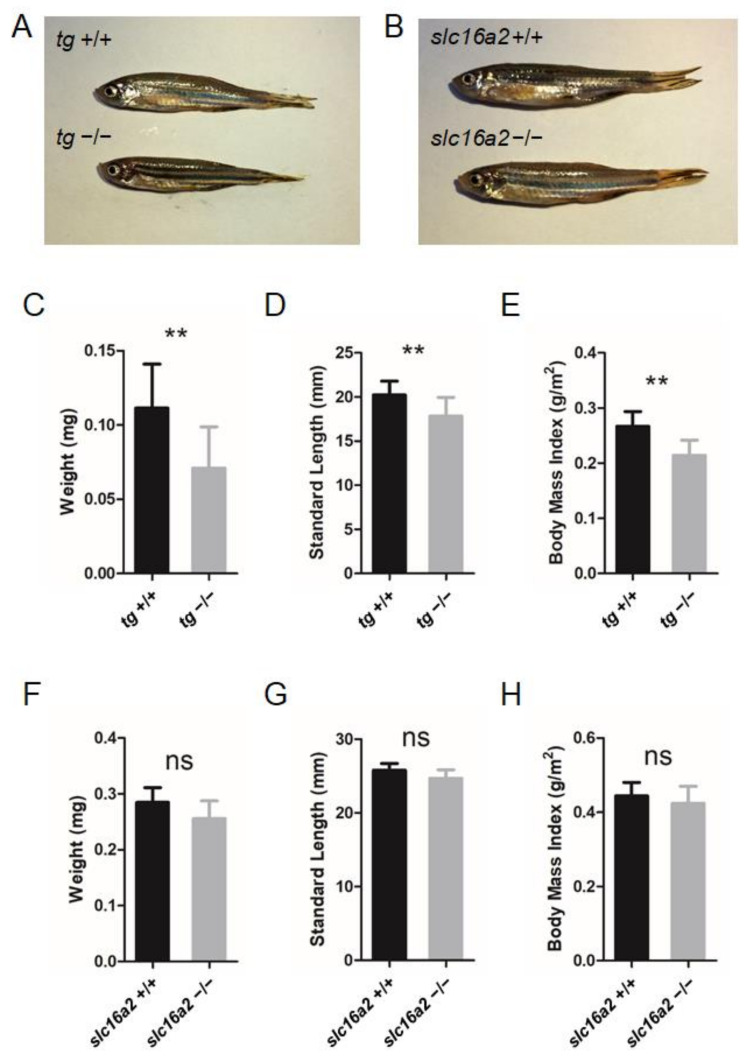
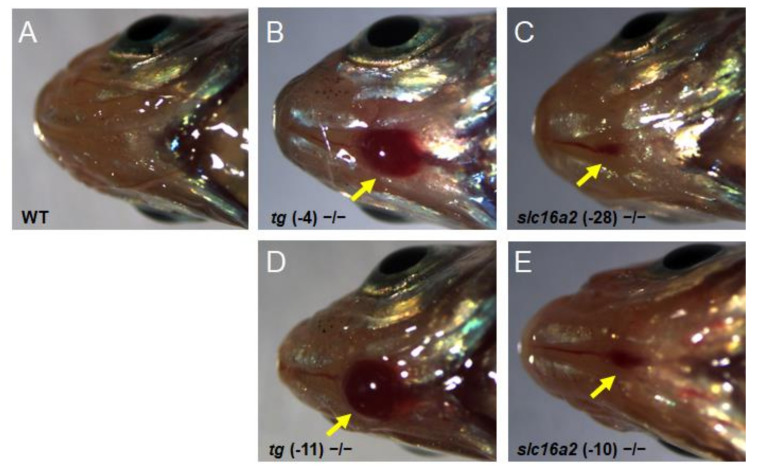
The hypothalamic-pituitary-thyroid (HPT) axis regulates many critical features in vertebrates. Utilizing TALENs and CRISPR/Cas9 techniques, thyroid-stimulating hormone subunit beta a (), thyroglobulin (), and solute carrier family 16 member 2 () mutant zebrafish lines were generated. Among the three mutants, the earliest time point for the significantly altered T3 contents was observed in mutants, which resulted in the most severe defects, including typical defects such as the retardation of inflated anterior swimming bladder (aSB), proper formation of fin ray and posterior squamation (SP), the larval-to-juvenile transition (LTJT) process, juvenile growth retardation, and mating failure. In mutants, which are actually compensated with an alternative splicing form, growth retardation was observed in the juvenile stage without LTJT and reproductive defects. The evident goiter phenotype was only observed in - and mutants, but not in mutants. Other than goiters being observed, no other significant developmental defects were found in the mutants. Regarding the reproductive defects observed in mutants, the defective formation of the secondary sex characteristics (SSCs) was observed, while no obvious alterations during gonad development were found. Based on our analyses, zebrafish at the 6-12 mm standard length or 16-35 days post-fertilization (dpf) should be considered to be in their LTJT phase. Using a series of zebrafish dyshormonogenesis models, this study demonstrated that the TSH function is critical for the proper promotion of zebrafish LTJT and SSC formation. In addition, the elevation of TSH levels appears to be essential for goiter appearance in zebrafish.
下丘脑-垂体-甲状腺 (HPT) 轴调节脊椎动物的许多关键特征。利用 TALENs 和 CRISPR/Cas9 技术,生成了甲状腺刺激激素亚基 β a (), 甲状腺球蛋白 (), 和溶质载体家族 16 成员 2 () 突变斑马鱼品系。在这三个突变体中,在 突变体中观察到 T3 含量明显改变的最早时间点,导致最严重的缺陷,包括典型的缺陷,如膨胀前游泳膀胱 (aSB) 的延迟,鳍射线和后鳞 (SP) 的正确形成,幼体到幼体的过渡 (LTJT) 过程,幼体生长迟缓,以及交配失败。在 突变体中,实际上存在一种替代剪接形式的补偿,在没有 LTJT 和生殖缺陷的幼体阶段观察到生长迟缓。仅在 - 和 突变体中观察到明显的甲状腺肿表型,但在 突变体中未观察到。除了观察到甲状腺肿外,在 突变体中未发现其他明显的发育缺陷。关于在 突变体中观察到的生殖缺陷,观察到次级性特征 (SSC) 的形成缺陷,而在性腺发育过程中未发现明显的改变。基于我们的分析,6-12 毫米标准长度或 16-35 天受精后 (dpf) 的斑马鱼应被认为处于 LTJT 阶段。使用一系列斑马鱼激素失调模型,本研究表明 TSH 功能对于斑马鱼 LTJT 和 SSC 形成的适当促进至关重要。此外,TSH 水平的升高似乎对于斑马鱼甲状腺肿的出现是必要的。