Institute for Animal Breeding and Genetics, University of Veterinary Medicine Hannover, 30559, Hannover, Germany.
Unit of Reproductive Medicine of the Clinics, University of Veterinary Medicine Hannover, 30559, Hannover, Germany.
BMC Genomics. 2018 Jun 25;19(1):492. doi: 10.1186/s12864-018-4877-5.
Miniature size in horses represents an extreme reduction of withers height that originated after domestication. In some breeds, it is a highly desired trait representing a breed- or subtype-specific feature. The genomic changes that emerged due to strong-targeted selection towards this distinct type remain unclear.
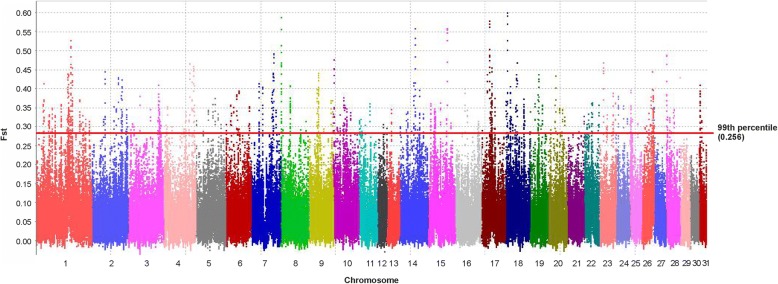
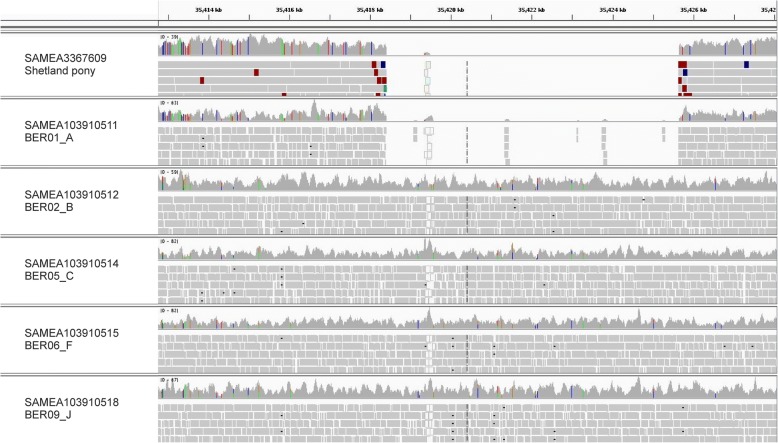
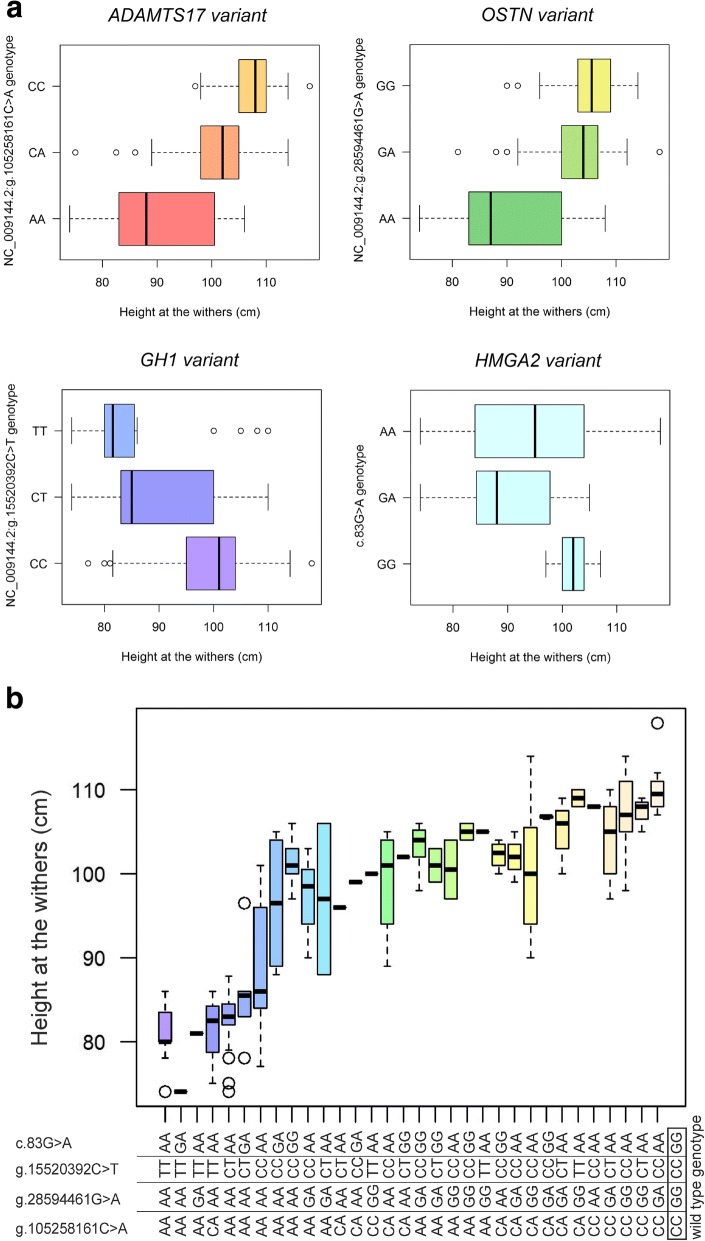
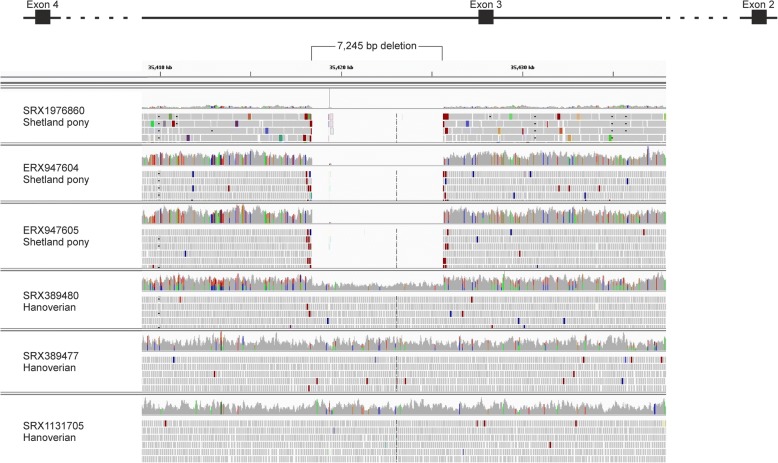
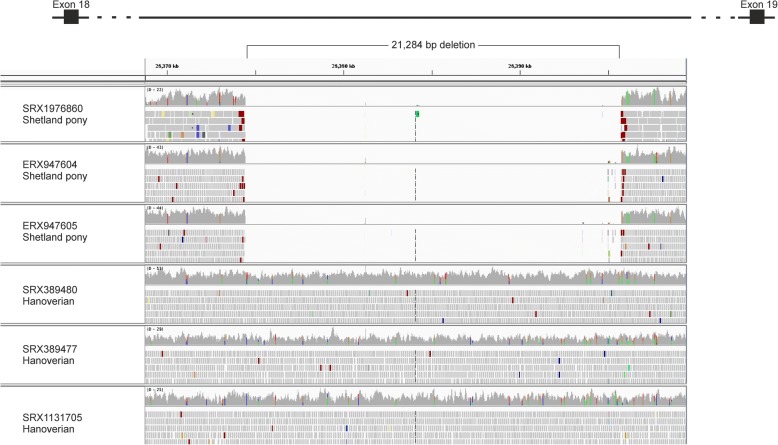
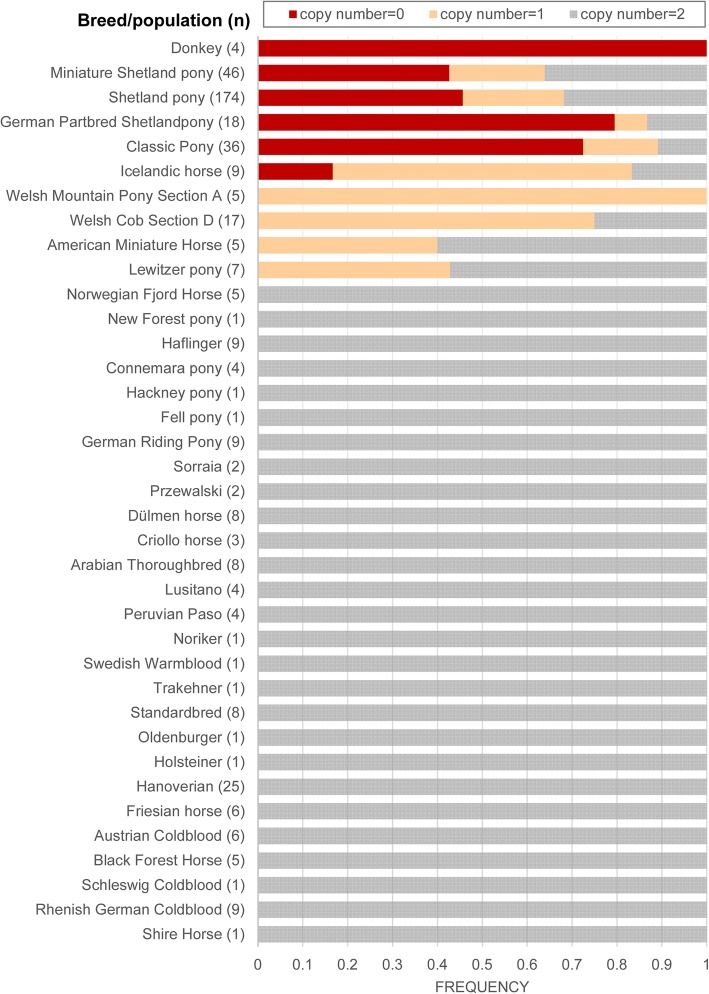
Comparisons of whole-genome sequencing data from two Miniature Shetland ponies and one standard-sized Shetland pony, performed to elucidate genetic determinants for miniature size, revealed four synergistic variants, limiting withers height to 34.25 in. (87 cm). Runs of homozygosity regions were detected spanning these four variants in both the Miniature Shetland ponies and the standard-sized Shetland pony. They were shown to be characteristic of the Shetland pony breed, resulting in a miniature type under specific genotypic combinations. These four genetic variants explained 72% of the size variation among Shetland ponies and related breeds. The length of the homozygous regions indicate that they arose over 1000 years ago. In addition, a copy number variant was identified in DIAPH3 harboring a loss exclusively in ponies and donkeys and thus representing a potential height-associated variant.
This study reveals main drivers for miniature size in horses identified in whole genome data and thus provides relevant candidate genes for extremely short stature in mammals.
马的微型体型代表了一种极端的马肩隆高度降低,这种现象起源于驯化之后。在某些品种中,这是一种高度理想的特征,代表了一种特定品种或亚型的特征。由于针对这种独特类型的强烈靶向选择,出现的基因组变化仍不清楚。
为了阐明微型体型的遗传决定因素,对两只微型设得兰矮马和一只标准设得兰矮马的全基因组测序数据进行了比较,结果发现了四个协同变异体,将马肩隆高度限制在 34.25 英寸(87 厘米)以内。在这两个微型设得兰矮马和标准设得兰矮马中,都检测到了跨越这四个变异体的纯合区域。它们被证明是设得兰矮马品种的特征,在特定的基因型组合下导致了微型体型。这四个遗传变异体解释了设得兰矮马和相关品种之间 72%的体型变异。纯合区域的长度表明它们是在 1000 多年前产生的。此外,在 DIAPH3 中还发现了一个缺失变异体,仅存在于马和驴中,因此代表了一个潜在的与身高相关的变异体。
这项研究揭示了在全基因组数据中确定的马微型体型的主要驱动因素,从而为哺乳动物的极短体型提供了相关的候选基因。