Shaikh Aasef G, Antoniades Chrystalina, Fitzgerald James, Ghasia Fatema F
Department of Neurology, University Hospitals, Case Western Reserve University, Cleveland, OH, United States.
Daroff-Dell'Osso Ocular Motility Laboratory, Cleveland VA Medical Center, Cleveland, OH, United States.
Front Neurol. 2018 Jun 12;9:444. doi: 10.3389/fneur.2018.00444. eCollection 2018.
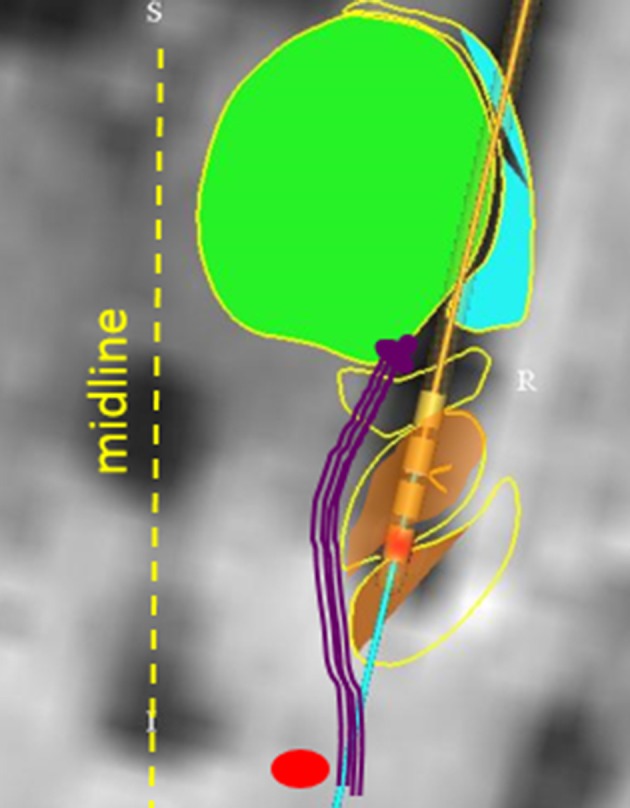
Discovery of inter-latching circuits in the basal ganglia and invention of deep brain stimulation (DBS) for their modulation is a breakthrough in basic and clinical neuroscience. The DBS not only changes the quality of life of hundreds of thousands of people with intractable movement disorders, but it also offers a unique opportunity to understand how the basal ganglia interacts with other neural structures. An attractive yet less explored area is the study of DBS on eye movements and vestibular function. From the clinical perspective such studies provide valuable guidance in efficient programming of stimulation profile leading to optimal motor outcome. From the scientific standpoint such studies offer the ability to assess the outcomes of basal ganglia stimulation on eye movement behavior in cognitive as well as in motor domains. Understanding the influence of DBS on ocular motor function also leads to analogies to interpret its effects on complex appendicular and axial motor function. This review focuses on the influence of globus pallidus, subthalamic nucleus, and thalamus DBS on ocular motor and vestibular functions. The anatomy and physiology of basal ganglia, pertinent to the principles of DBS and ocular motility, is discussed. Interpretation of the effects of electrical stimulation of the basal ganglia in Parkinson's disease requires understanding of baseline ocular motor function in the diseased brain. Therefore we have also discussed the baseline ocular motor deficits in these patients and how the DBS changes such functions.
基底神经节中互锁电路的发现以及用于调节的深部脑刺激(DBS)的发明是基础和临床神经科学的一项突破。DBS不仅改变了数十万患有顽固性运动障碍患者的生活质量,还提供了一个独特的机会来了解基底神经节如何与其他神经结构相互作用。一个有吸引力但较少被探索的领域是DBS对眼球运动和前庭功能的研究。从临床角度来看,此类研究为有效规划刺激参数以实现最佳运动结果提供了有价值的指导。从科学角度来看,此类研究能够评估基底神经节刺激对认知和运动领域中眼球运动行为的影响。了解DBS对眼球运动功能的影响也有助于类推解释其对复杂的附属和轴向运动功能的作用。本综述重点关注苍白球、丘脑底核和丘脑DBS对眼球运动和前庭功能的影响。讨论了与DBS原理和眼球运动相关的基底神经节的解剖学和生理学。解释帕金森病中基底神经节电刺激的效果需要了解患病大脑中的基线眼球运动功能。因此,我们还讨论了这些患者的基线眼球运动缺陷以及DBS如何改变这些功能。