Department of Pharmacology, Division of Pathological Sciences, Kyoto Pharmaceutical University, Kyoto, Japan.
Department of Pharmacology, Graduate School of Medical Sciences, Nagoya City University, Nagoya, Japan.
Cancer Sci. 2018 Sep;109(9):2781-2791. doi: 10.1111/cas.13715. Epub 2018 Jul 28.
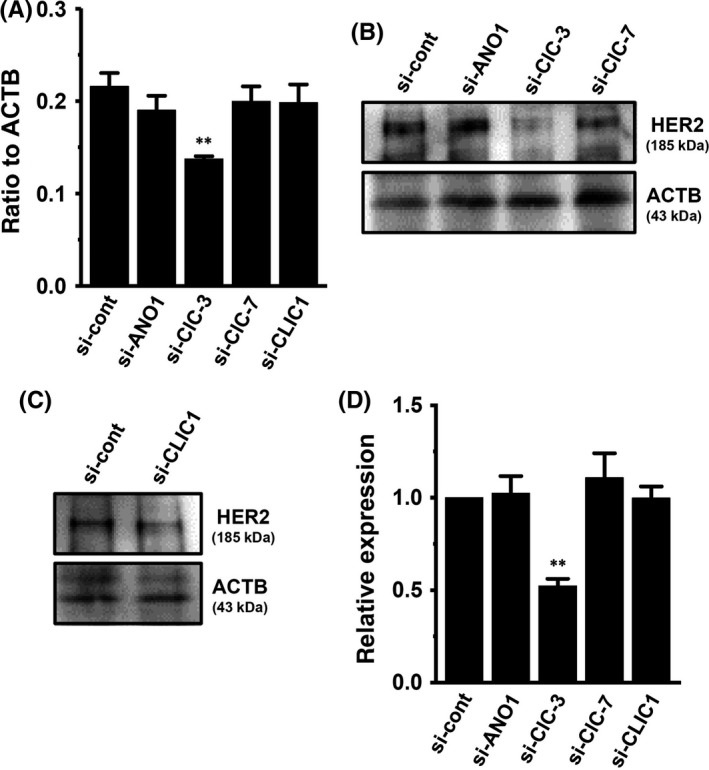
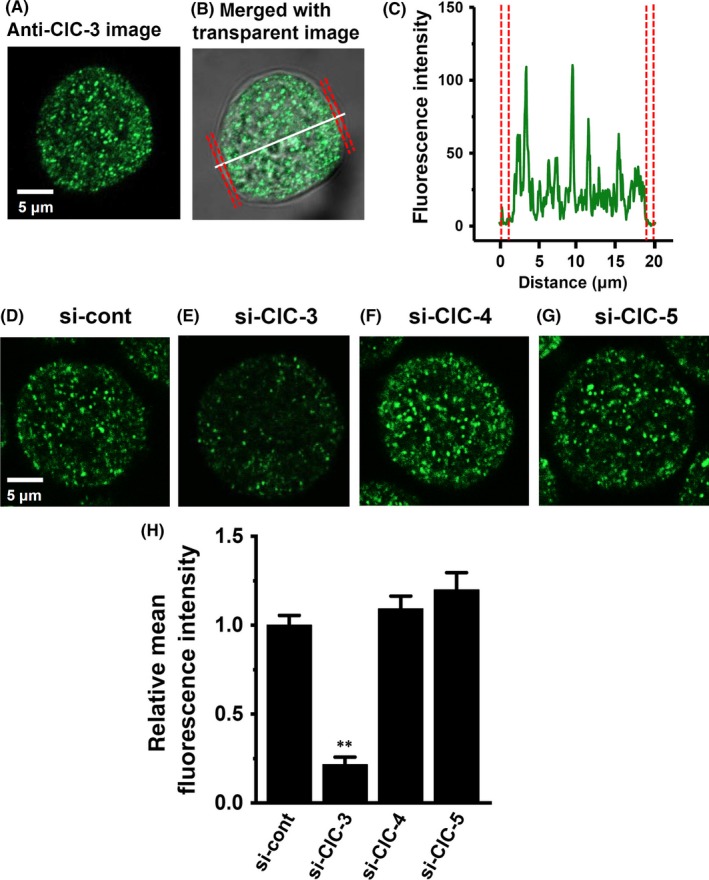
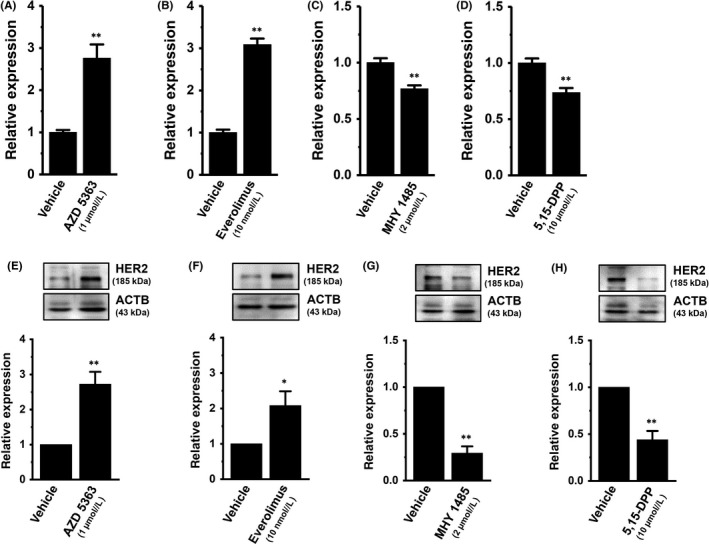
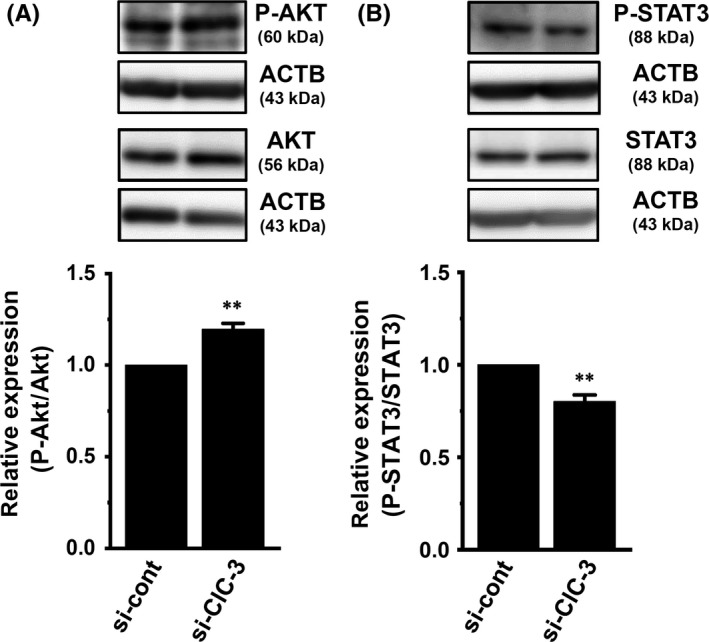
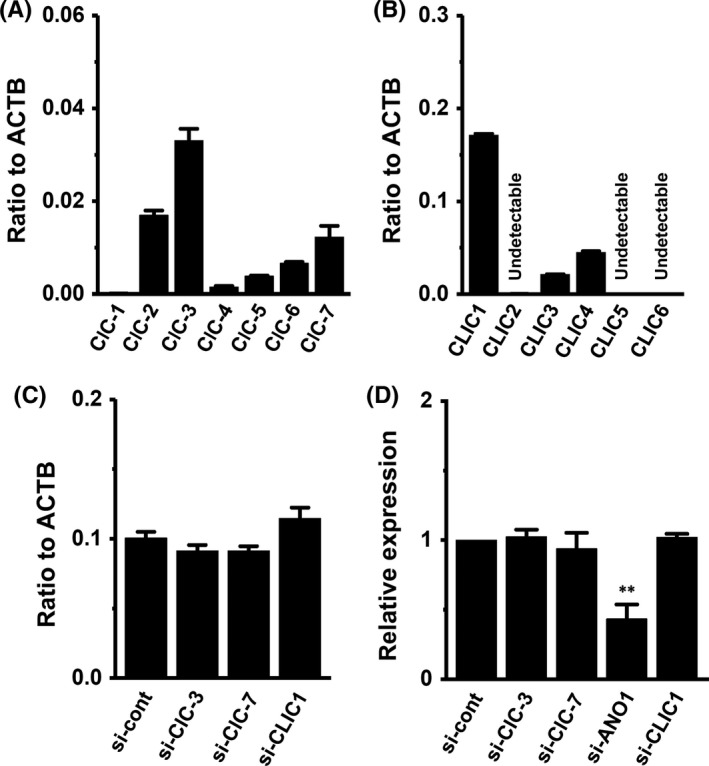
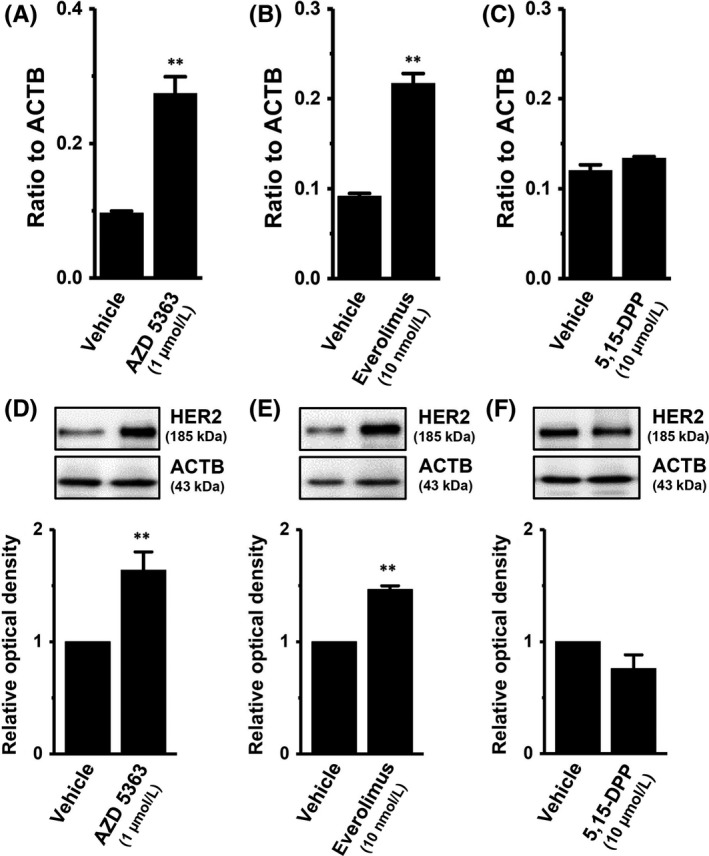
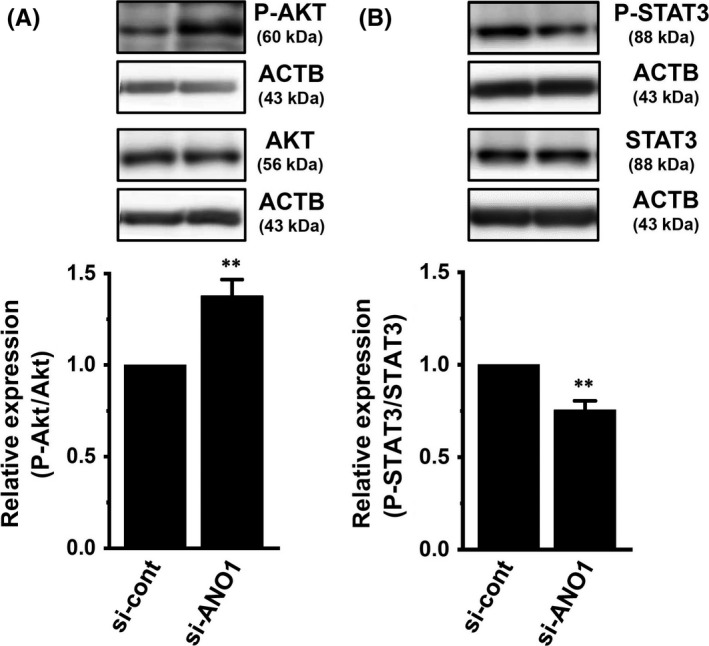
Recent studies have indicated that the intracellular concentration of chloride ions (Cl ) regulates gene expression in several types of cells and that Cl modulators positively or negatively regulate the PI3K/AKT/mammalian target of rapamycin (mTOR) and signal transducer and activator of transcription (STAT)3 signaling pathways. We previously reported that the Ca -activated Cl channel anoctamine (ANO)1 regulated human epidermal growth factor receptor 2 (HER2) transcription in breast cancer YMB-1 cells. However, the mechanisms underlying ANO1-regulated HER2 gene expression have not yet been elucidated. In the present study, we showed the involvement of intracellular organelle ClC-3 Cl /H transporter in HER2 transcription in breast cancer MDA-MB-453 cells. The siRNA-mediated inhibition of ClC-3, but not ANO1, markedly repressed HER2 transcription in MDA-MB-453 cells. Subsequently, treatments with the AKT inhibitor AZD 5363 and mTOR inhibitor everolimus significantly enhanced HER2 transcription in MDA-MB-453 cells, whereas that with the STAT3 inhibitor 5,15-diphenylporphyrin (5,15-DPP) inhibited it. AKT and mTOR inhibitors also significantly enhanced HER2 transcription in YMB-1 cells. The siRNA-mediated inhibition of ClC-3 and ANO1 resulted in increased AKT phosphorylation and decreased STAT3 phosphorylation in MDA-MB-453 and YMB-1 cells, respectively. The intracellular Cl channel protein CLIC1 was expressed in both cells; however, its siRNA-mediated inhibition did not elicit the transcriptional repression of HER2. Collectively, our results demonstrate that intracellular Cl regulation by ANO1/ClC-3 participates in HER2 transcription, mediating the PI3K/AKT/mTOR and/or STAT3 signaling pathway(s) in HER2-positive breast cancer cells, and support the potential of ANO1/ClC-3 blockers as therapeutic options for patients with resistance to anti-HER2 therapies.
最近的研究表明,氯离子(Cl-)的细胞内浓度调节多种类型细胞中的基因表达,Cl 调节剂正向或负向调节 PI3K/AKT/雷帕霉素靶蛋白(mTOR)和信号转导和转录激活因子(STAT)3 信号通路。我们之前报道过钙激活的氯离子通道 anoctamine(ANO)1 调节乳腺癌 YMB-1 细胞中的人表皮生长因子受体 2(HER2)转录。然而,ANO1 调节 HER2 基因表达的机制尚未阐明。在本研究中,我们表明在乳腺癌 MDA-MB-453 细胞中,细胞内细胞器 ClC-3 Cl-/H+转运体参与 HER2 转录。ClC-3 的 siRNA 介导抑制,而不是 ANO1,显著抑制 MDA-MB-453 细胞中的 HER2 转录。随后,用 AKT 抑制剂 AZD 5363 和 mTOR 抑制剂 everolimus 处理显著增强 MDA-MB-453 细胞中的 HER2 转录,而用 STAT3 抑制剂 5,15-二苯基卟啉(5,15-DPP)抑制它。AKT 和 mTOR 抑制剂也显著增强 YMB-1 细胞中的 HER2 转录。ClC-3 和 ANO1 的 siRNA 介导抑制分别导致 MDA-MB-453 和 YMB-1 细胞中 AKT 磷酸化增加和 STAT3 磷酸化减少。细胞内 Cl 通道蛋白 CLIC1 在这两种细胞中均有表达;然而,其 siRNA 介导的抑制并没有引起 HER2 的转录抑制。总之,我们的结果表明,ANO1/ClC-3 对细胞内 Cl 的调节参与 HER2 转录,介导 HER2 阳性乳腺癌细胞中的 PI3K/AKT/mTOR 和/或 STAT3 信号通路,并支持 ANO1/ClC-3 阻滞剂作为抗 HER2 治疗耐药患者的潜在治疗选择。